Signs Your CNC Machine Needs Immediate Attention
Share Post
10 Warning Signs Your CNC Machine is About to Fail: Act Before You Crash
nnIn the fast-paced world of modern manufacturing, computer numerical control (CNC) machines are the absolute workhorses of the shop floor. Day in and day out, these advanced machines cut, drill, carve, and shape metals, composites, and plastics with incredible speed and sub-thousandth-of-an-inch accuracy. However, because CNC machines are complex systems composed of thousands of high-speed mechanical, electrical, electronic, hydraulic, and pneumatic parts, they are subject to tremendous wear and physical stress. nnTo keep your shop profitable and your production lines moving, it is absolutely critical to avoid catastrophic, unscheduled breakdowns. A sudden machine crash or an unexpected spindle lockup can halt production for days, damage expensive workpieces, destroy tooling, and cost thousands of dollars in emergency repairs and lost output. Fortunately, CNC machines rarely fail completely without warning. In almost every case, a machine will display clear, physical warning signs that something is wrong. nnBy training your operators to recognize these warning signs and calling an expert technician immediately, you can address minor mechanical and electrical issues before they escalate into major, catastrophic failures. At In-House CNC Service LLC, owned and operated by Jason Wutzke, we specialize in rapid, on-site CNC diagnostics, repair, and calibration. If your machine is showing any of the following 10 warning signs, call us immediately at (951) 540-4820 to protect your equipment and your business.nn
The 10 Critical Warning Signs Your CNC Machine Needs Professional Attention
nn
1. Unusual High-Pitch Noises or Squealing
nA healthy CNC machine should run with a predictable, consistent hum. If you begin to hear high-pitched squealing, grinding, or whining noises coming from the spindle or axis drives, it is a clear warning sign of trouble. Squealing from the spindle is typically a sign of failing spindle bearings or belt slippage, while axis grinding often indicates dry linear guide rails or worn ball screw assemblies. Continuing to operate a machine with bad spindle bearings can lead to a catastrophic lockup, which can destroy the spindle housing entirely.nn
2. Excessive or Abnormal Machine Vibration
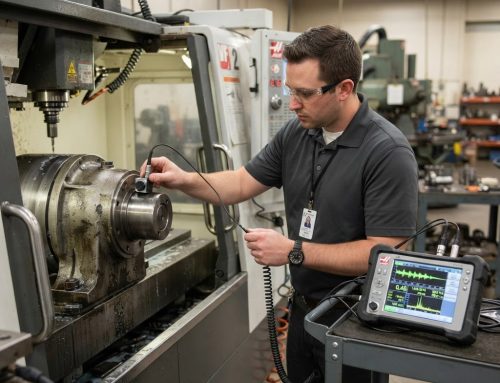
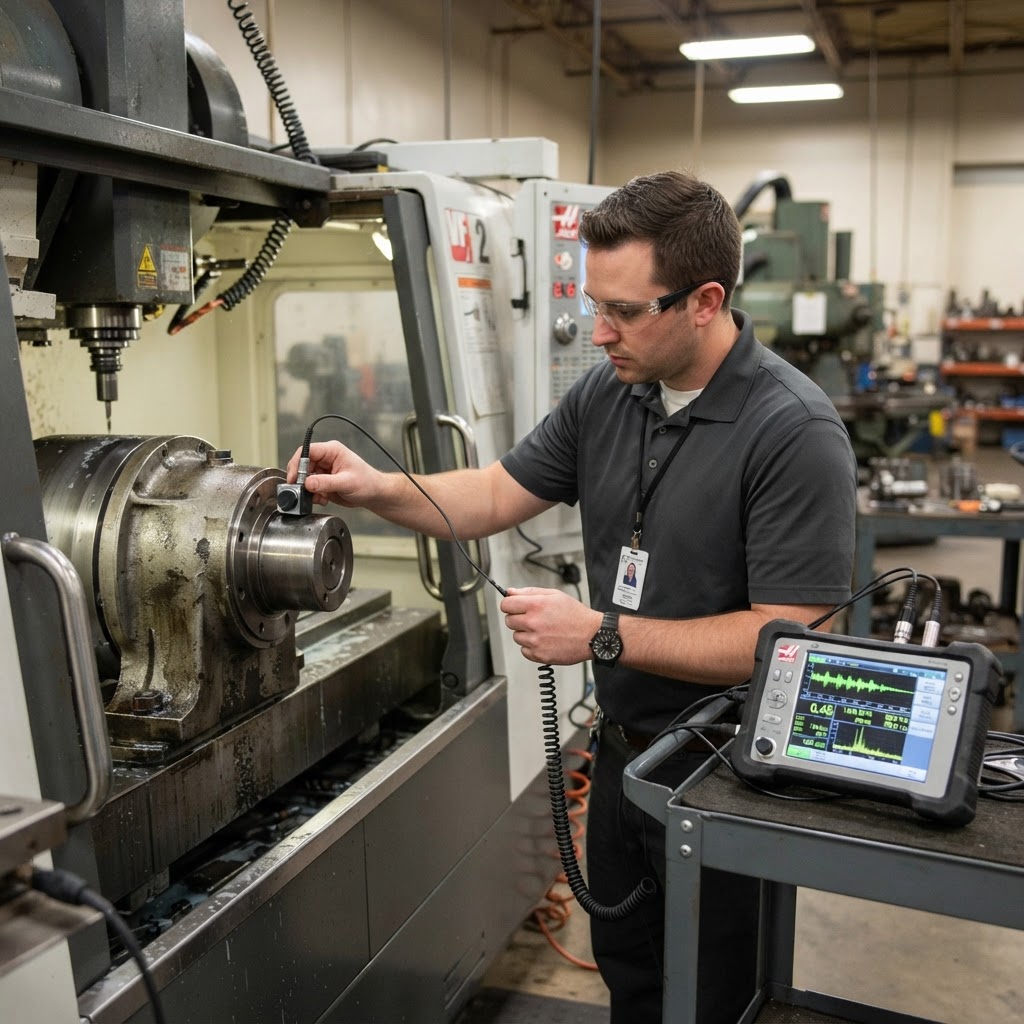
nExcessive vibration is one of the most destructive forces in any CNC machine. Vibration not only ruins the surface finish of your machined parts, but it also causes rapid tool wear, damages high-speed spindle bearings, and can even loosen critical electrical connections inside the control cabinet. Vibration is often caused by spindle runout, a misaligned toolholder, unbalanced workpieces, or an unanchored machine frame. If you notice your machine vibrating more than usual, it requires immediate diagnostic testing.nn
3. Gradual Axis Drift or Loss of Positioning Accuracy
nAre your machined parts starting to fail inspection due to dimensional drift, or are your circular interpolation passes suddenly cutting oval holes? Gradual loss of accuracy across the X, Y, or Z-axes is a major warning sign. This “axis drift” is typically caused by worn ball screws, worn ball nuts, or deteriorated thrust bearings, which introduce physical play (backlash) into the axis movement. An expert technician can test for backlash, replace the worn mechanical components, and recalibrate your control system parameters to restore factory accuracy.nn
4. Frequent or Persistent Controller Alarm Codes
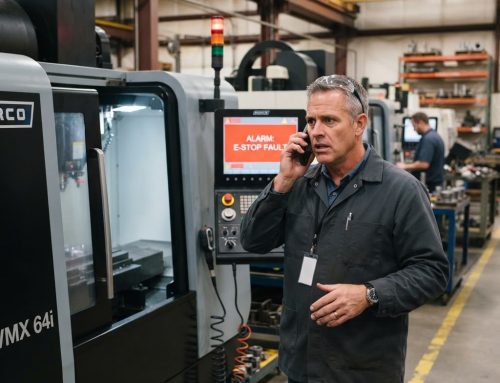
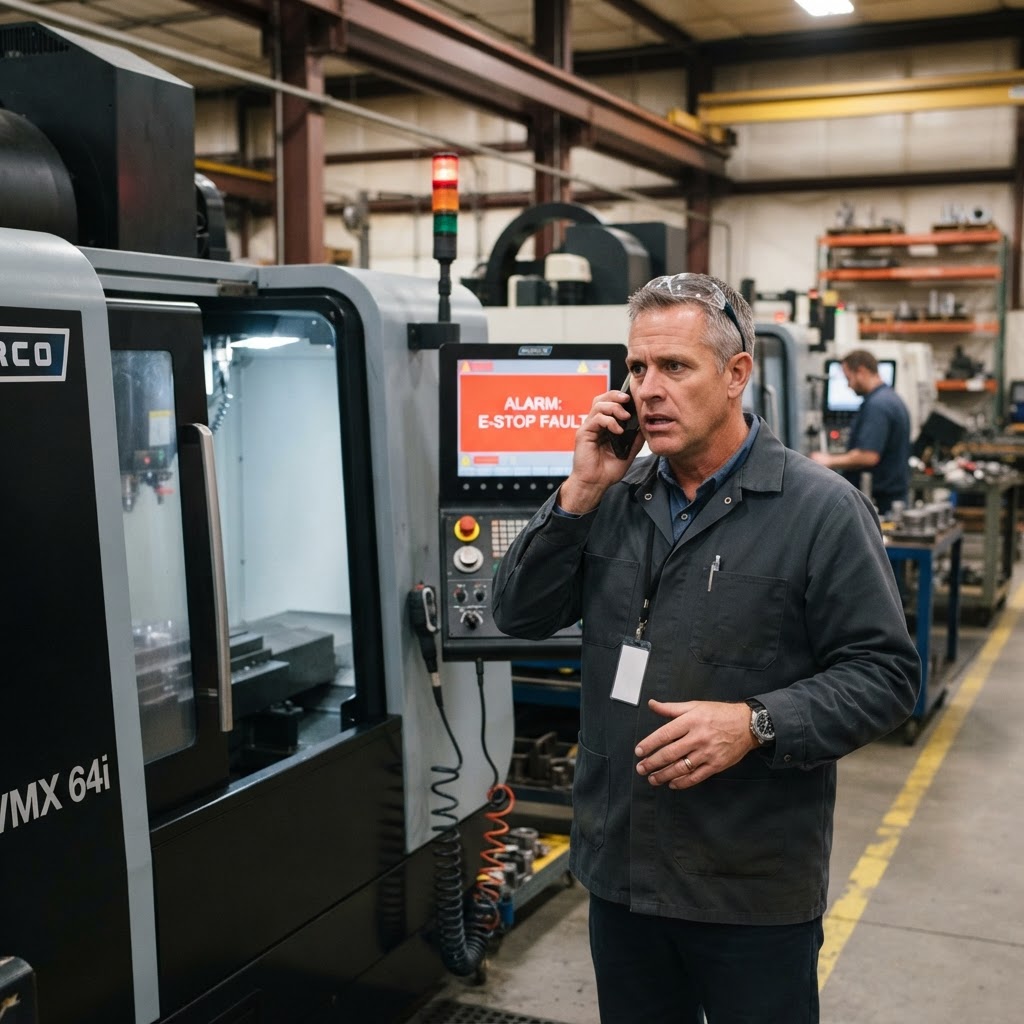
nEvery modern CNC machine control (such as Fanuc, Haas, Mitsubishi, or Fadal) is equipped with an alarm system designed to protect the machine from damage. While an occasional alarm code might be resolved by resetting the machine, frequent or persistent alarms—such as overtravel, axis drive overload, spindle temperature, or lubrication faults—must never be ignored. These alarms indicate that the control system is working hard to prevent a major mechanical or electrical failure. Continually clearing and bypassing alarms will eventually lead to a severe breakdown.nn
5. Degradation of Part Surface Finish Quality
nA CNC machine’s primary job is to produce parts that meet specific surface roughness requirements. If you suddenly notice chatter marks, scoring, gouging, or a generally poor, rough surface finish on your parts, your machine is struggling. Surface finish degradation is a classic symptom of mechanical instability, which can be caused by worn spindle bearings, spindle runout, loose linear guide blocks, or a lack of proper lubrication on the axis ways.nn
6. Visible Fluid Leaks (Oil, Coolant, or Hydraulics)
nIf you notice pools of coolant, hydraulic fluid, or waylube forming around the base of your CNC machine, you have a leak that needs immediate attention. Hydraulic leaks can cause sudden drops in chuck or tool clamping pressure, leading to dangerous tool slippage or thrown parts during machining. Coolant leaking into the electrical cabinets or axis motor housings can cause catastrophic short circuits, while waylube leaks mean your critical slide ways are being starved of oil, leading to rapid wear and axis scoring.nn
7. Slow, Sluggish, or Jerky Axis Movement
nWhen you manual jog or run an axis program, the motion should be completely smooth and fluid. If an axis moves in a slow, jerky, or hesitant manner (often called “stick-slip” motion), it is a sign of high friction. This is typically caused by a failure in the automatic lubrication system (blocked lines, failed metering valves, or a dead pump), or by heavily worn waywipes that are allowing abrasive metal chips to jam between the slide blocks and guide rails.nn
8. Excessive Thermal Heat Buildup in the Spindle or Motors
nCNC machines are designed to manage heat, but excessive thermal buildup is a sign of severe mechanical or electrical distress. If the spindle housing, axis drive motors, or electrical cabinet feel unusually hot to the touch, or if the machine’s control panel displays thermal warning codes, you must shut the machine down. Excessive heat is caused by dry bearings, electrical overloads, clogged ventilation fans, or overloaded motors, and will quickly burn out expensive components if left unaddressed.nn
9. Erratic or Slow Tool Changer (ATC) Performance
nThe automatic tool changer (ATC) is a highly complex mechanical assembly that must operate with split-second timing. If your ATC begins to move slowly, makes loud clunking noises during a tool change, or frequently jams mid-cycle, it needs immediate attention. Tool changer issues are usually caused by misalignments between the spindle and the changer arm, failed pneumatic valves, or worn carousel fingers. A tool changer failure during a high-speed program can result in a massive tool crash and extensive spindle damage.nn
10. Smells of Burning Electrical Components or Hot Oil
nYour nose can be one of your most valuable diagnostic tools. If you smell ozone, burning plastic, hot wire insulation, or overheated waylube coming from your CNC machine, shut off the main power breaker immediately. These smells indicate that an electrical component (such as an axis drive amplifier, transformer, or wiring harness) is shorting out or severely overloading. Ignoring these smells can result in permanent damage to your expensive control boards or, worse, a devastating electrical fire on your shop floor.nn
Why You Must Call In-House CNC Service LLC Immediately
nnWhen your CNC machine displays any of these warning signs, ignoring them is a highly risky gamble that will always cost you more money in the long run. Acting proactively by calling a professional technician is the smartest decision a shop owner can make:n
- n
- Minimize Repair Costs: Replacing a worn bearing, a bad belt, or a clogged lube line is quick and highly affordable. Rebuilding a locked spindle, replacing a cracked casting, or buying a new main control board after a catastrophic crash can cost tens of thousands of dollars.
- Keep Production on Schedule: Scheduled, proactive repairs can be planned during low-production hours or weekends, ensuring that your customer deliveries are never delayed. Unplanned breakdowns always seem to happen at the worst possible moment.
- Protect Operator Safety: A CNC machine that suffers a mechanical or electrical failure under high-speed operation can throw heavy workpieces, shatter tooling, or suffer electrical fires, putting your operators’ lives and safety at risk.
n
n
n
nnAt In-House CNC Service LLC, Jason Wutzke and his team are dedicated to helping Southern California manufacturers maintain safe, productive, and precise machine shops. Contact In-House CNC Service today at (951) 540-4820 to schedule a comprehensive diagnostic or preventative maintenance visit for your CNC equipment.