Questions to Ask Before Hiring a CNC Machine Repair Technician
Share Post
Questions to Ask Before Hiring a CNC Machine Repair Technician
Why Asking the Right Questions Matters
Not all CNC repair technicians are equally qualified. The CNC repair market includes highly trained specialists with decades of multi-platform experience and providers with general mechanical skill but limited CNC-specific expertise. Knowing the difference before you hand over access to your machine — and your production schedule — is worth the conversation.
These questions are not meant to be adversarial. They are the questions that a professional, experienced CNC repair provider will answer confidently and specifically. Vague or evasive answers to direct technical questions are the most reliable signal that a provider may not have the depth of expertise your situation requires.
Question 1: Do You Have Experience With My Specific Machine and Controller?
This is the most important question. Ask specifically: have you worked on this machine brand, this controller platform, and this controller version? Generic answers like ‘yes, we work on all CNC machines’ are not sufficient. You want specific confirmation of experience with your machine’s control system.
A technician with genuine FANUC 30i experience will respond with specifics about the platform — alarms they commonly see, parameter backup procedures, drive configuration details. A technician without that experience will respond with generalities. The difference is audible in the first thirty seconds of the conversation.
Question 2: What Is Your Diagnostic Process?
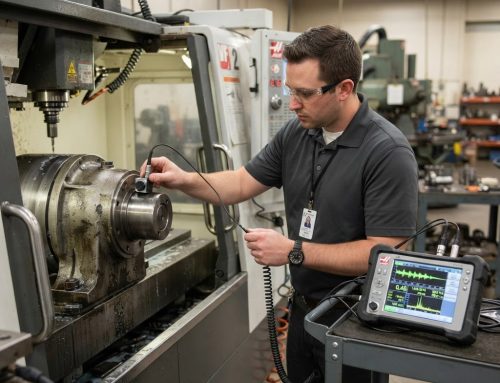
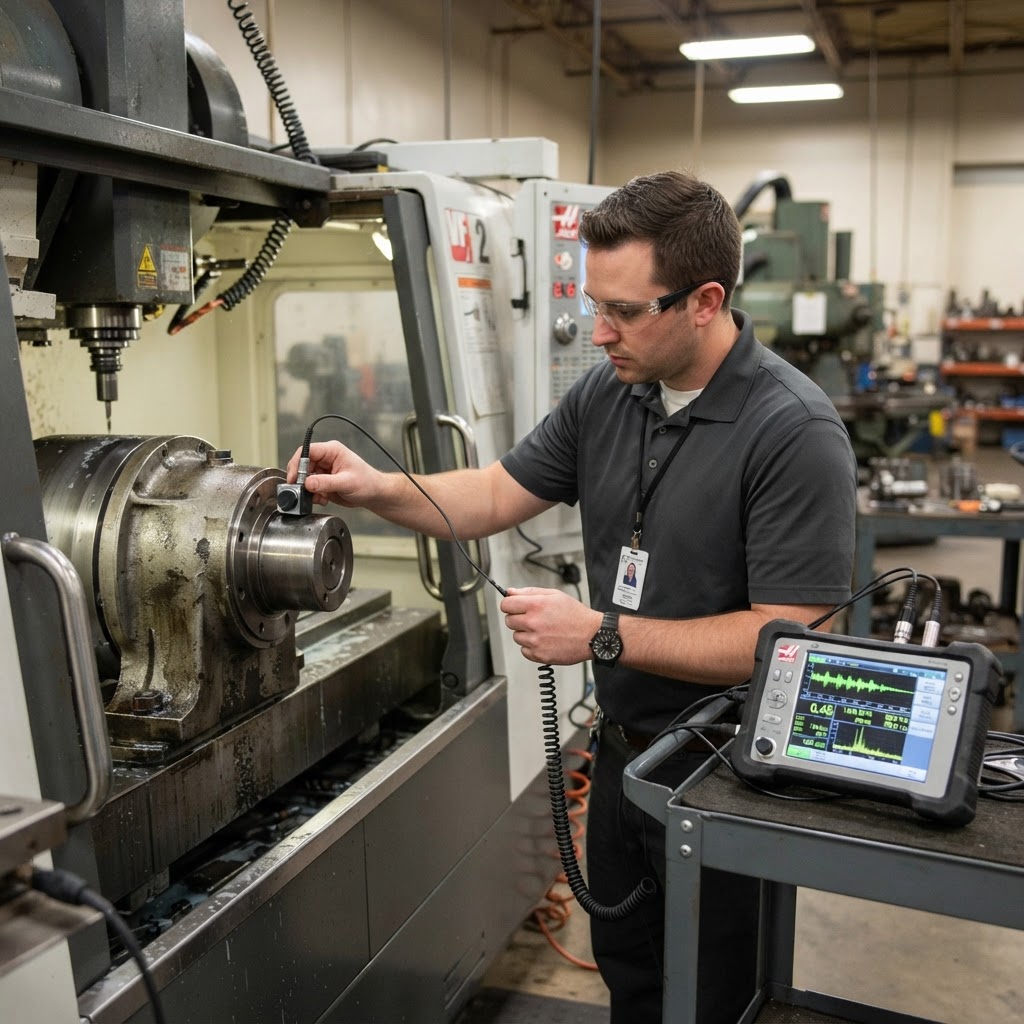
Ask for a clear explanation of how they approach diagnosing an unfamiliar fault. A qualified technician should be able to describe a systematic process: reviewing fault history, checking alarm codes against the service manual, testing specific components in sequence, narrowing to the root cause before recommending a repair.
A response that sounds like ‘we try replacing the most likely part first’ is a red flag. Replacing parts based on probability rather than diagnosis is how repair bills escalate without resolution. Insist on a provider who diagnoses to the root cause before touching a single component, ensuring comprehensive CNC repairs and troubleshooting.
Question 3: Do You Provide a Written Quote Before Starting Work?
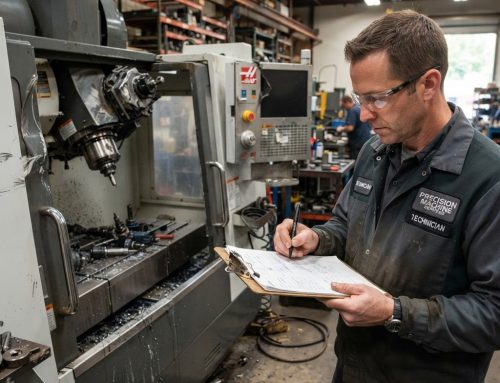
A written quote before work begins is non-negotiable. Any reputable CNC repair provider will diagnose the machine first, document the findings, and provide a written quote that you approve before any repair work starts. This protects you from unauthorized charges and ensures both parties have the same expectations about scope and cost.
If a provider is reluctant to commit to a written quote before starting, that reluctance is telling you something important about how disputes will be handled if the final bill is higher than expected.
Question 4: What Warranty Do You Offer on Parts and Labor?
Professional CNC repair services back their work with a warranty on parts and labor. Ask specifically: what is the warranty period, what does it cover, and what is the process for a warranty claim? A 90-day to one-year warranty on labor and a manufacturer’s warranty on new parts is a reasonable expectation.
The existence of a warranty is not just financial protection — it is a signal that the provider is confident enough in their diagnostic accuracy and repair quality to stand behind the result. Providers without a clear warranty policy have no contractual accountability for the quality of their work.
Question 5: Do You Carry Replacement Parts for My Machine?
A technician who arrives to diagnose your machine but then has to wait two weeks for parts to ship from the distributor is extending your downtime significantly. Ask whether the provider carries common replacement components for your machine brand — servo drives, encoders, power supply modules, and other high-failure-rate components.
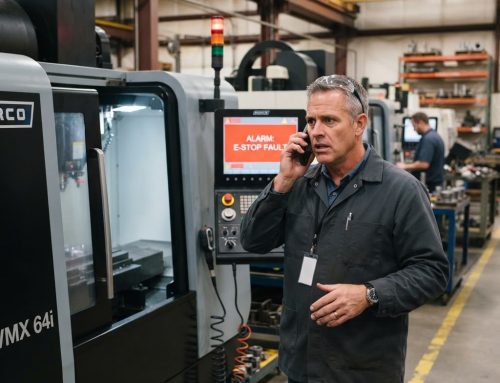
For emergency repairs, parts availability is the difference between a one-day resolution and a five-day resolution. A well-stocked service provider will be upfront about what they carry and how they source components that are not in their inventory.
Question 6: Can You Provide References from Similar Manufacturing Operations?
A request for references is reasonable and any experienced provider should be able to provide them. Ideally, ask for references from manufacturers running similar equipment in similar industries — aerospace shops if you are in aerospace, precision machining operations if that is your environment. For broader industry quality benchmarks, organizations like the NIST Manufacturing Extension Partnership offer excellent frameworks on supplier selection and manufacturing excellence.
Speaking with a reference who has had an emergency repair resolved well by this provider tells you far more than any sales conversation. It confirms the provider performs under pressure, communicates clearly, and backs their work after the invoice is paid.
One Final Question: What Happens If the Repair Does Not Resolve the Fault?
Ask directly: if the repair does not fix the problem, what happens next? A confident, experienced technician will have a clear answer — they will continue diagnosing at no additional charge until the fault is identified and resolved, or they will provide a written explanation of why the fault cannot be resolved with the proposed repair.
In-House CNC Service answers all of these questions directly and specifically. We diagnose to the root cause, provide written quotes before work begins, back our work with a clear warranty, and carry common parts for the machine platforms we service most frequently. Please talk to our team to discuss your equipment and your current repair situation.
Your CNC Machine Can't Wait. Neither Can We.
In-House CNC Service provides expert on-site CNC repair, dispatching certified technicians directly to your facility across Southern California. No shipping. No guesswork. Just expert repair that gets you back online.