CNC Repair vs. Replace: How to Make the Right Decision
Share Post
CNC Repair vs. Replace: How to Make the Right Decision
The Repair vs. Replace Question Every Shop Faces
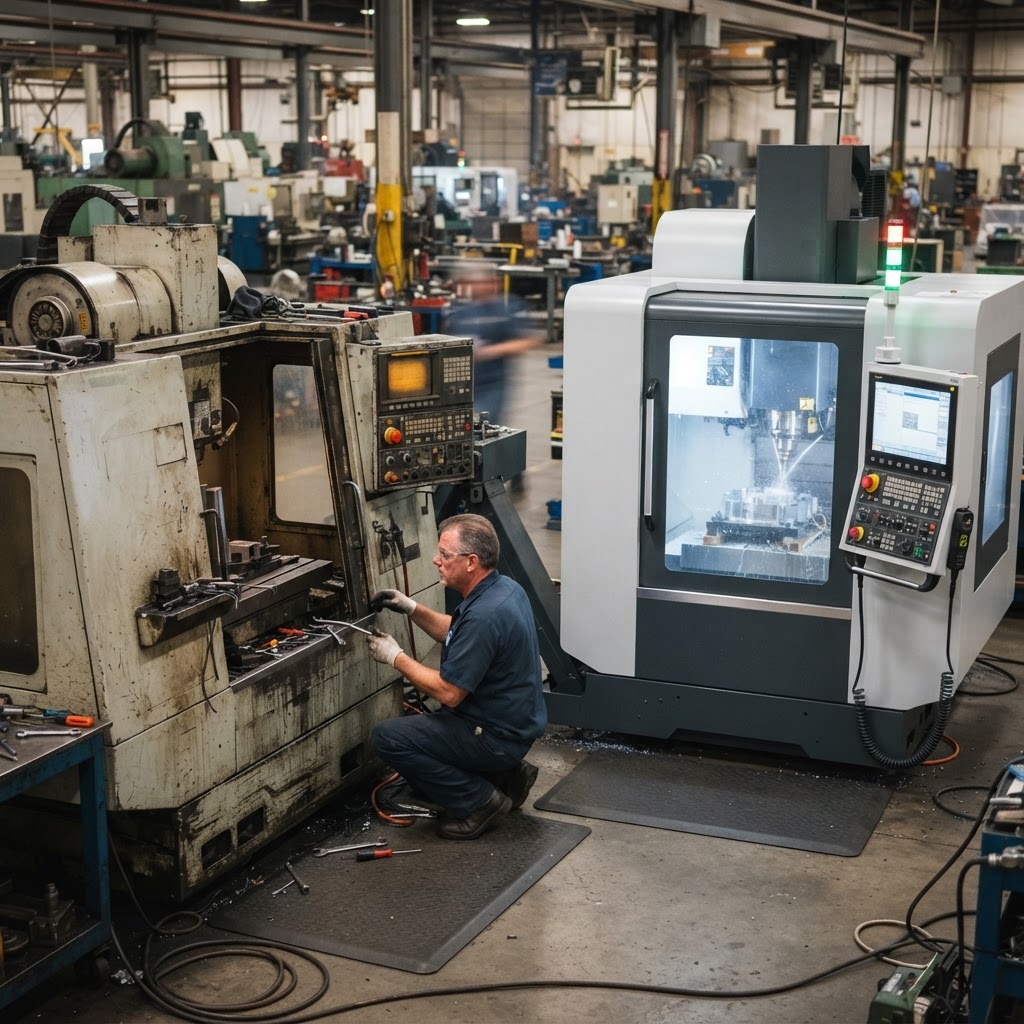
Every CNC machine eventually reaches the point where a major failure raises the question: is it worth investing in professional CNC repair, or is replacement the smarter investment? This is one of the most consequential decisions a shop manager or owner makes — and it is frequently made poorly because the analysis is incomplete.
The right answer depends on a combination of financial factors, operational factors, and strategic considerations that are specific to your machine, your shop, and your production requirements. This guide walks through each of them systematically.
The Financial Analysis: Repair Cost vs. Machine Value
The most commonly cited rule of thumb, supported by AMT manufacturing industry data, is that if a repair costs more than 50 percent of the machine’s current market value, replacement deserves serious consideration. This is a reasonable starting point, but it is not sufficient on its own — because it ignores the cost of the replacement, the lead time to get a new machine running, and the ongoing cost of ownership for both options.
A more complete financial analysis compares: the total repair cost including parts, labor, and any ancillary work required; the machine’s expected remaining service life after the repair; the cost of a replacement machine including installation, tooling, fixturing, and programming time; and the production impact during the transition period.
Machine Age and Expected Remaining Service Life
A 10-year-old CNC machine that has been well-maintained and is receiving its first major repair is a very different proposition from a 20-year-old machine that has had multiple major repairs and is showing wear across multiple systems. The first machine likely has significant remaining useful life. The second may be entering a period of escalating repair frequency.
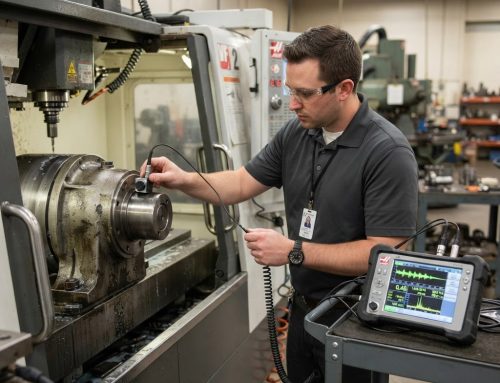
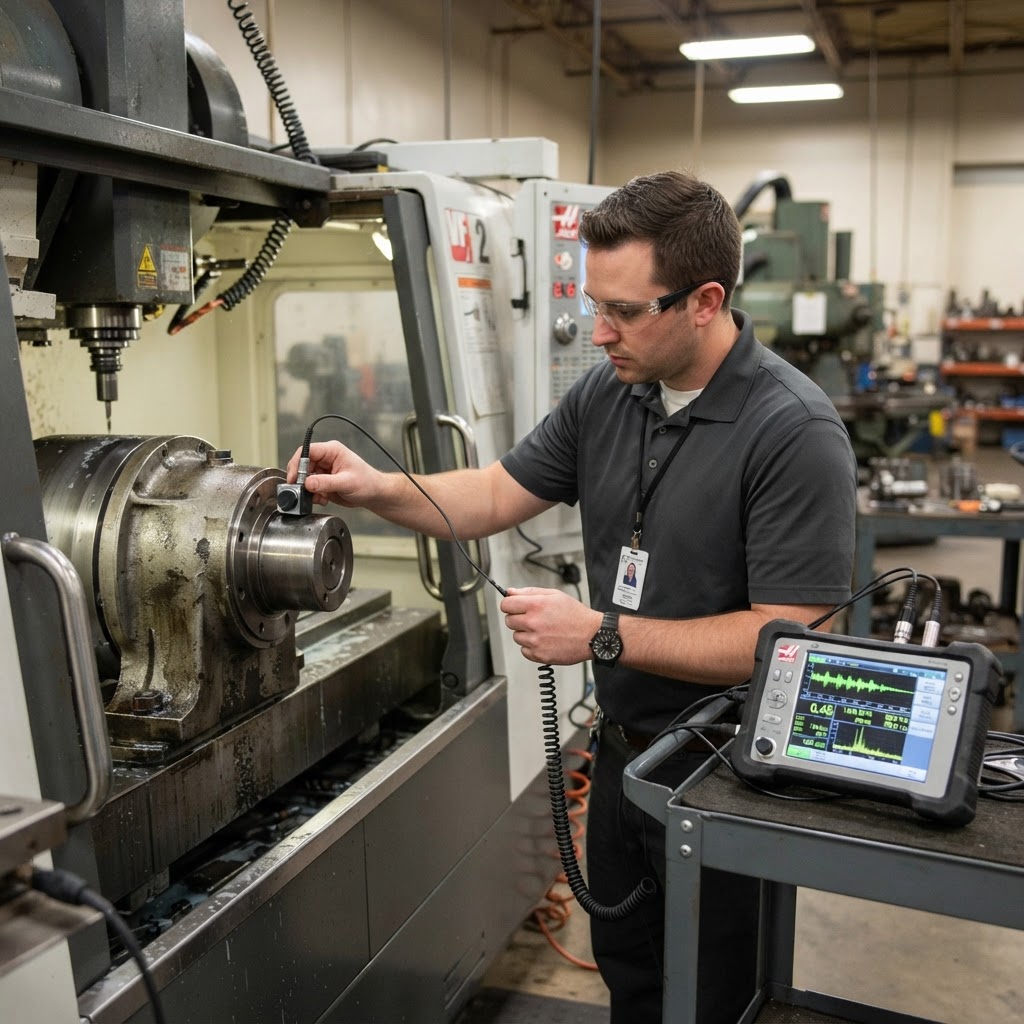
A certified technician performing a thorough condition assessment or pre-purchase inspection — checking ballscrew wear, spindle condition, servo drive health, and controller component age — can give you a professional opinion on remaining useful life. That opinion is worth getting before committing to a major repair on an aging machine.
Replacement Parts Availability: A Critical Factor
For older machines — typically those more than 15 to 20 years old — parts availability becomes a significant factor in the repair vs. replace analysis. If the controller platform is discontinued and spare boards, drives, or display units are only available as expensive surplus parts, the long-term serviceability of the machine declines regardless of its mechanical condition.
Choosing CNC retrofitting and upgrades — replacing an aging controller with a modern equivalent while retaining the machine’s mechanical systems — is often the most cost-effective solution for mechanically sound older machines with obsolete controls. This can extend machine life by 10 to 15 years at a fraction of the cost of a new machine.
Production Requirements and Machine Capability Match
Sometimes the repair vs. replace decision is less about the machine’s condition and more about whether it still meets your production requirements. If your work has evolved toward tighter tolerances, more complex geometries, or materials that demand capabilities the current machine cannot provide, replacement may be strategically correct even if the machine is mechanically sound.
Conversely, if the machine continues to meet your production requirements and the repair restores it to full specification, there is often no compelling case for replacement — especially when you factor in the full cost and disruption of bringing a new machine online.
The Hidden Costs of Replacement
New machine procurement cost is only the starting point of the replacement investment. Add: delivery and installation costs, electrical and foundation modifications, tooling and fixturing (which rarely transfers perfectly), programming and setup time, operator training on the new control system, and the production loss during the transition period.
For many manufacturers, the true all-in cost of replacement is 1.5 to 2.5 times the machine purchase price when these factors are accounted for. A repair that costs 40 percent of machine value but avoids a $150,000 to $200,000 total replacement investment is often the correct economic decision.
When Replacement Is Clearly the Right Answer
Replacement becomes clearly correct when: the repair cost exceeds machine value; the machine has a history of escalating failures across multiple systems; replacement parts are no longer available and retrofitting is not cost-effective; the machine no longer meets your production capability requirements; or a new machine offers productivity improvements that generate a compelling return on investment.
If you are facing a major repair decision on a machine you are unsure about, In-House CNC Service can perform a full condition assessment and provide an honest opinion on remaining service life, repair cost expectations, and whether a retrofit is a viable option. We are in the business of keeping machines running when that is the right answer — and being honest when it is not.