Emergency CNC Repair in Southern California: What to Expect
Share Post
The Anatomy of a High-Priority CNC Emergency
n
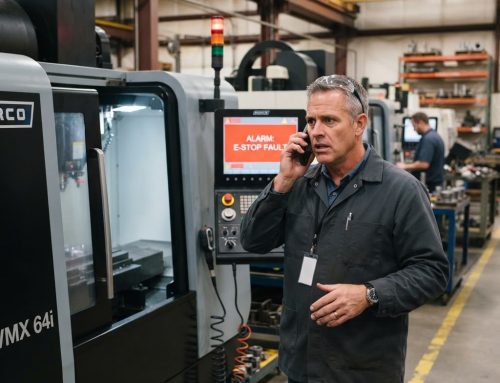
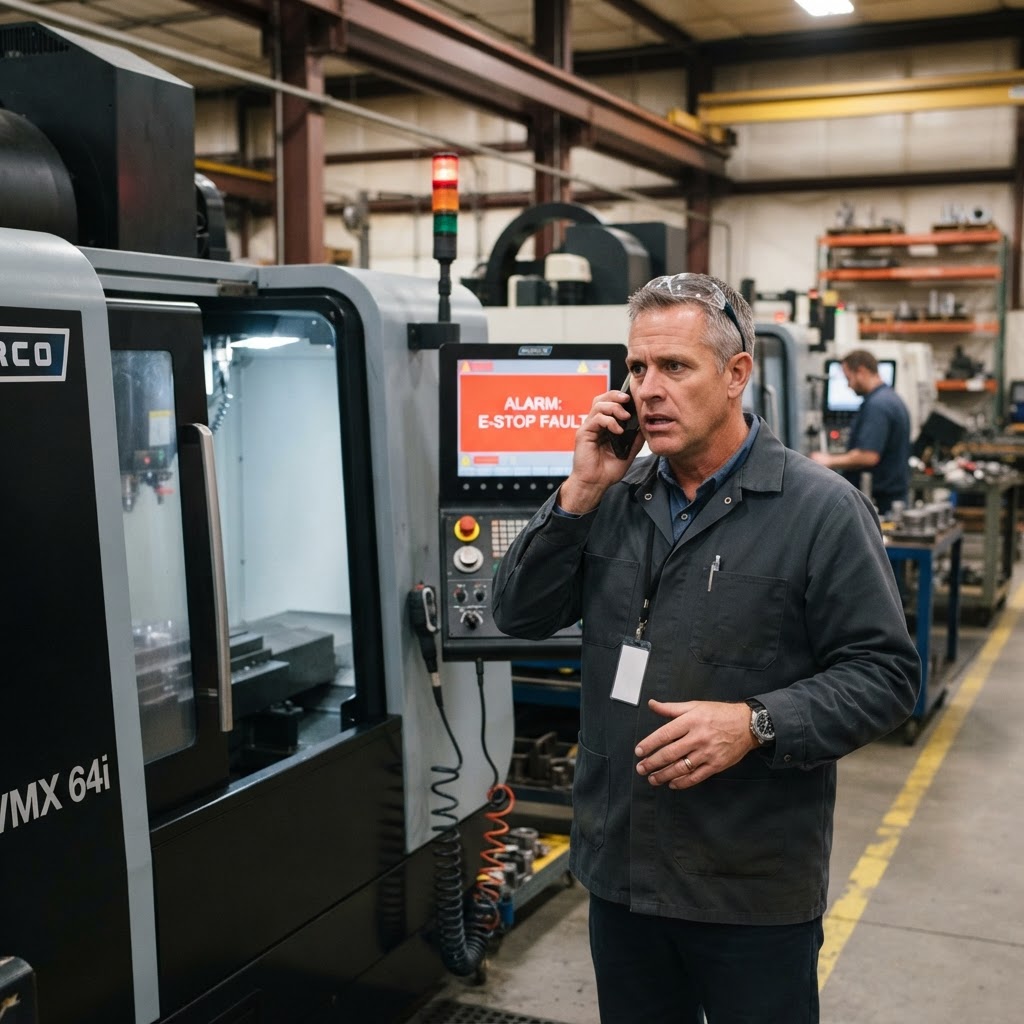
Every CNC machine shop manager knows the cold feeling of a sudden production stoppage. It usually happens in the middle of a high-priority, time-sensitive run. A machine tool hums along perfectly, and then—clunk. A red alarm light flashes on the control tower, an error code pops up on the screen, and your operator stands idle. If you do not have an in-house maintenance team, this is an immediate emergency. Your delivery schedule, your client relationships, and your profit margins are suddenly on the line. Every minute that passes without a solution is money down the drain. You can feel the tension rising on the shop floor as supervisors gather around the dead machine, trying to figure out how to salvage the week’s shipments.
n
In Southern California’s fast-paced manufacturing corridors, you cannot afford to wait days for a factory technician to respond to your service request. You need an immediate, highly specialized response from a local expert who understands the urgency of your business. In this article, we will walk you through exactly what to expect when you call In-House CNC Service LLC for emergency repair, detailing our rapid response protocols, diagnostic procedures, parts sourcing pipelines, and our commitment to getting you back to production quickly and safely. We believe in complete transparency, and we want you to know exactly how we work to solve your crisis.
n
When you are in the middle of a production emergency, you don’t need automated phone menus or generic customer service agents. You need direct access to technical experts who can assess your situation and deploy a solution immediately. At In-House CNC, we treat your emergency as if it were our own, because we know that our success is directly tied to your machine’s uptime. Let’s look at the step-by-step process that begins the moment you pick up the phone to call us.
nn
What Happens the Moment You Call In-House CNC Service LLC at (951) 540-4820
n
When you call In-House CNC at (951) 540-4820 during a machine emergency, you are not routing through a corporate call center or speaking with an offshore dispatcher. You are connecting directly with local experts who understand CNC machinery. Our intake process is designed to gather critical information immediately so we can hit the ground running:n
- n
- Machine Details: We identify your machine’s make, model, control system (e.g., Haas, Fanuc, Mazak, Mitsubishi), and serial number to ensure we bring the correct schematics and documentation.
- Alarm Codes & Symptoms: We ask for the exact alarm numbers and descriptions displayed on the control screen, along with any physical symptoms (e.g., strange noises, burning smells, axis binding, coordinate drift, tool changer jams).
- Operating Context: We ask what operation was running when the failure occurred, helping us narrow down whether the issue is mechanical, electrical, or software-related.
n
n
n
nBy gathering this information during the initial call, we can often pre-diagnose the problem, select the most likely replacement parts and specialized testing tools from our inventory, and dispatch a technician to your facility with a clear action plan, saving precious hours on the shop floor.
nn
Our Response Time and On-Site Diagnostic Protocols across Southern California
n
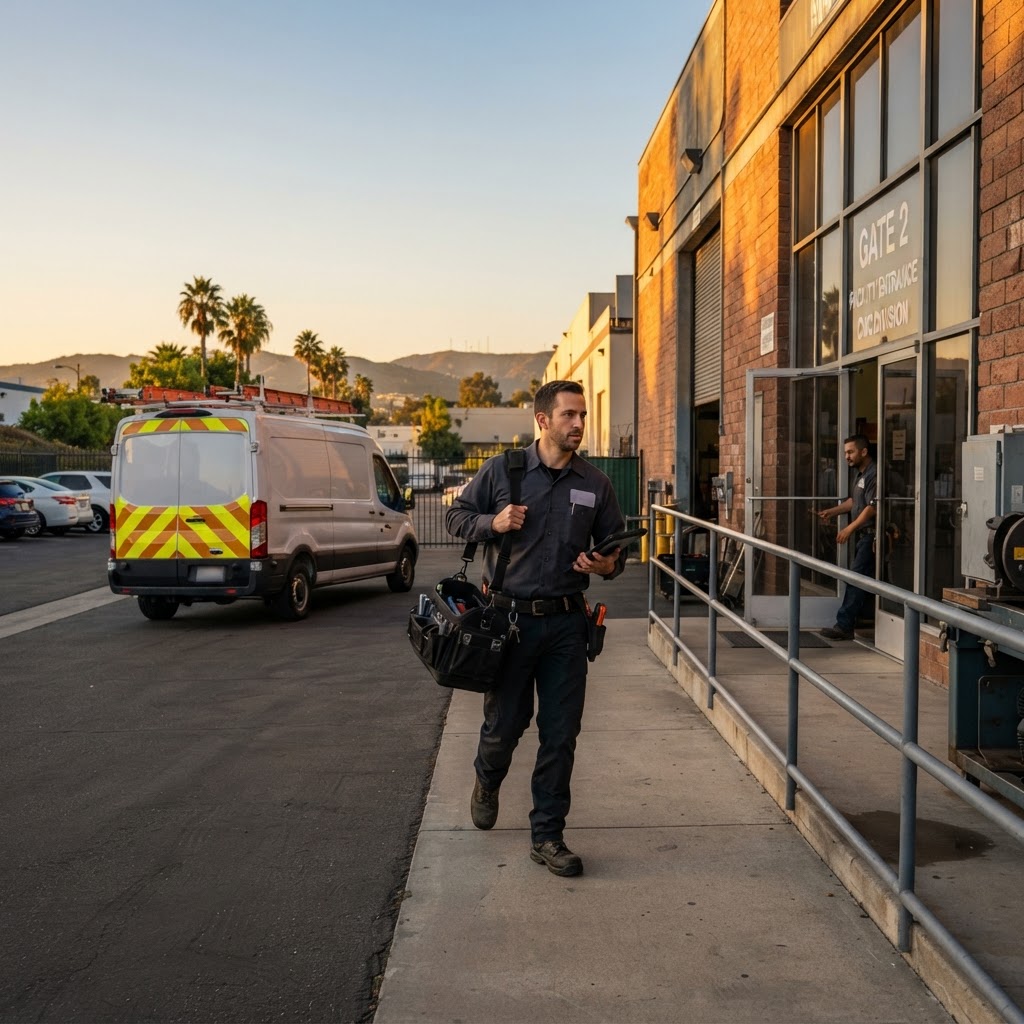
Based in Menifee, CA, In-House CNC is strategically positioned to provide rapid emergency service throughout Riverside, San Bernardino, Orange, and San Diego counties. We treat your emergency with the highest priority, aiming to get a technician to your shop floor as quickly as possible. We understand that in an emergency, response time is measured in hours, not days.
n
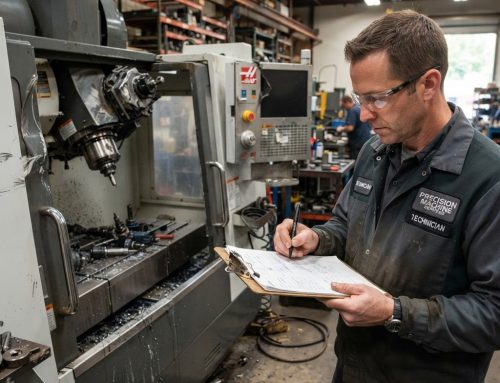
Once on-site, our technician follows a structured, highly efficient diagnostic protocol to isolate the root cause of the failure without wasting valuable time:n
- n
- Safety Isolation: We perform standard Lockout/Tagout (LOTO) procedures to ensure a safe working environment before opening any electrical cabinets or mechanical enclosures.
- Electrical Diagnostics: We test low-voltage power supplies, check fuse continuity, measure incoming 3-phase line voltages, and inspect servo drive status lights inside the electrical cabinet.
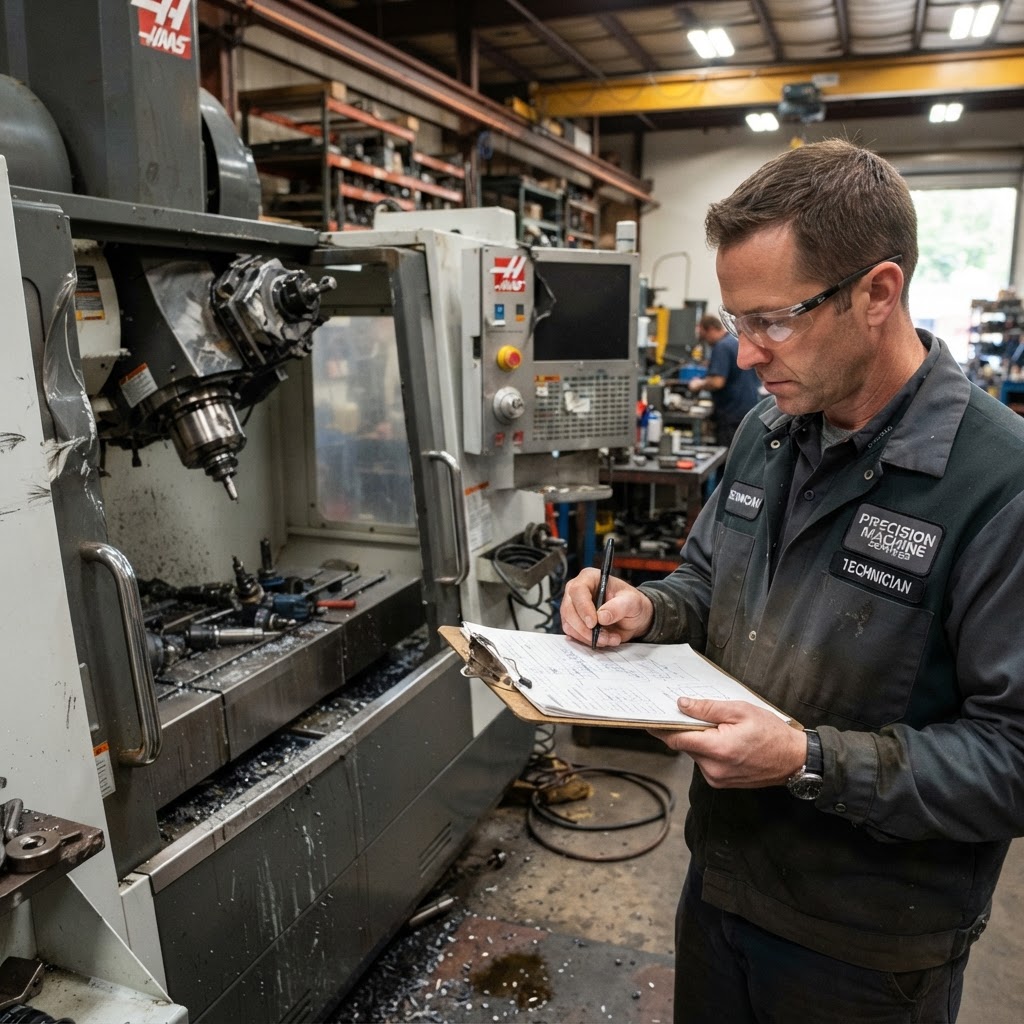
- Mechanical Inspection: We check linear guides, ballscrew assemblies, way lube distribution lines, and spindle mechanics to isolate binding, wear, or alignment issues.
- Control & Sensor Testing: We utilize specialized diagnostic screens on the CNC control to monitor real-time I/O (Input/Output) signals, testing proximity sensors, limit switches, and encoder feedback loops.
n
n
n
n
nThis systematic approach ensures we identify the true root cause of the failure, rather than simply treating the symptoms and risking a repeat breakdown. We keep you informed during every step of the diagnostics, showing you exactly what we find.
nn
Navigating Parts Sourcing in SoCal: Local Warehouse Networks and Overnight Pipelines
n
One of the biggest bottlenecks in CNC repair is parts availability. If a technician diagnoses a failed servo motor or a blown hydraulic valve, but you have to wait three weeks for the part to arrive from overseas, your business remains paralyzed. That is why having a robust parts sourcing strategy is just as important as having technical expertise.
n
At In-House CNC, we have spent years building a robust, highly reliable parts sourcing network. Our strategies for minimizing parts lead times include:n
- n
- Local Distributor Partnerships: We maintain close relationships with local Southern California industrial distributors, bearing houses, and electrical supply warehouses. For common components like bearings, seals, belts, fuses, limit switches, and solenoid valves, we can often source the part locally and have it on your machine the same day.
- Manufacturer Direct Accounts: We have direct channels to major CNC manufacturers and rebuilders, allowing us to check regional stock instantly and secure overnight shipping for specialized proprietary components like Fanuc drives, Haas boards, or Mazak parts.
- On-Site Rebuilding Capabilities: For components like ballscrews or tool turrets, we can often perform precision rebuilds and key repairs on-site, saving you the time and expense of ordering a complete replacement assembly from the factory.
n
n
n
n
nn
The Back-to-Production Timeline: Minimizing Your Bottleneck
n
Our ultimate goal in any emergency repair is to minimize your production bottleneck. We do not count a job as complete until your machine is fully validated, calibrated, and running production-quality parts.
n
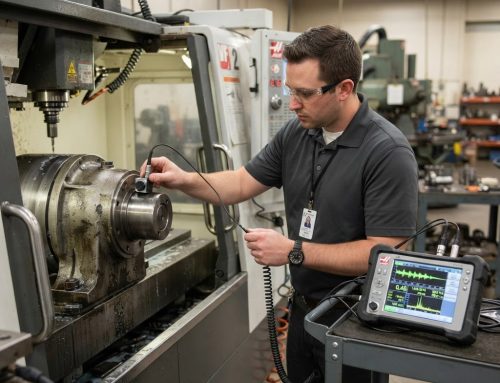
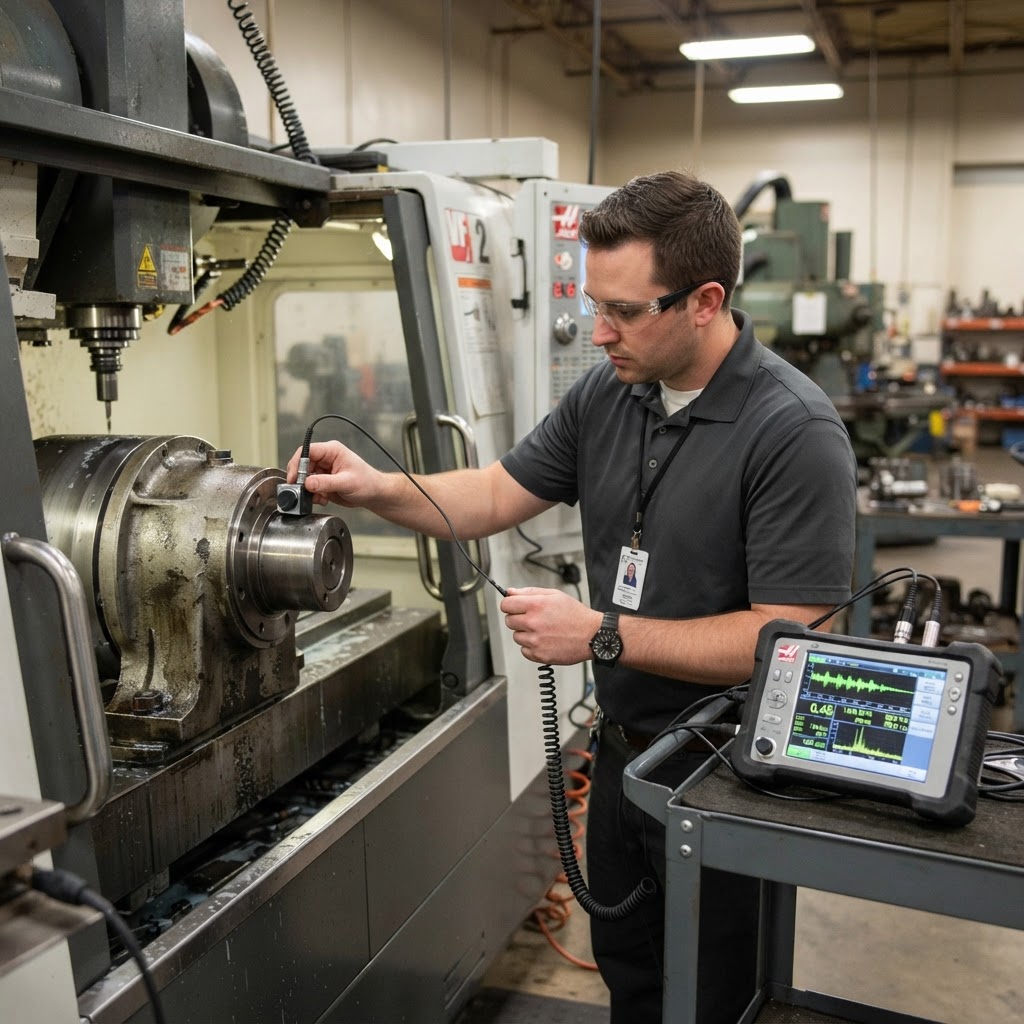
Once the replacement parts are secured and installed, we execute a rigorous validation process. We perform geometry alignments, check axis backlash, and run standardized circular interpolation and test cuts. We monitor spindle temperatures, servo current draws, and vibration levels to guarantee that the repair is robust and that your machine is operating safely at factory specifications. Only when your operator is back at the control panel making high-quality chips do we sign off on the service call. We make sure you are 100% satisfied with the machine’s performance before we leave your shop.
nn
How to Prepare Your Shop Floor for an Emergency CNC Repair Technician
n
To help us expedite your repair and get your spindle turning even faster, we recommend taking a few simple preparation steps before our technician arrives:n
- n
- Clear the Work Area: Ensure the area around the down machine is clear of raw materials, parts bins, and forklifts so our technician has immediate, safe access to the electrical cabinet and mechanical enclosures.
- Clean the Machine: If safe to do so, clear away excessive chips and wipe down heavy coolant pooling around the affected axis or spindle area, allowing for faster mechanical inspection.
- Provide Access to Power & Manuals: Have your facility’s electrical schematics, machine manuals, and parameter backup disks readily available, as these documents are invaluable for rapid circuit tracing and parameter verification.
- Have an Operator Available: Keep the machine’s primary operator nearby during the initial diagnostic phase, as their first-hand account of the failure is often the most valuable diagnostic tool we have.
n
n
n
n
n
nn
Summary: Your Southern California First Responder for CNC Failure
n
A sudden CNC machine failure is a stressful, high-cost event, but you do not have to navigate it alone. With In-House CNC Service LLC, you have a highly responsive, expert partner ready to bring top-tier diagnostic and repair capabilities directly to your shop floor. We are dedicated to supporting Southern California’s rich manufacturing community with fast, professional, and reliable services.
n
From the moment you place your emergency call to the final validation cut, we focus entirely on speed, precision, and minimizing your downtime. If your shop is facing an unexpected machine breakdown, do not panic—reach out to the local team that keeps Southern California manufacturing moving. Call Jason Wutzke at In-House CNC Service LLC immediately at (951) 540-4820 or visit in-housecnc.com. We are your reliable first responder for CNC failure.