CNC Spindle Maintenance: How to Extend Spindle Life
Share Post
The Definitive Guide to CNC Spindle Maintenance: How to Maximize Spindle Life and Accuracy
nnAt the very heart of every CNC milling machine, router, and turning center lies the spindle. The spindle is the critical component that delivers the rotary power, speed, and geometric stability required to drive cutting tools through tough alloys, engineering plastics, and composites. Because the spindle is responsible for both holding the tool (or workpiece) and enduring the intense physical forces of high-speed machining, it is subject to more stress than almost any other component on your CNC machine.nnA high-performance CNC spindle is an extraordinary feat of precision engineering. Operating at speeds ranging from 6,000 to over 24,000 RPM, the internal bearings are manufactured to microscopic tolerances, and the entire assembly must maintain near-zero runout to ensure precise dimensions and flawless surface finishes. However, because spindles operate in harsh environments filled with abrasive chips, high-pressure coolant, and immense thermal shifts, they require dedicated, structured maintenance to survive.nnA premature spindle failure is one of the most expensive and disruptive events a machine shop can experience. A complete spindle rebuild or replacement can easily cost anywhere from $5,000 to over $30,000, and can leave your critical machine offline for weeks. Fortunately, with a consistent, proactive maintenance routine, you can dramatically extend your spindle’s operating life, preserve its accuracy, and avoid catastrophic breakdowns.nnAt In-House CNC Service LLC, owned and operated by Jason Wutzke, we provide expert, on-site CNC repair, calibration, and preventative maintenance across Southern California. If you are experiencing spindle vibration, runout issues, or want to set up a comprehensive spindle care routine, call In-House CNC Service today at (951) 540-4820.nn
The Core Pillars of a Proactive CNC Spindle Maintenance Routine
nnTo keep your CNC spindles running smoothly and to prevent premature bearing wear, you should implement the following fundamental maintenance practices in your machine shop:nn
1. Implement a Structured Spindle Warm-Up Cycle
nOne of the most common causes of premature spindle bearing failure is thermal shock. When a CNC spindle sits idle overnight, the bearing grease or oil settles, and the internal components cool down and contract. If an operator starts the machine in the morning and immediately runs it at high speeds under heavy cutting loads, the internal bearings will expand rapidly and unevenly, causing high friction, severe wear, and immediate damage.nnTo prevent this, always run a dedicated spindle warm-up cycle every morning before cutting any material. A typical warm-up cycle should take 10 to 15 minutes, starting at a low RPM (e.g., 10% of maximum speed) and gradually increasing in steps to intermediate and high speeds. This allows the lubrication to distribute evenly throughout the bearings and lets the spindle assembly reach a stable operating temperature gradually and safely.nn
2. Ensure Proper Spindle Bearing Lubrication
nLubrication is the lifeblood of your spindle bearings. Too little lubrication leads to immediate metal-on-metal contact, extreme friction, and catastrophic bearing seizure. Conversely, too much lubrication (over-greasing or over-oiling) can cause “churning,” which generates excessive thermal heat and leads to premature bearing failure.n
- n
- Grease-Lubricated Spindles: Many modern spindles use sealed-for-life grease lubrication. For these, keeping the spindle running within its designed temperature limits and avoiding high-vibration environments is key to keeping the grease from breaking down.
- Air-Oil Lubrication Systems: High-speed spindles often rely on an external air-oil lubrication unit that injects precise micro-droplets of oil into a stream of clean, dry compressed air. For these systems, it is vital to regularly check the oil reservoir level, use the exact manufacturer-specified spindle oil, and monitor the air pressure to ensure a continuous, clean oil mist is reaching the bearings.
n
n
nn
3. Maintain Strict Toolholder and Spindle Taper Cleanliness
nThe physical interface between your CNC spindle’s internal taper and the toolholder (e.g., CAT40, BT40, or HSK) must be absolutely flawless. Even a microscopic speck of metal dust, dried coolant residue, or chip debris trapped between the taper and the toolholder can cause tool misalignment.nnThis misalignment introduces “spindle runout,” which causes the tool to wobble as it rotates. Runout drastically reduces tool life, causes poor part surface finishes, and subjects the spindle bearings to uneven, destructive forces.n
- n
- Train operators to clean and inspect every toolholder before loading it into the machine.
- Use dedicated spindle taper cleaning wipers (taper brushes) daily to clean the internal spindle taper.
- Never leave an empty spindle taper open to the shop environment. Always keep a clean toolholder or a dedicated protective plug in the spindle when the machine is idle to prevent airborne dust and coolant mist from settling inside.
n
n
n
nn
4. Perform Periodic Spindle Runout and Vibration Monitoring
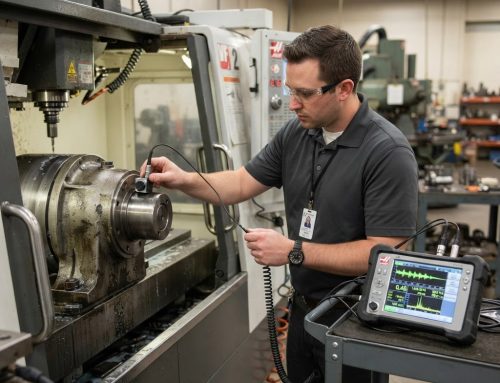
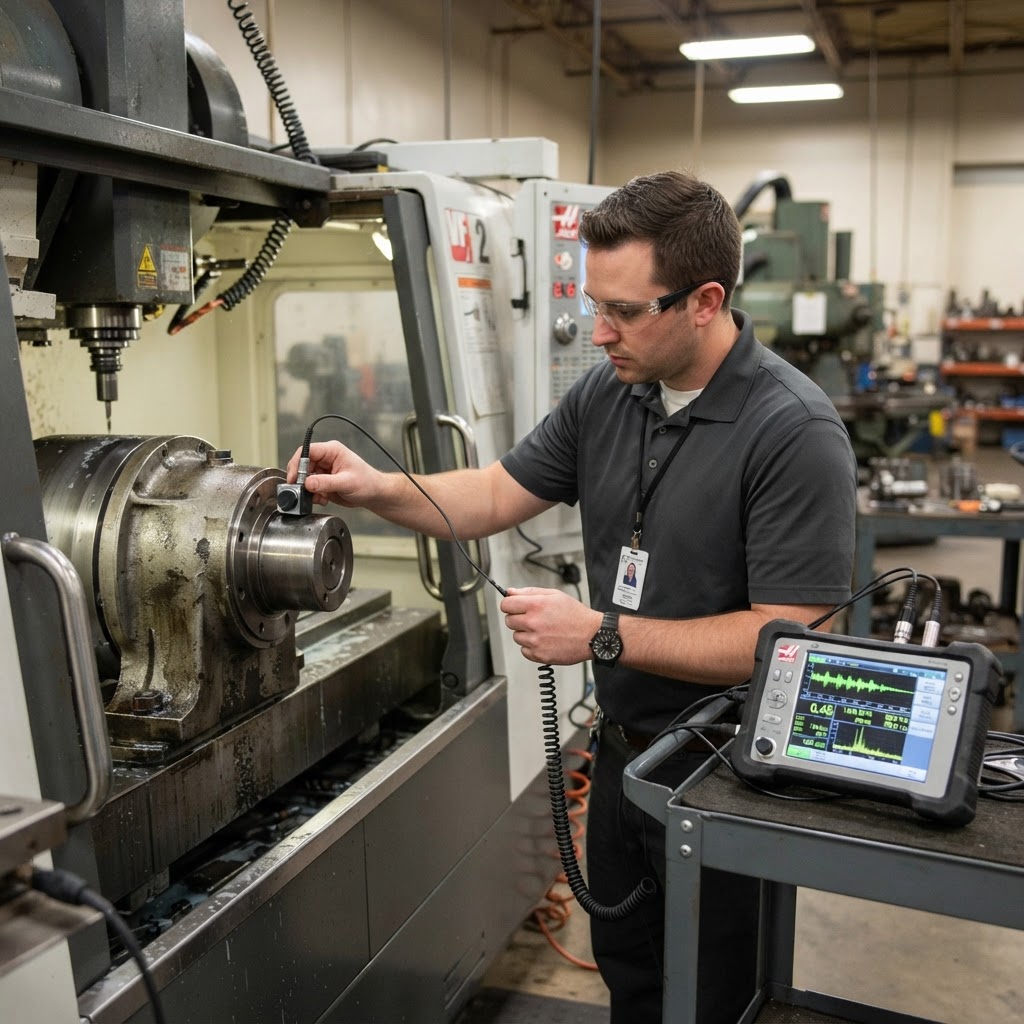
nYou cannot manage what you do not measure. Regularly monitoring your spindle’s physical runout and vibration levels is the best way to catch bearing degradation and misalignment before they cause a catastrophic failure.n
- n
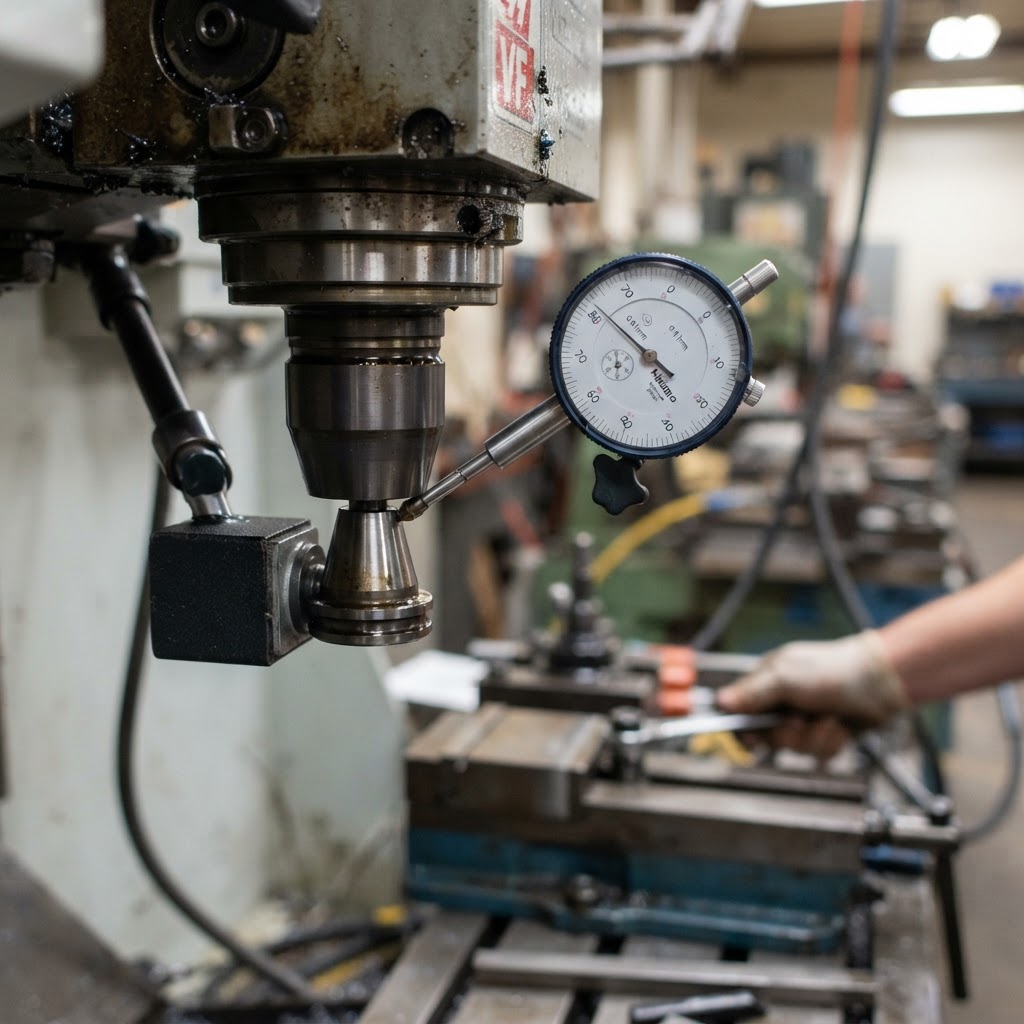
- Runout Testing: Using a high-precision dial indicator (with 0.0001-inch resolution) and a precision ground test arbor, you can measure both radial and axial runout at the spindle taper. Any runout exceeding the manufacturer’s specification (typically less than 0.0002 inches) requires immediate investigation.
- Vibration Analysis: Technicians use specialized vibration analysis tools to measure the amplitude and frequency of spindle vibrations under load. Increases in vibration over time are a definitive indicator of bearing fatigue, spindle unbalance, or structural loosening.
n
n
nn
5. Test Drawbar Pulling Force Regularly
nInside the spindle, a stack of high-strength Belleville spring washers (the drawbar assembly) pulls back on the toolholder retention knob to lock the tool securely into the spindle taper. Over time, these spring washers can fatigue, crack, or lose their tension, resulting in a dramatic drop in drawbar pulling force.nnWhen drawbar force drops, the toolholder can slide and vibrate inside the spindle taper during heavy cuts. This tool slippage causes severe damage to both the toolholder and the expensive internal spindle taper, ruins part tolerances, and can even cause the tool to pull completely out of the spindle during operation. Testing the drawbar pulling force with a specialized force gauge at regular intervals (e.g., every 6 to 12 months) is crucial to catch failing springs before a major accident occurs.nn
Spindle Rebuild vs. Spindle Replacement: Making the Right Choice
nnWhen a CNC spindle finally reaches the end of its useful life or suffers a catastrophic failure, shop owners are faced with a major decision: should they have the spindle rebuilt/repaired, or should they purchase a brand-new replacement spindle?nnThe right choice depends on several factors, including budget, downtime tolerance, and the age of the machine:nn
Option A: Spindle Rebuilding (The Cost-Effective Choice)
nA professional spindle rebuild involves completely disassembling the spindle, thoroughly cleaning all parts, replacing the high-precision bearings and seals, regrinding the internal taper (if worn or damaged), reassembling the unit, and performing dynamic balancing. n
- n
- Pros: A quality rebuild is typically 40% to 60% less expensive than buying a new spindle, and restores the unit to original factory-level performance and precision.
- Cons: Rebuilding can take several days to a week of turnaround time, depending on parts availability and balancing requirements, during which your machine will be down.
n
n
nn
Option B: Spindle Replacement (The Fast Downtime Choice)
nPurchasing a brand-new or factory-remanufactured exchange spindle directly from the machine tool builder (OEM).n
- n
- Pros: This is the fastest way to get your machine back online. The replacement spindle is shipped immediately, and an on-site technician can install it on your machine in a single day.
- Cons: This is by far the most expensive option, often costing double the price of a standard rebuild. It may also be difficult to source new spindles for older, legacy machines.
n
n
nnAt In-House CNC Service LLC, we help you analyze your specific situation, diagnose the extent of your spindle damage, and provide honest, professional recommendations on whether a rebuild or a replacement is the most cost-effective solution for your business.nn
Work with Southern California’s CNC Spindle Experts
nnYour CNC spindle is too valuable and too critical to leave to chance. By implementing a disciplined spindle maintenance routine, emphasizing cleanliness, and scheduling regular professional inspections, you can keep your CNC machinery operating with maximum accuracy, speed, and profitability.nnIf your spindle is making unusual noises, vibrating, showing runout, or if you need expert assistance with a drawbar force test or a complete spindle installation, trust the professionals at In-House CNC Service LLC. Owner Jason Wutzke and his team are dedicated to keeping Southern California’s manufacturing shops running at peak performance.nnContact In-House CNC Service today at (951) 540-4820 to schedule an on-site spindle inspection, calibration, or machine maintenance appointment.