CNC Service Contract vs. On-Demand Repair: Which Is Right for You?
Share Post
Balancing Preventive Maintenance and Emergency Expenditures
n
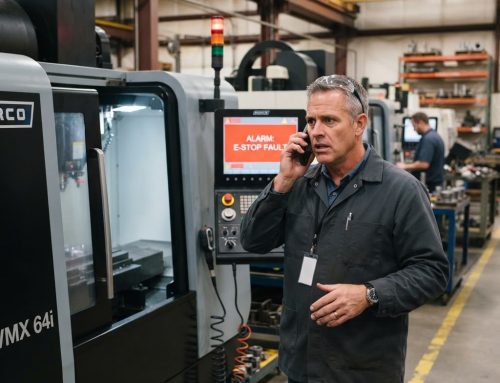
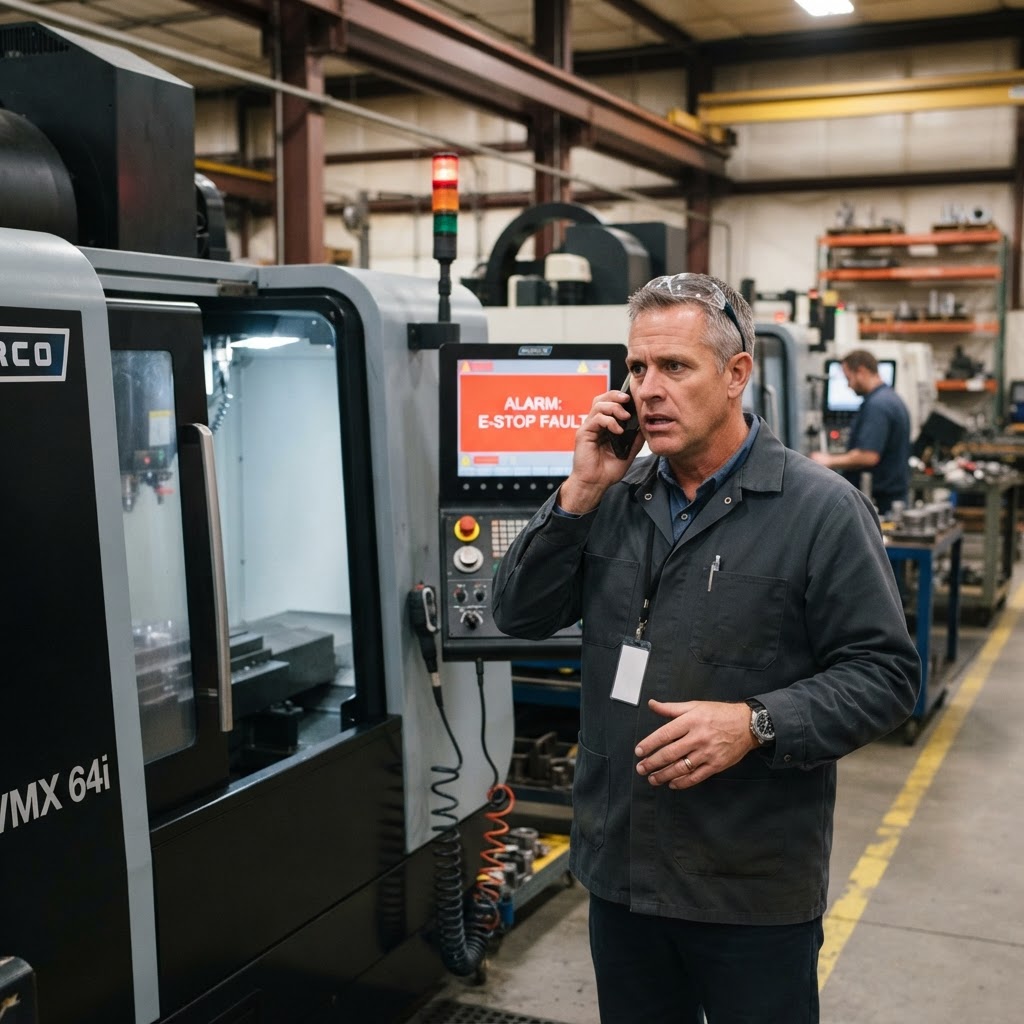
For any machine shop manager, managing maintenance costs is a delicate balancing act. On one hand, you have the daily pressure of keeping machines running to meet tight production deadlines and satisfy your customers. On the other hand, you have the financial reality of maintaining a tight, predictable budget. When a critical machine breaks down, the cost is not just the repair bill—it is the lost production, the stressed operators, the missed delivery windows, and the rush delivery charges for replacement parts. Every component of a machine failure represents a direct hit to your operating capital.
n
This reality raises an important strategic question: Is it better to operate on a CNC service contract model with structured preventive maintenance (PM), or should you rely on on-demand repair services whenever something breaks? Both models have distinct advantages and drawbacks. In this article, we will compare CNC service contracts and on-demand repair, helping you determine which approach is best suited for your shop’s size, volume, and long-term business goals. We will analyze the mathematical and operational differences between these two strategies so you can optimize your maintenance spend.
n
A machine shop is a complex ecosystem of electrical, hydraulic, pneumatic, and mechanical systems. These systems are constantly subjected to heat, friction, high-pressure fluids, and abrasive metal shavings. Over time, components inevitably degrade. The strategy you choose to manage this degradation will dictate not only your maintenance expenses but also the overall lifespan and resale value of your equipment. Let’s delve into the details of both approaches to find the right path for your facility.
nn
Understanding On-Demand CNC Repair: Pros, Cons, and Hidden Stressors
n
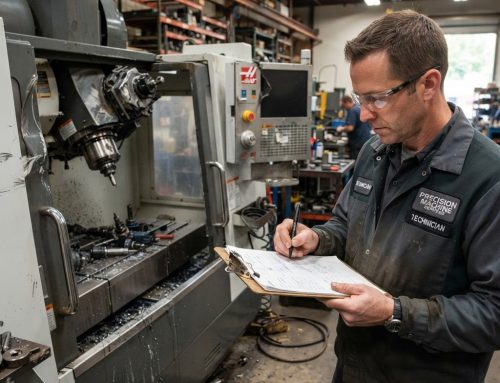
The on-demand, or ‘break-fix,’ model is the most common approach for smaller shops, startups, and facilities with low machine utilization. In this model, you only call a technician when a machine stops working or displays a critical error that your internal team cannot resolve.
n
The Pros:n
- n
- Zero Upfront Cost: You do not pay anything when your machines are running fine. There are no monthly or quarterly fees to worry about, allowing you to run a very lean operation during busy months.
- Capital Flexibility: For a young shop, keeping cash flow liquid is critical. On-demand repair lets you allocate capital to materials, tooling, or payroll, only spending on maintenance when absolutely forced to.
n
n
nThe Cons:n
- n
- Unpredictable Expenses: A major failure, like a spindle bearing failure or a fried CNC control board, can cost thousands of dollars unexpectedly, throwing off your monthly budget and hurting cash flow.
- Extended Downtime: When a machine breaks down unexpectedly, you must find an available technician, diagnose the issue, order parts, and wait for the repair. This can lead to days or weeks of costly downtime.
- Accelerated Machine Wear: Without regular maintenance, small issues like minor lubrication blockages or loose belts go unnoticed, eventually turning into major, expensive failures that could have been easily prevented.
n
n
n
n
nn
The Mechanics of a CNC Service Contract: What Is Included?
n
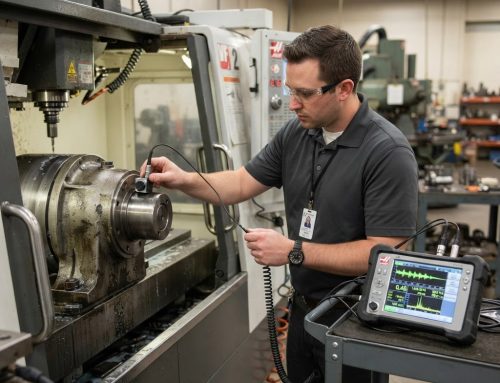
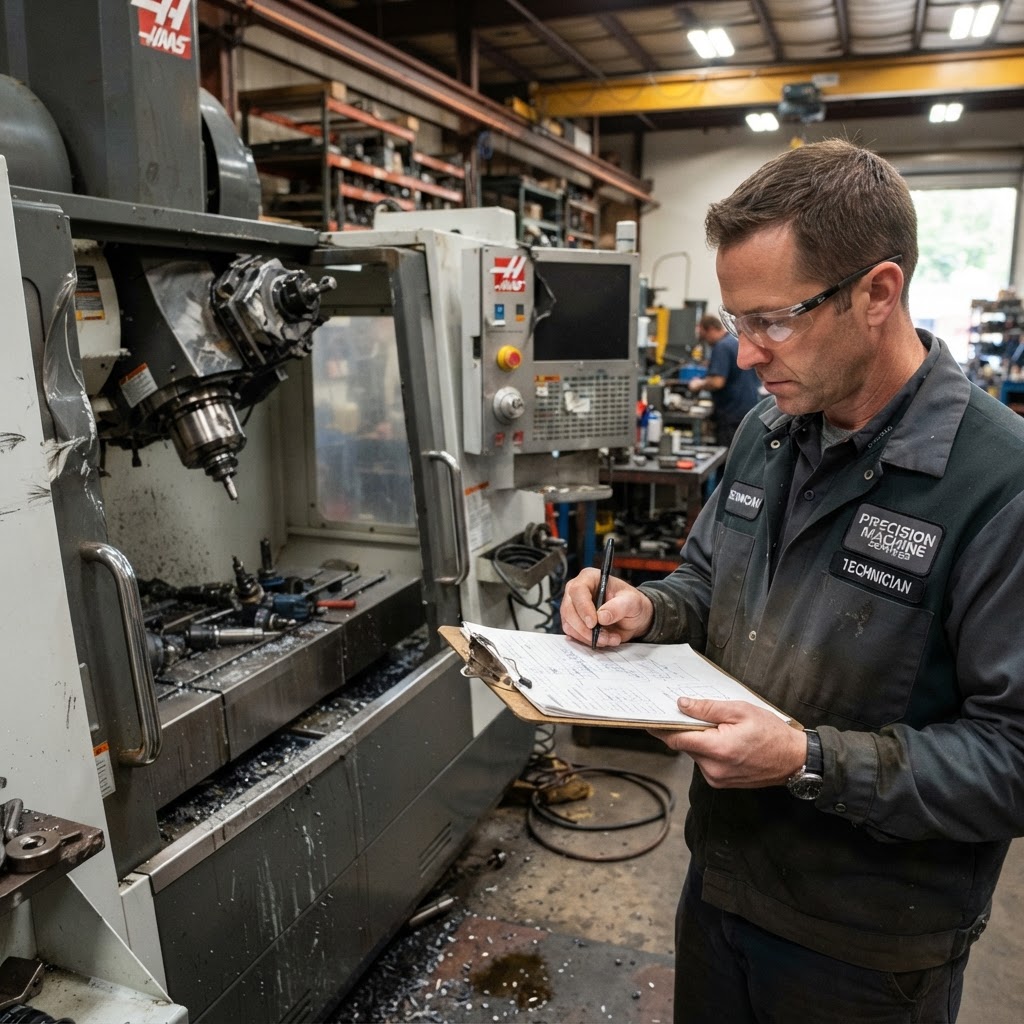
A CNC service contract is a proactive agreement with a professional maintenance provider. Instead of waiting for a machine to fail, you schedule regular, structured maintenance visits. These visits are designed to keep your machines in peak operating condition and catch potential issues before they cause a breakdown.
n
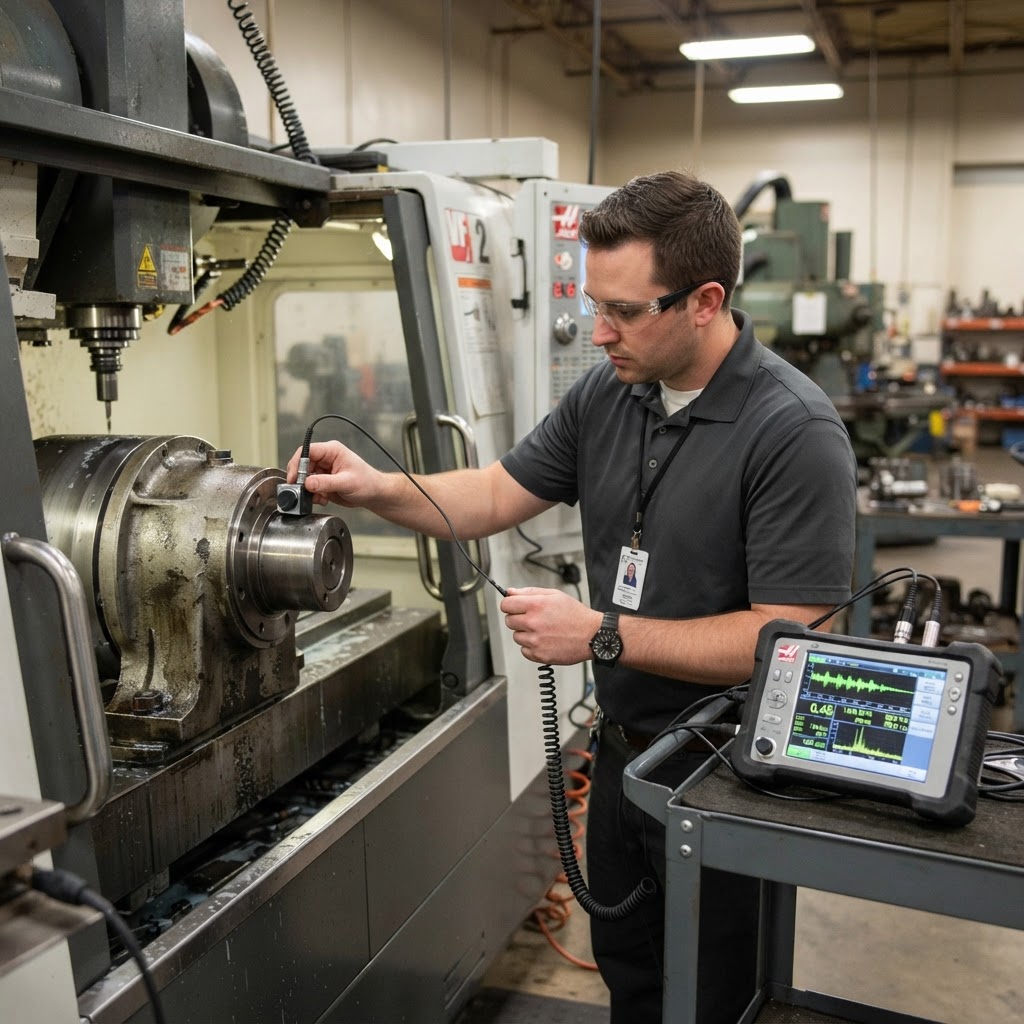
A high-quality Preventive Maintenance (PM) contract with In-House CNC Service LLC includes a comprehensive multi-point checklist that covers every system on the machine:n
- n
- Fluid and Filter Service: We check and replace hydraulic filters, pneumatic regulators, cooling fans, and electrical cabinet air filters to prevent overheating, low-pressure faults, and contamination.
- Way Lube and Lubrication Inspection: We verify that the automatic lubrication system is pumping the correct volume of oil to all linear guide trucks and ballscrew nuts, flushing any blockages, testing metering valves, and cleaning the lines.
- Backlash and Geometry Calibration: We measure axial backlash in the X, Y, and Z axes, adjusting parameters, leveling the machine, or adjusting gibs to restore accuracy and reduce mechanical wear.
- Spindle and Motor Testing: We check spindle drawbar force, monitor spindle bearing temperatures, inspect belts for cracking, and check servo motor couplings for play.
- Electrical Cabinet Cleaning: We vacuum dust, tighten loose terminal connections, verify power supply voltages, and test safety circuit interlocks to prevent electrical shorts and control system crashes.
n
n
n
n
n
n
nn
Financial Comparison: Predictable Flat-Rate Contracts vs. Spikes in Repair Budgets
n
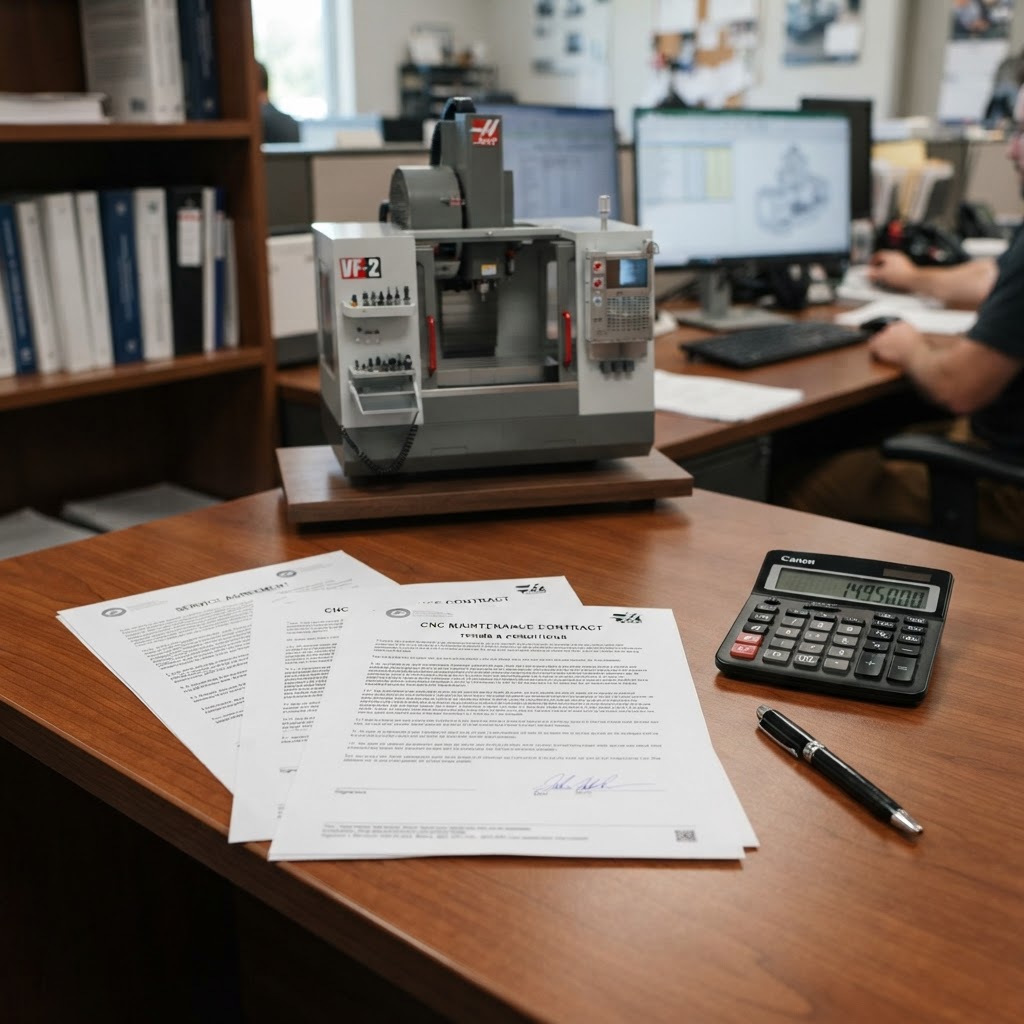
From a financial perspective, the two models represent different ways of managing risk. A CNC service contract offers highly predictable, flat-rate costs. You know exactly what your maintenance budget will be for the year, allowing you to price your machining jobs accurately and maintain stable cash flow. You can run your business with the peace of mind that comes from knowing there are no major, unbudgeted maintenance surprises waiting around the corner.
n
In contrast, the on-demand model is highly volatile. You might go six months with zero repair expenses, only to hit a string of bad luck where three machines fail in the same month. This can lead to sudden cash flow crises, especially if you have to pay emergency travel fees and rush parts shipping to meet a critical delivery deadline. A service contract smooths out these financial spikes, converting unpredictable emergency costs into a predictable, manageable operational expense. Over a three-to-five-year period, shops on a service contract almost always spend less overall on maintenance because they avoid the massive costs associated with catastrophic mechanical failures.
nn
Analyzing the Downtime Vector: How PM Prevents 80% of Emergency Failures
n
Studies across the manufacturing industry show that structured preventive maintenance can prevent up to 80% of sudden mechanical and electrical failures. Consider how a simple PM task saves you from a massive repair bill:n
- n
- The PM Scenario: During a scheduled visit, our technician notices a small tear in an axis way cover and a minor drop in the automatic lubrication pressure. We patch the cover and replace a worn-out lubrication manifold for a few hundred dollars. The machine continues running flawlessly, holding tight tolerances day in and day out.
- The Break-Fix Scenario: Without regular inspection, the torn way cover goes unnoticed. Metal chips enter the linear guides, and the lack of lubrication causes the ballscrew to overheat and seize. The machine crashes, requiring a new ballscrew, new linear guides, and days of rigging and alignment—costing thousands of dollars and shutting down production for a week.
n
n
nBy investing a small, predictable amount in preventive maintenance, you avoid the catastrophic, unpredictable costs of major emergency repairs and keep your spindle turning.
nn
Which Model Fits Your Shop?
n
The right choice depends on your shop’s unique operating profile, volume, and redundancy. Here is a quick guide to help you decide:n
nChoose On-Demand Repair if:n
- n
- You run a small, low-volume shop with multiple redundant machines that can take over if one fails.
- Your production schedules are highly flexible, and a down machine does not cause immediate financial penalties or strain client relationships.
- You have an experienced in-house maintenance technician who can handle basic daily servicing and minor electrical issues.
n
n
n
nChoose a Service Contract if:n
- n
- You run high-volume, continuous production where a down machine halts your entire line and stops shipping.
- You operate complex, high-end machines (like 5-axis mills or multi-tasking turning centers) that require highly specialized calibration and testing.
- You want predictable, flat-rate maintenance costs to protect your cash flow and simplify your annual budgeting.
n
n
n
n
nn
In-House CNC Service LLC: Custom PM Programs and On-Demand Support in SoCal
n
At In-House CNC Service LLC, we believe that maintenance is not one-size-fits-all. Based in Menifee, CA, and led by Jason Wutzke, we offer both top-tier emergency on-demand repair and highly customized preventive maintenance contracts for machine shops across Southern California.
n
Our PM contracts are tailored to your specific machines, production volume, and budget. We work around your production schedules, offering evening or weekend maintenance visits to ensure your daily output is never disrupted. Whether you need a one-time emergency repair or a comprehensive, year-round maintenance partner, In-House CNC has the technical expertise and local availability to keep your shop running at peak efficiency.
n
Protect your investment and eliminate the stress of sudden machine failures. Contact In-House CNC Service LLC today at (951) 540-4820 or visit in-housecnc.com to discuss our customizable service contracts and professional on-site repair options. We keep Southern California’s machining industry running strong.