CNC Machine Troubleshooting: Common Problems and How to Fix Them
Share Post
CNC Machine Troubleshooting: A Professional Guide to Diagnosing Common Shop Floor Issues
On a busy manufacturing floor, time is money. Every minute a CNC machine sits idle due to an unexplained error is a minute of lost production, delayed shipments, and mounting stress. While some complex mechanical or electronic failures absolutely require a certified field technician, many common CNC issues can be identified and even resolved by operators or maintenance staff with the right diagnostic approach. This comprehensive guide covers key strategies for CNC machine troubleshooting, detailing common axis alarms, spindle faults, and servo errors, while helping you determine when to troubleshoot in-house and when to call in the professionals.
1. Troubleshooting Axis Alarms and Travel Errors
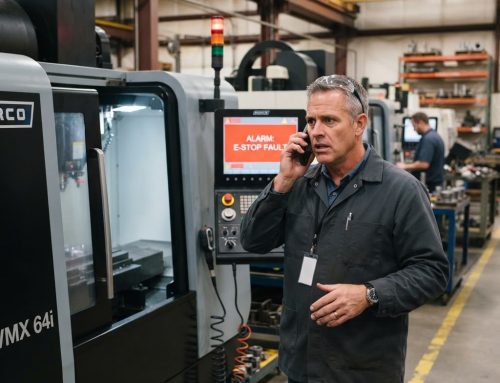
Axis alarms are among the most common errors operators encounter. They typically occur when the controller detects a deviation between where the machine is told to go and where it actually is, or when the physical limits of travel are exceeded.
- Overtravel Alarms (Hard and Soft Limits): These occur when an axis travels beyond its safe operating envelope. Operator Check: Many machines have a physical bypass button or manual handwheel override that allows the operator to carefully jog the axis back into the safe zone.
- Backlash and Positioning Errors: If parts are coming off the machine out-of-round or with dimensional errors, the culprit is often mechanical backlash in the ballscrew or worn linear guide bearings. Operator Check: Inspect the axis for physical obstructions, loose mounting bolts, or signs of lubrication failure.
2. Diagnosing Spindle Faults
The spindle is the heart of the machining center. When it fails to run, runs loud, or overheats, production comes to a complete halt.
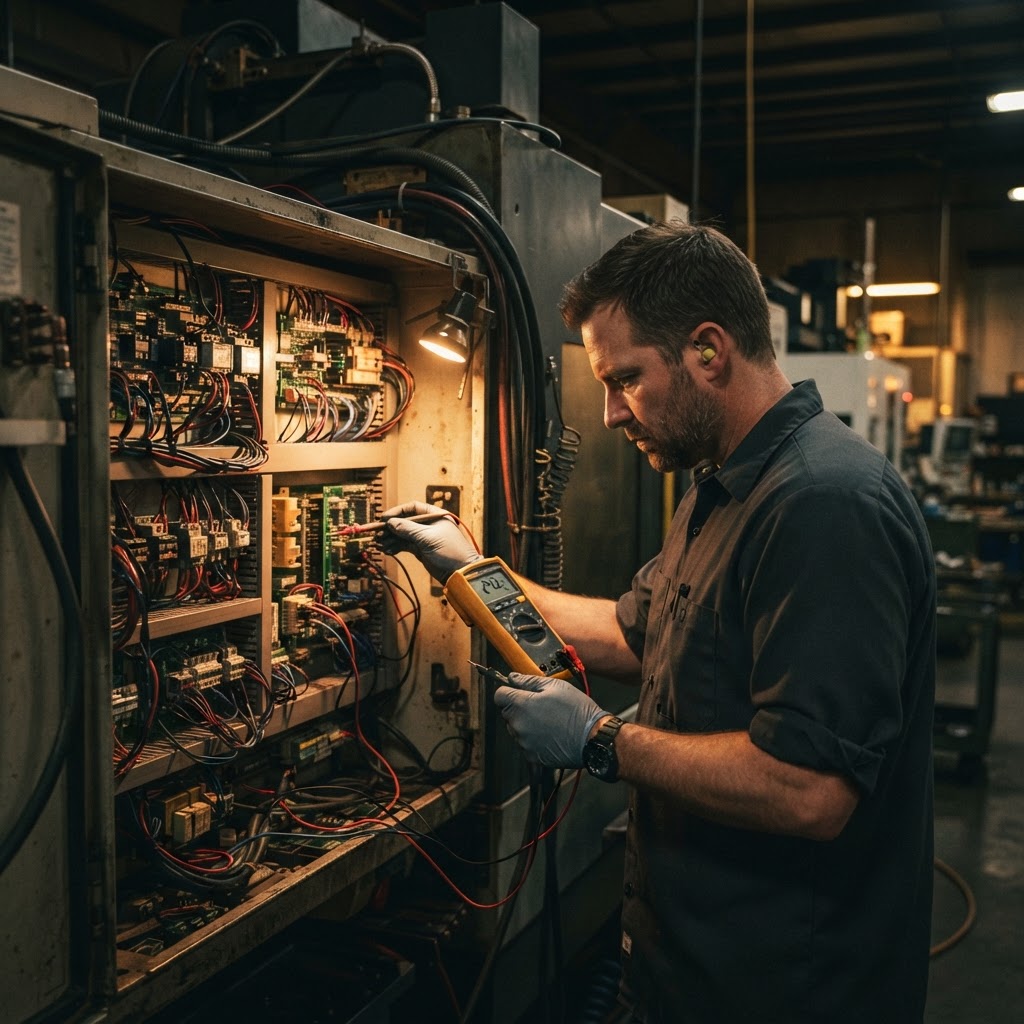
- Spindle Drive or Amplifier Alarms: Often displayed as overcurrent, overload, or phase loss errors on the controller screen. Operator Check: Verify that the spindle tool release pneumatics are working correctly, and check the electrical cabinet cooling fans. Overheating in the electrical cabinet is a primary cause of drive trips.
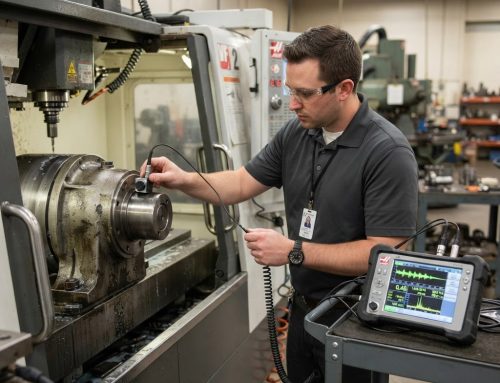
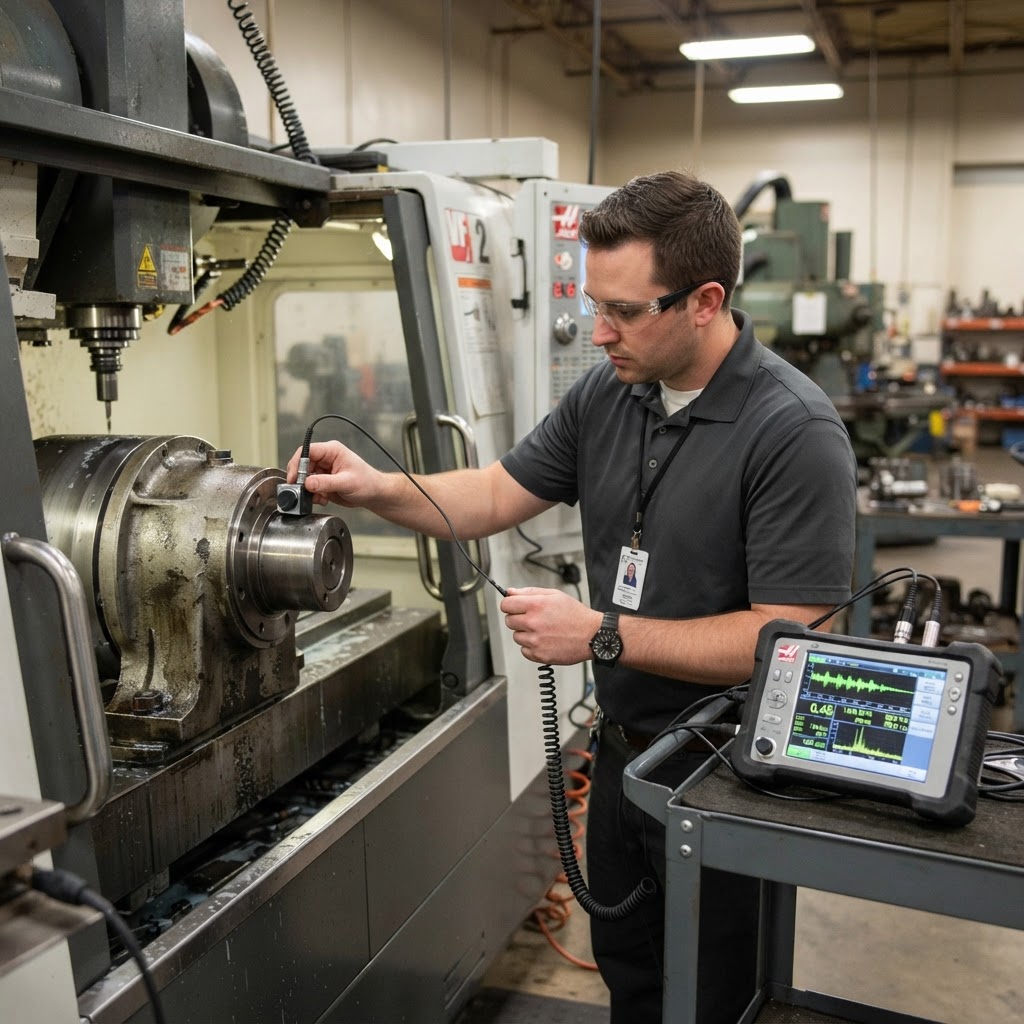
- Excessive Vibration and Noise: A noisy spindle is a clear sign of bearing fatigue, spindle shaft runout, or tool unbalance. Operating a noisy spindle will ruin surface finishes and can lead to a catastrophic spindle lockup.
3. Understanding Servo Drive Errors
Servo drives control the precise positioning and speed of each axis. On systems like FANUC or Haas, these drives communicate directly with the control, throwing diagnostic codes when they detect a fault.
- FANUC Servo Alarms (e.g., Alarm 401, 414): Typically point to a servo drive disconnection, overload, or an absolute encoder battery voltage drop. Operator Check: Check the backup batteries on the amplifier module. If battery voltage is low, swap them out while the machine is powered ON to prevent parameter loss.
- Haas Alarm References (e.g., Alarm 103, 161): These alarms often point to axis servo overcurrent or a short circuit. Operator Check: Check the physical axis for binding, ensure the way lube pump is delivering oil to the guideways, and check that the cable connections to the servo motor are secure and dry of coolant.
Operator Checks vs. Calling a Professional Technician
To maximize safety and avoid worsening a machine problem, it is vital to know where operator troubleshooting should stop and professional diagnostic service must begin:
| Issue Category | In-House Operator Check | Call Professional Service |
|---|---|---|
| Lubrication | Check lube level, clean reservoirs, inspect lines for cuts. | Replace metering valves, rebuild oil pumps, clear internal blockages. |
| Electrical | Check external circuit breakers, cabinet cooling fans, backup batteries. | Replace servo amplifiers, diagnose board-level faults, restore parameter backups. |
| Mechanical | Clear chips, tighten visible external hardware, adjust way wipers. | Realign spindles, replace ballscrews or linear guide rails, level machine. |
Professional On-Site CNC Repair in Southern California
When in-house troubleshooting is not enough, In-House CNC Service LLC is here to help. Located in Menifee, CA, and owned by expert technician Jason Wutzke, we provide Southern California with rapid, highly reliable on-site CNC diagnostics and repairs. We carry the advanced diagnostic equipment, mechanical tooling, and technical expertise required to solve your toughest CNC problems, reducing your downtime and restoring factory-grade precision to your machinery.
Stuck on a difficult CNC alarm or mechanical issue? Contact Jason Wutzke at (951) 540-4820 or visit In-House CNC Service to schedule an experienced on-site diagnostic consultation.