How to Find a CNC Machine Repair Shop: The Complete Resource Guide
Share Post
How to Find a CNC Machine Repair Shop: The Complete Resource Guide
What Is CNC Machine Repair?
CNC machine repair encompasses all the diagnostic, corrective, and restorative work required to return a non-functioning or underperforming CNC machine to full operational specification. This ranges from diagnosing and replacing a failed servo drive to rebuilding a spindle assembly, correcting axis geometry, or resolving controller software faults.
Unlike general mechanical repair, CNC machine repair requires expertise across three intersecting disciplines: mechanical systems (ballscrews, linear guides, spindles, gearboxes), electrical systems (servo drives, power supplies, encoders, wiring), and control systems (FANUC, Haas, Mazak, Siemens, Mitsubishi controllers). A technician who is strong in only one area will diagnose incorrectly or incompletely.
The Most Common CNC Machine Faults and Their Causes
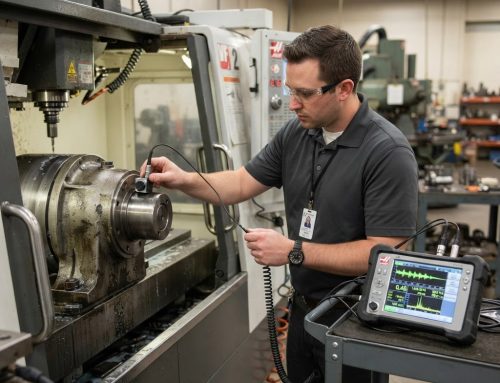
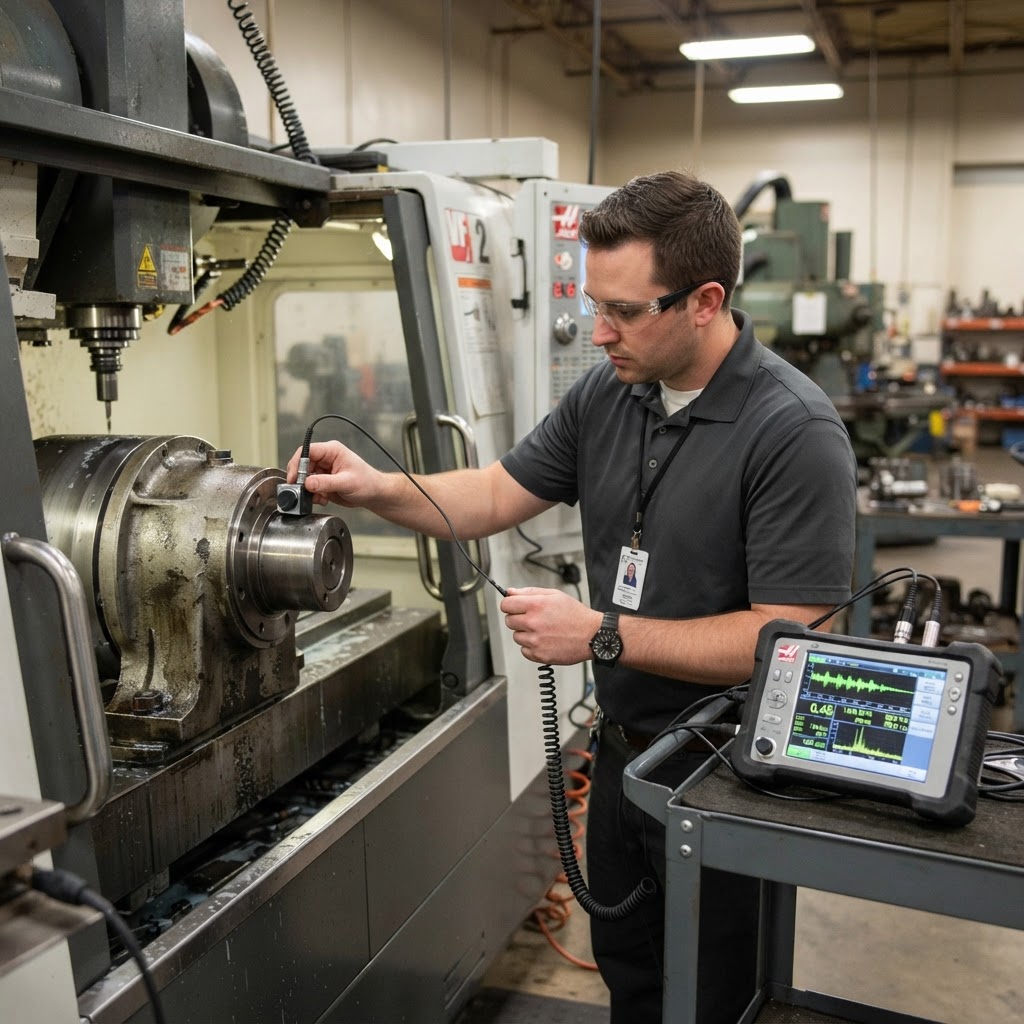
Spindle faults are among the most frequent and most disruptive CNC failures. They are caused by bearing wear, contamination from coolant or chips entering the spindle bore, thermal damage from running without adequate coolant, or impact from tool crashes. Spindle faults typically manifest as vibration, noise, runout, or outright failure to rotate.
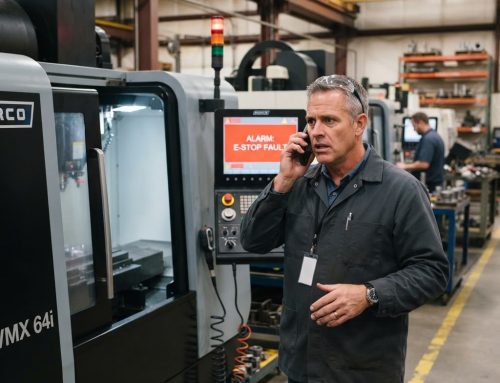
Axis faults — servo alarms, positioning errors, axis drift — are the second most common fault category. Root causes include encoder failure, servo drive degradation, ballscrew wear, linear guide contamination, and loose or broken wiring in the axis drive circuit. Controller alarms, which reference specific fault codes in the machine manual, are the starting point for any axis diagnosis.
On-Site vs. Ship-Out Repair: What You Should Know
The traditional model of CNC repair — where a machine is disassembled and shipped to a service center — is appropriate for specialized spindle rebuilds, major retrofits, and component rebuilds that require a controlled shop environment. For the majority of CNC faults, however, on-site repair is faster, less expensive, and lower-risk.
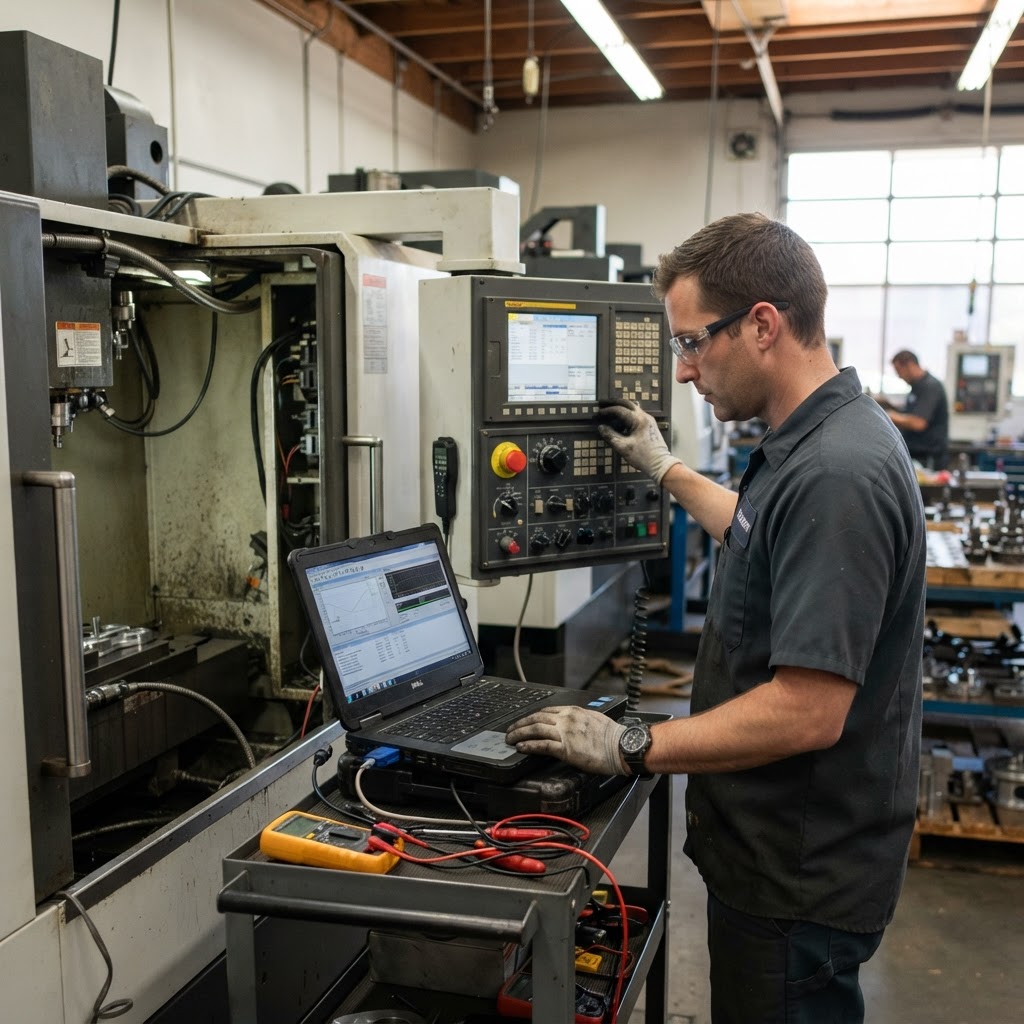
On-site repair eliminates shipping time, transit damage risk, and the operational disruption of moving a heavy machine. A qualified on-site technician can diagnose and resolve most drive faults, controller issues, axis problems, and routine mechanical failures at your facility — often on the same day.
How to Prepare for a CNC Repair Service Call
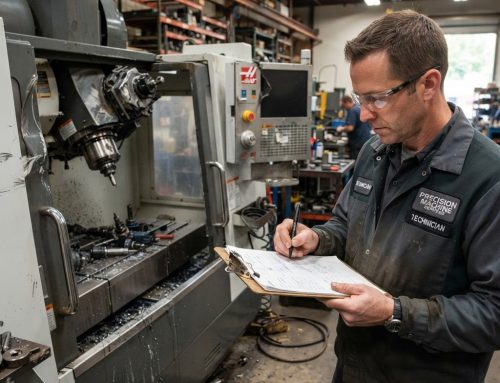
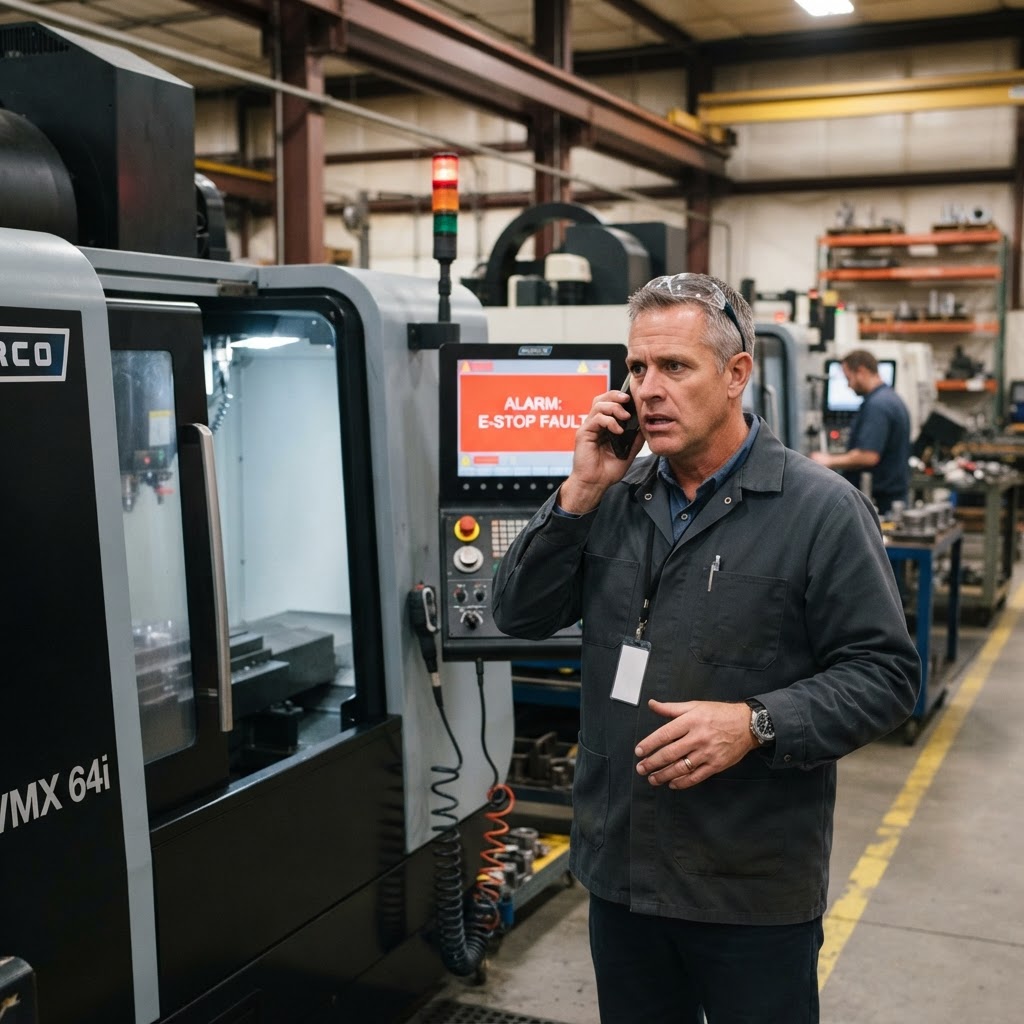
Before a technician arrives, document the fault completely: write down all alarm codes, take photos of any error messages on the controller display, and note any unusual behavior that preceded the failure — sounds, vibration, axis movement anomalies. Gather the machine manual if available. Clear access to the machine and electrical cabinet.
Provide the technician with your maintenance history if you have one. Recent services, previous repairs, and any changes to tooling or programming can all be relevant to diagnosing the current fault. The more context you provide, the faster the diagnosis.
Understanding CNC Repair Costs
CNC repair costs vary based on the type of fault, the machine brand, the complexity of the repair, and whether parts replacement is required. A straightforward drive fault diagnosis and parameter restore might cost a few hundred dollars. A spindle rebuild on a high-speed machining center can run several thousand. A full ballscrew replacement with calibration on a large machining center falls in between.
Any reputable CNC repair provider should be able to give you a diagnostic fee for the initial assessment and a clear written quote before any repair work begins. Be cautious of providers who quote a repair before diagnosing, or who present a bill significantly higher than the quoted amount without prior approval.
Preventative Maintenance: The Most Cost-Effective CNC Strategy
The most reliable way to reduce CNC repair costs is to prevent failures before they occur. A structured preventative maintenance program — covering lubrication, calibration, mechanical inspection, and electrical health checks — can extend machine life by years and dramatically reduce the frequency and severity of unplanned breakdowns.
Southern California manufacturers who operate their machines on double or triple shifts are particularly at risk from deferred maintenance. High utilization accelerates wear rates, and a maintenance program calibrated to actual machine usage — not calendar time alone — is essential for protecting that investment.
Choosing the Right CNC Repair Partner in California
The right CNC repair partner is one who knows your equipment, responds when you need them, communicates clearly throughout the repair process, and backs their work with a documented warranty. They should be able to name their experience with your specific controller platform, provide references from similar manufacturing environments, and demonstrate a structured diagnostic process.
In-House CNC Service provides on-site CNC repair, maintenance, and calibration to manufacturers throughout Southern California. Our technicians are trained across FANUC, Haas, Mazak, Okuma, Siemens, and Mitsubishi platforms. Contact us to discuss your equipment and establish a service relationship before your next machine-down event.
Your CNC Machine Can't Wait. Neither Can We.
In-House CNC Service dispatches certified technicians directly to your facility across Southern California. No shipping. No guesswork. Just expert repair that gets you back online. According to the Association for Manufacturing Technology, proactive CNC maintenance significantly reduces unplanned manufacturing downtime.