Metal Lathe Cutting Tools: Materials, Wear Patterns, and Longevity
Share Post
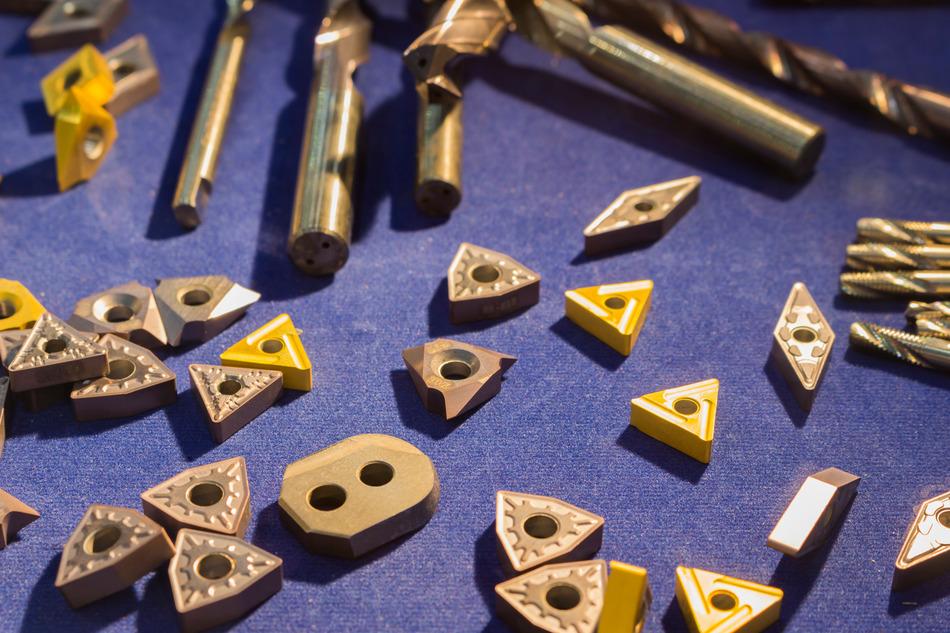
The cutting tool is the last point of contact between the machine and the part. Everything upstream — the spindle, axes, control, workholding — exists to position that cutting edge precisely and move it through the material at the correct speed and feed. When cutting tool condition degrades, part quality suffers immediately: dimensions drift, surface finish deteriorates, and tool pressure increases in ways that stress the machine’s mechanical systems. Understanding cutting tool materials, wear patterns, and replacement timing is essential knowledge for any Southern California machine shop running production turning operations.
Cutting Tool Material Types
Carbide
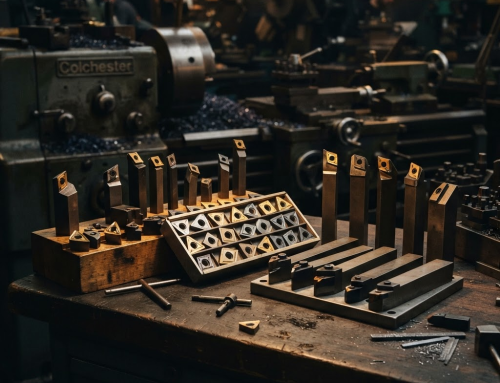
Tungsten carbide inserts are the standard for CNC lathe operations in modern production environments. Carbide’s hardness — typically 1,500–1,800 HV — allows it to maintain a sharp edge at the elevated temperatures generated by high-speed cutting. Carbide inserts come in multiple grades: uncoated grades for aluminum and non-ferrous materials, and coated grades (TiN, TiCN, TiAlN, or AlTiN coatings) for steel, stainless, and hardened materials.
The correct carbide grade for the material and operation is not optional — running the wrong grade degrades tool life dramatically and often produces inferior surface finish.
High-Speed Steel (HSS)
HSS tooling is largely confined to form tools, thread chasers, and applications requiring a geometry that’s impractical in carbide insert form. HSS can be reground to restore the cutting edge, making it cost-effective for specialized applications. However, HSS’s lower hot hardness limits it to lower cutting speeds than carbide.
Ceramic
Ceramic cutting tools are used for high-speed finishing of cast iron, hardened steels, and superalloys. Operating at surface speeds 3–5x higher than carbide, ceramics excel in applications where their brittleness can be managed with rigid setups and consistent material hardness. Not appropriate for interrupted cuts or unstable setups.
CBN (Cubic Boron Nitride)
CBN tooling is the standard for hard turning — cutting hardened steels above 45 HRC. CBN’s extreme hardness allows it to cut material that would immediately destroy carbide, often replacing grinding operations with turning. CBN inserts are expensive but deliver exceptional tool life in appropriate applications.
Wear Patterns and What They Tell You
Cutting tool wear patterns are diagnostic. Each wear mode has a cause, and identifying the pattern points directly to the corrective action:
- Flank wear: Gradual wear on the tool’s clearance face. Normal wear mode for most operations — tool life ends when flank wear reaches 0.3mm (finishing) or 0.6mm (roughing). Extend life by optimizing cutting speed.
- Crater wear: Depression on the rake face caused by chip abrasion. Indicates excessive cutting temperature — reduce speed or switch to a grade with better hot hardness.
- Built-up edge (BUE): Workpiece material welded to the cutting edge, common in aluminum, low-carbon steel, and stainless at low cutting speeds. Increase surface speed or switch to an uncoated or PVD-coated grade.
- Chipping: Small fractures on the cutting edge. Indicates interrupted cut, excessive feed, or tool overhang — reduce feed or use a tougher grade.
- Notch wear: Accelerated wear at the depth-of-cut line. Common in work-hardening materials like stainless. Vary depth of cut or use a grade with greater toughness.
- Catastrophic failure: Complete fracture of the insert. Usually caused by running a worn tool past its limit, excessive vibration, or an incorrect grade for the application.
When to Replace vs. Resharpen
For indexable carbide inserts, the answer is straightforward: index to a fresh edge when wear limits are reached, replace the insert when all edges are used. There’s no resharpening of carbide inserts in a production context.
For brazed carbide tools, HSS toolbits, and form tools, resharpening is an option — but it requires the right equipment and technique. Improper grinding of carbide creates subsurface cracks that cause premature failure. We recommend identifying a qualified tool grinding service for any tooling that’s worth resharpening rather than attempting it in-house without proper equipment.
How Cutting Tool Condition Affects Machine Health
Running worn tooling doesn’t just produce bad parts — it stresses the machine. A dull insert generating 50% more cutting force than a sharp one is loading the spindle bearings, ballscrews, and linear guides with loads they weren’t designed to carry continuously. Over time, running worn tooling accelerates mechanical wear in ways that show up as expensive repairs.
This is one of the reasons In-House CNC Service includes tool condition checks in our preventative maintenance visits — not because we’re tooling experts, but because we’ve seen the mechanical consequences of chronic dull-tool operation too many times. A conversation about tooling change intervals sometimes saves a client a ballscrew replacement six months later.
How In-House CNC Service Supports Your Lathe Operations
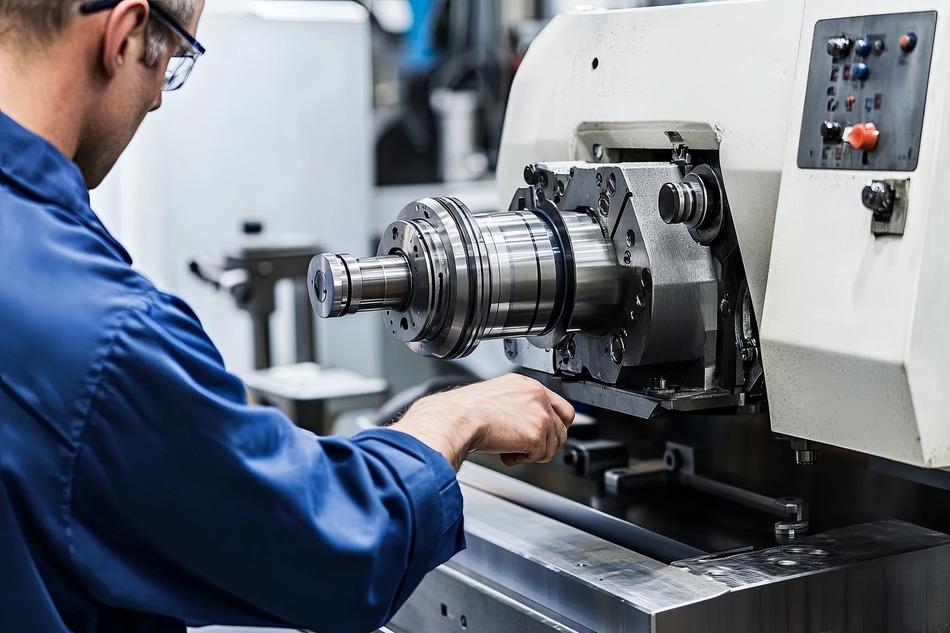
Our field technicians service lathes across the full spectrum — manual engine lathes, CNC turning centers, Swiss-style lathes, and multi-axis turning and milling centers. We address the mechanical systems that tooling condition affects: spindle bearings, turret indexing accuracy, tailstock alignment, and axis geometry. When a lathe’s mechanical condition is optimized, tooling performs as designed.
Explore our full range of CNC lathe services, or contact In-House CNC Service today to schedule a lathe inspection or maintenance visit across Southern California.
A Final Note on Tool Tracking
The shops that get the best tool life and most consistent part quality are the ones that track tool usage. Whether it’s a simple spreadsheet logging parts-per-edge or a more sophisticated tool life management feature in the CNC control, knowing when a tool has reached its expected life — rather than waiting for it to tell you by breaking or making a bad part — is the single highest-leverage improvement most shops can make to their cutting tool program.