Upgrading Your CNC Machine: Key Considerations and Benefits
Share Post
In the highly competitive manufacturing corridors of Southern California, keeping your business profitable requires a constant focus on efficiency, cycle times, and part quality. As your CNC machines age, they inevitably lose precision, require more frequent maintenance, and struggle to keep pace with the faster processing speeds and advanced features of newer controls. This operational bottleneck leads every successful shop owner in Los Angeles, Orange County, Riverside, San Diego, or the Inland Empire to a critical crossroad: is it time to invest in upgrading your CNC machine, or does it make more financial sense to perform a high-quality repair on your existing equipment? Navigating this repair-versus-upgrade dilemma requires a careful evaluation of your machine’s structural health, your production goals, and the financial impact of each option.
The Repair vs. Upgrade Dilemma: Analyzing the Options
When a CNC machine tool begins to show signs of wear—such as increased backlash, poor surface finish, or frequent electrical faults—your immediate reaction might be to call for a quick patch. However, recurring minor repairs can quickly add up to a significant financial burden, while failing to address underlying structural issues only delays an inevitable breakdown. To make the smartest operational decision, you must evaluate both pathways thoroughly.
The Case for Repairing Your Existing Machinery
Repairing your current CNC machine is often the fastest way to restore production and is highly cost-effective when the core casting, linear guides, and control systems are structurally sound. For instance, if your machine is experiencing surface finish issues due to spindle bearing wear, a professional spindle rebuild and replacement can restore the machine to factory-level performance for a fraction of the cost of a new machine or a full system upgrade. Similarly, replacing worn-out ball screws, rebuilding way covers, or replacing faulty axis drives can extend the life of a reliable machine by several years, allowing you to maximize the return on your initial capital investment.
This repair-focused route is highly appealing to shops that have highly trained operators who are already deeply comfortable with the existing control layout. By repairing the machine rather than replacing or heavily modifying its user interface, you completely eliminate the learning curve and potential drops in productivity that occur when operators must master new software, button layouts, and parameter structures. It is a highly predictable, stable way to maintain your current production levels.
The Case for Upgrading Your CNC Machine
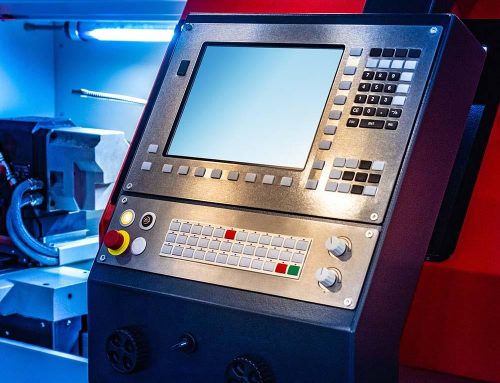
Upgrading your CNC machine—whether through control retrofits, adding 4th or 5th axis capabilities, upgrading to high-speed spindles, or installing high-precision scale feedback systems—is the preferred path when your existing mechanical frame is in excellent condition but your technology is holding you back. An upgraded control system can drastically reduce block processing times, allowing you to run modern, high-speed machining paths with complex coordinates without “starving” the machine. Upgrading also eliminates the risk of control parameter loss, improves operator ergonomics, and adds modern connectivity features that make program transfers seamless.
Furthermore, upgrading allows you to take full advantage of modern tooling and advanced cutting strategies, such as trochoidal milling or high-speed adaptive clearing. These strategies rely on high spindle RPMs and rapid feedrates to maintain a constant tool load, which older CNC controls simply cannot process fast enough. Upgrading can transform an older, slow machine into a competitive high-speed mill, dramatically reducing your cycle times and allowing you to output more parts per shift without expanding your physical shop footprint.
Key Considerations Before Making a Decision
Before committing your capital budget to either a major repair or an upgrade, you must analyze several technical and operational factors:
- Mechanical Foundation: Is the machine’s physical iron (the cast base, column, and ways) in good condition? If the structural castings are worn or cracked, upgrading the electronics is a waste of capital, as the machine will never regain its structural accuracy.
- Production Requirements: Are your customers demanding tighter tolerances, complex geometries, or faster turnaround times? If your current machine’s physical limits (such as maximum spindle speed or axis feedrates) prevent you from quoting on lucrative new jobs, an upgrade or replacement is necessary.
- Component Availability: Are replacement parts for your older control or drive systems still readily available? If your machine relies on obsolete electronics that can only be sourced as used parts from online auctions, upgrading to a modern, supported system is vital to prevent extended downtime during a future failure.
- Financial ROI: What is the payback period for each option? Calculate the cost of the repair or upgrade against the projected increase in machine uptime, reduced scrap rates, faster cycle times, and the potential to win new business.
Our Assessment Process: How In-House CNC Service Guides Your Decision
At In-House CNC Service, led by founder Jason Wutzke and based in Menifee, CA, we believe that making the right choice between repairing and upgrading must be based on objective, high-quality data. We do not offer generic recommendations or try to sell you services you do not need. Instead, we provide a rigorous, transparent on-site assessment process designed to give you a clear, unbiased picture of your machine’s condition.
When you contact us to evaluate an aging machine, our technical team conducts a comprehensive diagnostic evaluation:
- Geometric and Structural Alignment Audit: We check the machine’s physical leveling, squareness, and axis geometry using precision dial indicators, test arbors, and alignment blocks. This tells us if the machine’s structural foundation is capable of maintaining precision.
- Backlash and Wear Analysis: We measure the mechanical backlash on all axes and inspect the ball screws, support bearings, and linear guides for physical wear, pitting, or lubrication failure.
- Electrical and Control Diagnostics: We inspect the electrical cabinet, test the power supplies, check drive temperatures, and evaluate the overall health and reliability of your control system.
- Operational Discussion: We sit down with your shop manager and lead operators to discuss your production goals, material types, and cycle times. We want to understand what you need from the machine to ensure your business remains highly competitive in the Southern California market.
Based on this detailed assessment, we present you with a comprehensive report outlining the exact condition of your machine, along with tailored recommendations and transparent cost estimates for both the repair and upgrade paths. This detailed analysis ensures that you can make your capital investment decisions with complete confidence.
The Long-Term Benefits of Choosing the Right Path
Making the correct decision between repair and upgrade has a profound impact on your shop’s long-term profitability. If you choose a high-quality repair with In-House CNC Service, you quickly restore your machine’s original accuracy and productivity, minimizing downtime and avoiding the disruption of learning a new control system. We support this path with our dedicated on-site CNC machine repair and maintenance services, ensuring that your repaired machine remains reliable for years to come.
On the other hand, if our assessment shows that upgrading your CNC machine is the smarter path, the benefits can be transformative. An upgraded machine tool operates with higher reliability, faster processing speeds, and superior diagnostic capabilities. Your operators can utilize modern programming techniques, reduce setup times, and run complex parts with fewer manual interventions. Whichever path you choose, establishing a structured preventative maintenance contract with us is the best way to protect your newly restored or upgraded machine, ensuring it continues to deliver peak performance and maximum uptime for your business.
A Strategic Partner for the Southern California Industrial Sector
The manufacturing sector in Southern California is incredibly diverse, ranging from high-precision job shops to massive production facilities. Operating successfully in this region requires machines that are fast, repeatable, and cost-efficient. Because we live and work here, we understand the local competitive landscape and help local shop owners leverage their existing equipment to maximize profits. We don’t just fix problems; we provide the strategic technical insights you need to grow your business. When you partner with us, you are choosing a local company dedicated to keeping your machinery competitive and operational.
Partner with Southern California’s CNC Experts
Deciding how to manage your aging CNC machinery is a critical operational choice that affects your shop’s productivity and bottom line. Do not make this decision based on guesswork or superficial checks. Partner with the trusted, local experts at In-House CNC Service to get the professional diagnostics, honest advice, and high-quality on-site service you need to make the best choice for your business. Contact us today to schedule a comprehensive machine assessment, and let us help you keep your Southern California shop running smoothly, efficiently, and profitably.