How Often Should CNC Machines Be Serviced? A Complete Guide
Share Post
How Often Should CNC Machines Be Serviced? A Complete Guide
Why There Is No Single Answer to CNC Service Frequency
The most common question shop managers ask about CNC maintenance is: how often should we be servicing these machines? The honest answer is that it depends on factors specific to your operation — and a calendar-based schedule alone is not sufficient for high-utilization equipment.
The three primary variables that determine appropriate service intervals are: machine utilization rate (hours per day, shifts per week), the type of work being performed (light finishing vs. heavy roughing, dry cutting vs. flood coolant), and the operating environment (climate control, dust and chip exposure, coolant quality management).
Daily and Weekly Maintenance: Operator-Level Tasks
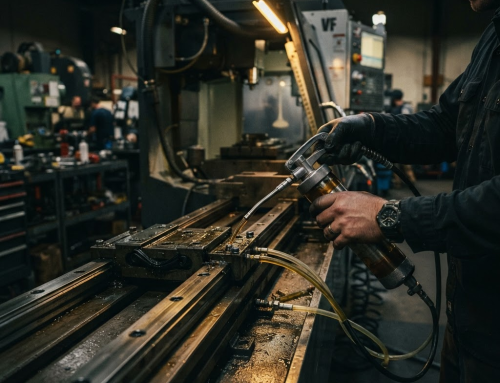
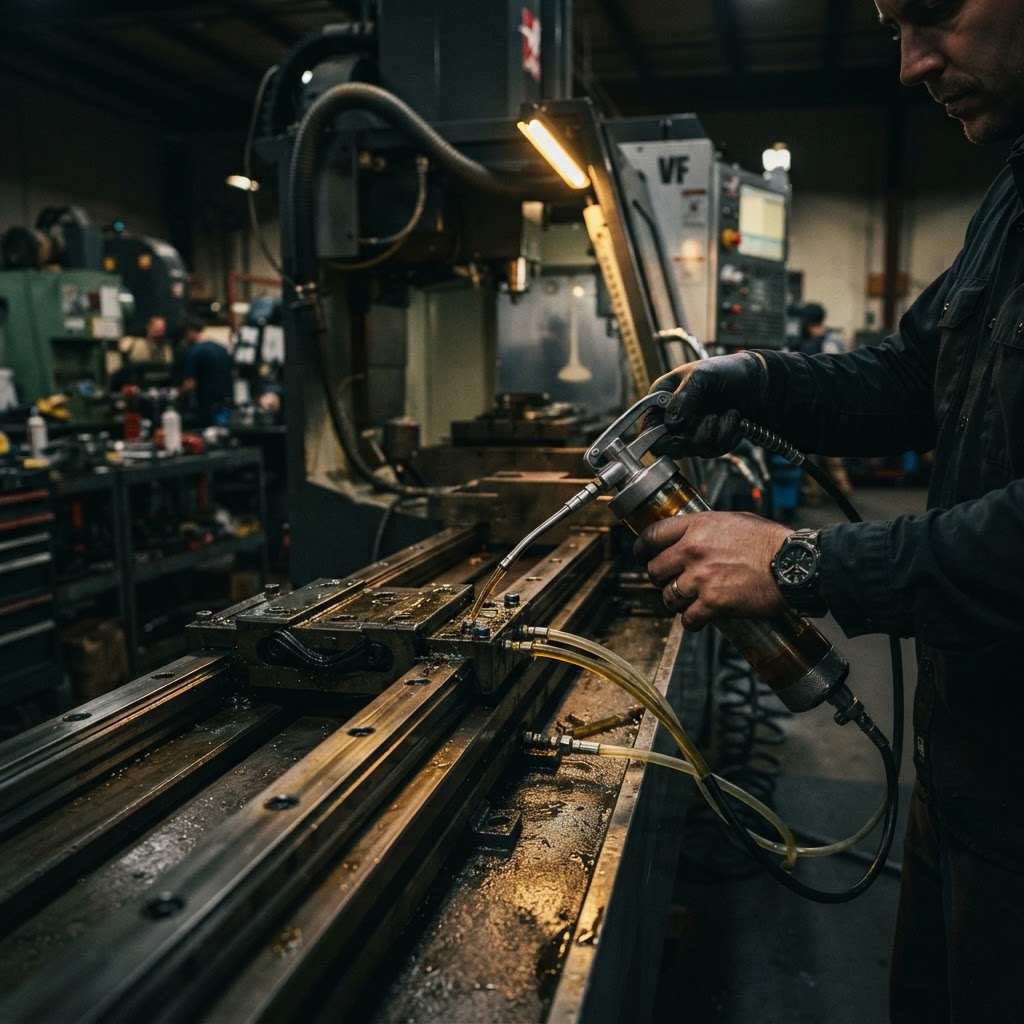
Daily and weekly maintenance tasks are operator responsibilities that do not require a technician but do require consistent execution. Daily tasks include lubrication level checks, coolant level and condition checks, chip and debris removal from way covers and the work envelope, and a brief spindle warmup with noise and vibration observation.
Weekly tasks include inspecting way wipers and covers for wear, checking hydraulic fluid level if applicable, cleaning coolant filters and strainers, and reviewing the controller’s fault history log for recurring alarms. These tasks collectively take less than thirty minutes per week and prevent the majority of accelerated wear failures.
Monthly Service: What Needs Technician Attention
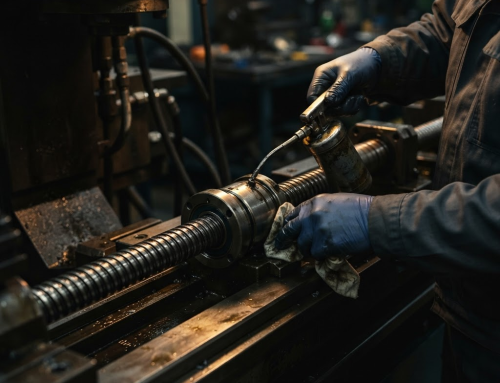
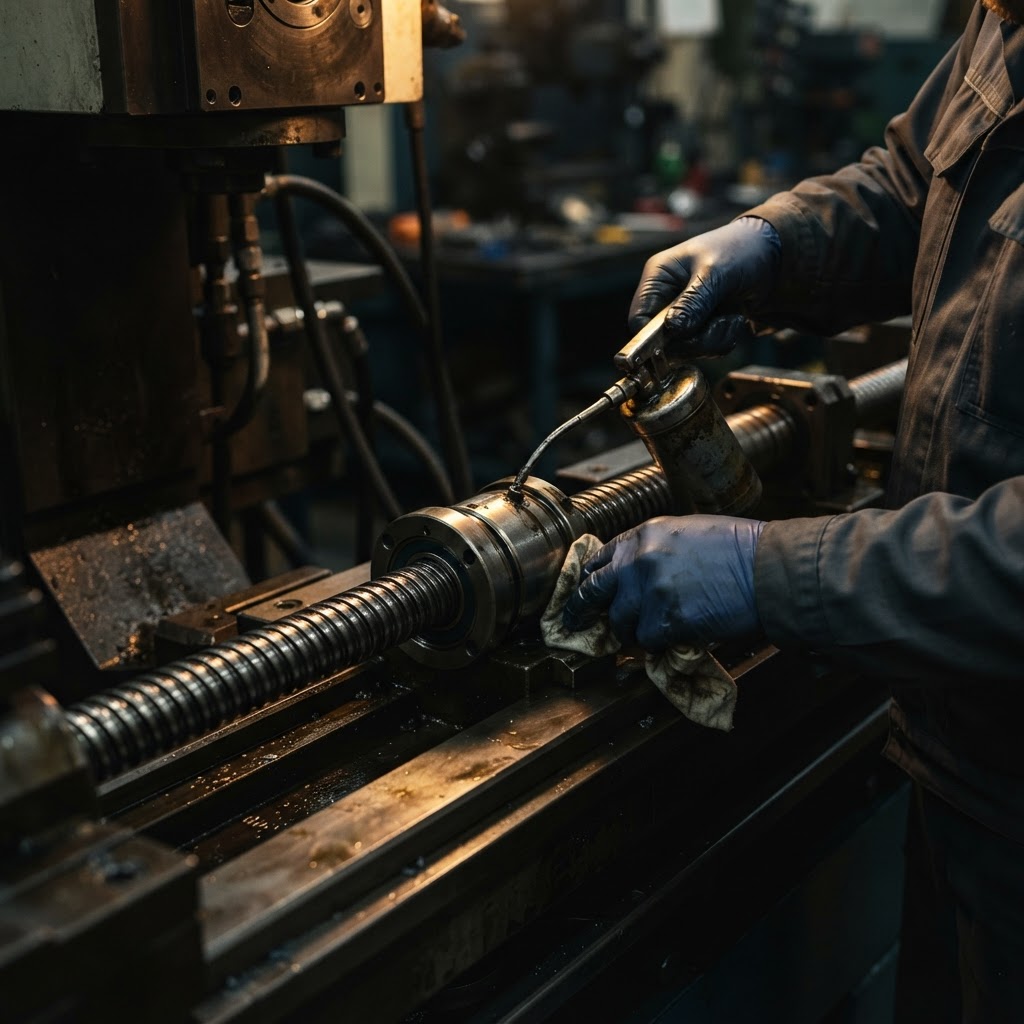
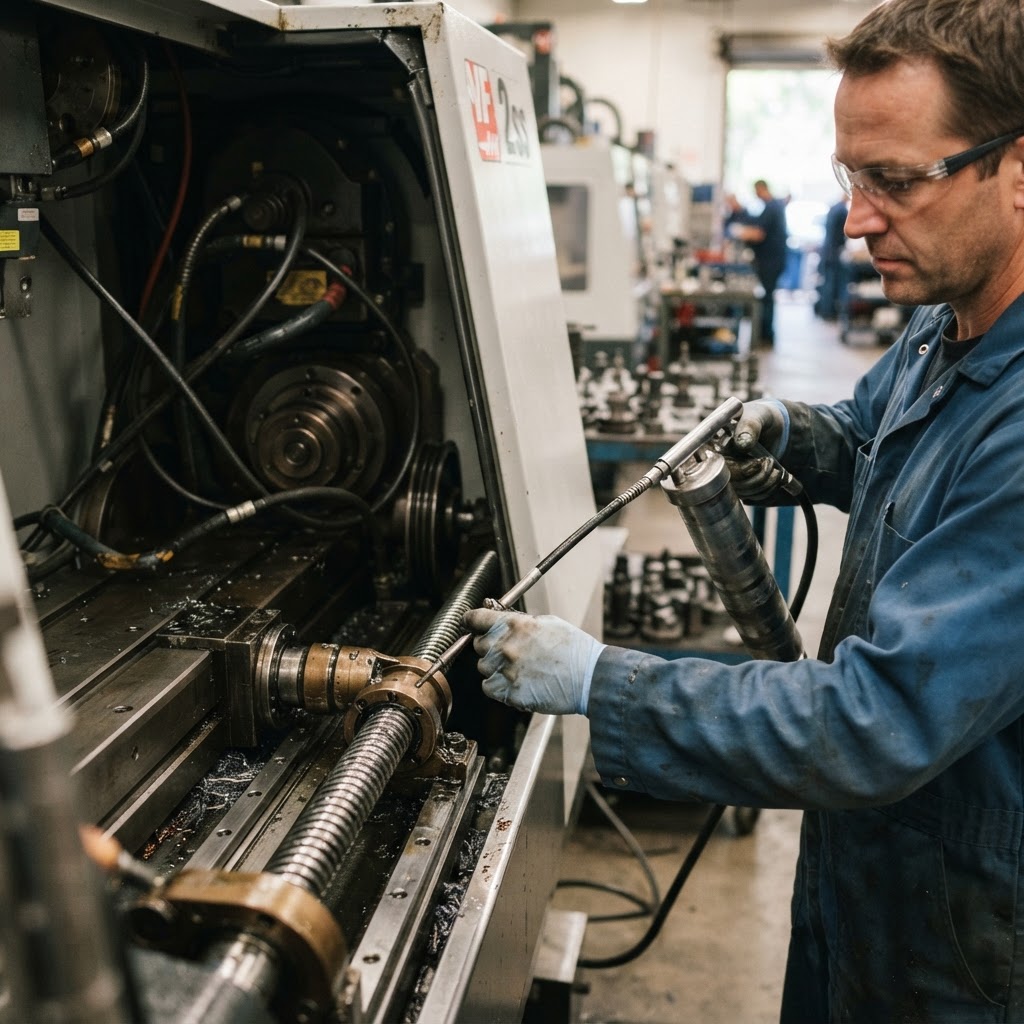
On a monthly basis, machines running production should receive a more thorough inspection covering ballscrew lubrication condition, spindle warm-up performance, axis drive health via the servo monitor screen, coolant system condition and concentration check, and a review of any fault codes that have appeared since the last monthly check.
For high-utilization machines — those running two or more shifts per day — monthly service intervals are the minimum appropriate cadence. Machines running on three shifts or in aggressive cutting environments (high chip loads, flood coolant, abrasive materials) may warrant service every two to three weeks.
Annual CNC Service: The Deep Inspection Interval
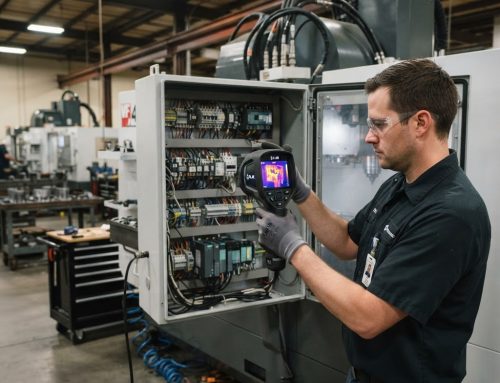
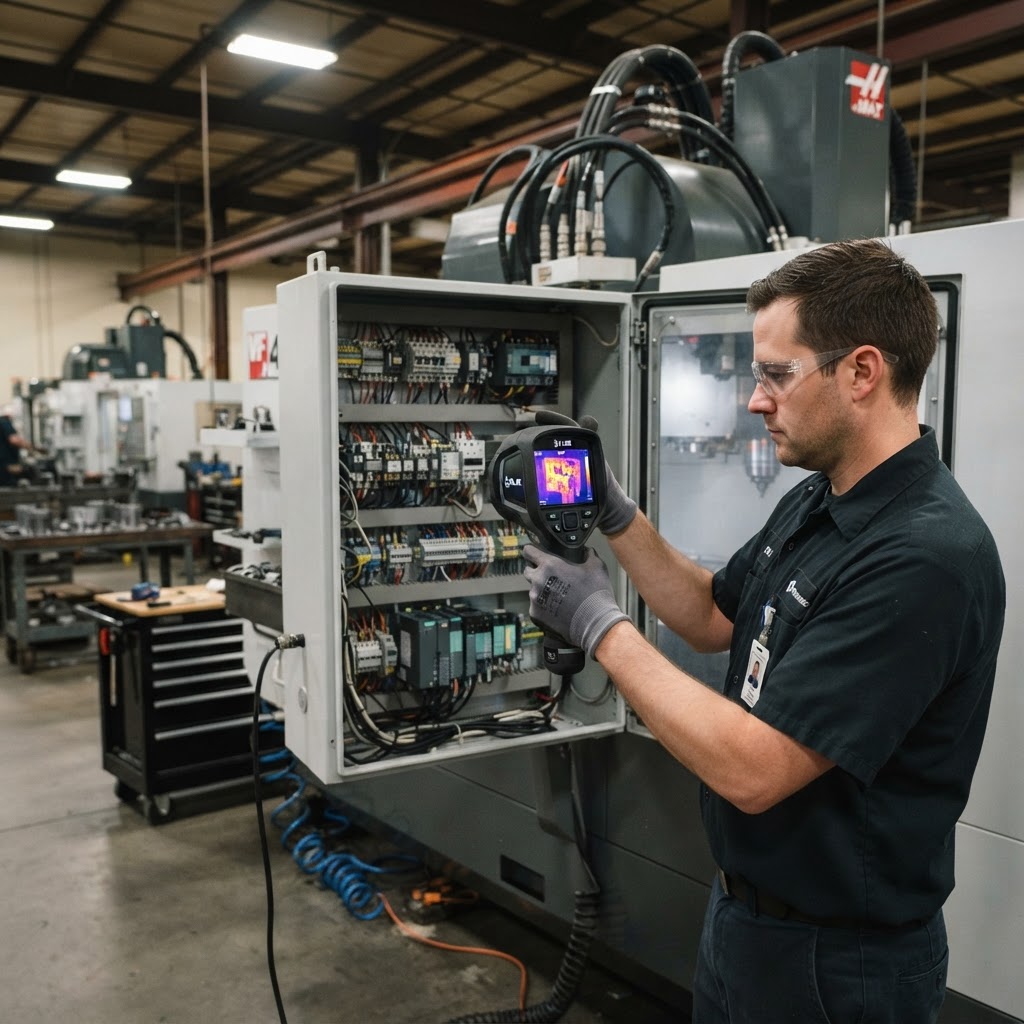
Annual maintenance is the full-system inspection. This is where a certified technician performs a complete mechanical and electrical health check: ballscrew wear measurement, spindle bearing condition assessment, servo drive performance testing, geometric accuracy verification via laser or ballbar calibration, lubrication system flush and refill, coolant system drain and refresh, and electrical cabinet inspection.
Many manufacturers schedule annual service during planned downtime — year-end shutdowns, slow production periods, or between major production runs. Planning ahead ensures the technician arrives with all required materials and the work is completed without disrupting active production commitments.
Adjusting Service Intervals for High-Utilization Environments
A CNC machine running 6,000 hours per year accumulates wear at roughly four times the rate of a machine running 1,500 hours per year. A service program built around annual intervals for a single-shift machine is completely inadequate for a machine running three shifts on aerospace tolerances.
In-House CNC Service designs PM programs around actual machine utilization data — not just calendar intervals. We review your production schedule, machine run logs where available, and the manufacturer’s recommended service intervals to build a maintenance cadence that matches the actual wear rate of your specific equipment.
Signs That Your Current Service Intervals Are Too Long
If your machines are experiencing repeated faults between service visits, if calibration checks are showing increasing dimensional error between annual services, or if lubrication systems are consistently running dry before scheduled top-ups, your service intervals are likely too long for your actual utilization.
Other indicators include increasing cycle time variability, higher scrap rates, unusual tool wear patterns, and recurring alarms that clear but keep returning. These are all signs of developing mechanical or electrical issues that a more frequent service cadence would catch before they become failures.
Building the Right Service Schedule for Your Shop
The right CNC service schedule is one that matches your machine’s actual utilization, accounts for the environment it operates in, and is executed consistently. The best schedule that is rarely followed is worse than a simpler schedule that is always followed.
In-House CNC Service works with Southern California manufacturers to design and execute maintenance programs that are practical, consistent, and calibrated to actual equipment demands. Contact us to evaluate your current maintenance cadence and identify where it can be strengthened.
The In-House CNC Recommended Service Schedule
For Southern California shops running one to two shifts, we recommend daily visual checks of lubrication levels, chip conveyors, and coolant concentration, combined with a weekly inspection of axis way covers, air pressure regulators, and spindle warm-up routines. A quarterly full preventative maintenance inspection — covering ballscrew backlash, servo drive parameters, and filter condition — catches the slow-developing issues that daily checks miss before they cause an unplanned breakdown.
In-House CNC Service offers contract preventative maintenance programs that handle scheduling automatically. We track your machine’s service history, remind you when inspections are due, and dispatch a technician on a fixed cadence so you never have to think about it. Shops on a PM contract consistently see fewer emergency repair calls and longer intervals between major component failures. According to the OSHA equipment maintenance standards, proactive CNC maintenance significantly reduces unplanned manufacturing downtime.