Linear Guide Rail Wear on CNC Machines: How to Spot It and Fix It
Share Post
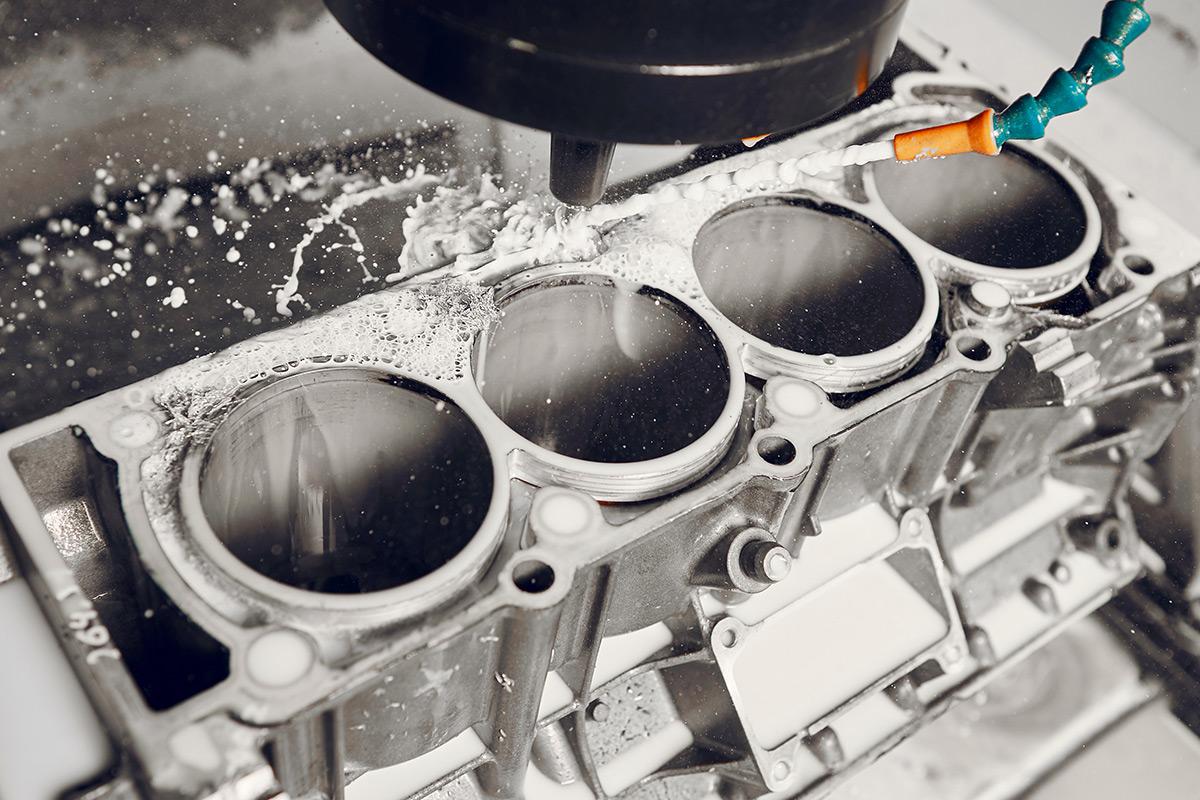
Linear guide rails are the precision foundation on which every CNC axis moves. A spindle cutting at 10,000 RPM, a table feeding at 500 IPM, a Z-axis plunging into a workpiece — all of that motion is guided by the rail and carriage system that keeps each axis on its intended path. When linear guide rails wear, the effects are subtle at first and catastrophic if ignored. Understanding how to identify wear and what the repair process involves is essential knowledge for any Southern California shop running production CNC equipment.
Types of Linear Guide Systems
Modern CNC machines use profiled rail linear guides — hardened steel rails with precision-ground raceways and matching carriages containing recirculating ball or roller elements. The most common suppliers are THK, Hiwin, NSK, and INA/Schaeffler. Each carriage rides on the rail with a defined preload — internal compressive force — that determines rigidity and accuracy.
Older machines may use box ways (flat, scraped cast iron surfaces) or round column designs. These wear differently and require different service approaches, but profiled rail guides are the standard on machines built in the last 20–25 years and are the primary focus of this guide.
How Linear Guide Rails Wear
Guide rail wear is primarily caused by three mechanisms: contamination (chips, coolant, and abrasives entering the carriage), inadequate lubrication (dry running damages the ball raceways rapidly), and mechanical overload (crash events or excessive cutting loads that brinell the raceways). Normal service wear — even without these aggravating factors — gradually reduces carriage preload, which shows up as increased axis play and reduced rigidity.
Wear Symptoms to Watch For
- Axis play: Measurable movement of the axis table or spindle head when pushed by hand, perpendicular to the axis direction. Any detectable play in a precision machine is worth investigating.
- Vibration during cuts: Chatter that appears at specific feedrates or depths of cut, particularly on finishing passes, often indicates carriage preload loss.
- Surface finish degradation: Directional marks or inconsistent finish that correlates with axis movement.
- Noise during travel: Scraping, grinding, or rumbling sounds during axis moves, especially at low feedrates.
- Positioning inconsistency: Parts that measure correctly in some locations but not others, indicating the axis is not maintaining a straight path.
Repair Options: Carriage Replacement vs. Full Rail Replacement
When guide rail wear is identified, the repair scope depends on where the wear is located. If the rail surface itself is undamaged (no brinelling, pitting, or corrosion), but the carriages have lost preload through ball wear, carriage replacement alone can restore full axis accuracy. This is the less expensive option and is appropriate for machines that have experienced normal service wear without crash events.
Full rail and carriage replacement is required when the rail surface shows race damage, when a crash has deformed the rail, or when the machine is being returned to OEM accuracy specification as part of a major rebuild. Full replacement is also advisable when carriage replacement alone would restore the carriage to a better condition than the rail can support.
Alignment Verification After Service
Guide rail service is incomplete without alignment verification. After carriage or rail replacement, the axis must be checked for straightness, flatness, and squareness relative to the other axes. We use precision levels, alignment bars, and laser measurement to verify that the repaired axis meets OEM specification before returning the machine to production. This step is non-negotiable — installing new rails without verifying alignment simply moves the accuracy problem from the rail to the geometry.
How In-House CNC Service Approaches This
Our linear guide assessment starts with a systematic play check on all axes and a review of the machine’s positioning accuracy data. We can distinguish between ballscrew wear, guide rail wear, and axis drive issues based on the pattern of symptoms — which is critical because the repair approach is completely different for each cause.
We carry common carriage replacements for Haas, Mazak, Doosan, and other popular Southern California machine brands in our service inventory. For less common models, we source from THK, Hiwin, and NSK distributors, typically with 3–5 business day lead times. All rail service is performed on-site at your facility. See our full service catalog and PM programs, or contact us today to schedule a linear guide assessment.
Preventing Premature Rail Wear
The most effective prevention for linear guide wear is a functioning way lube system delivering the correct lubricant volume to all carriages on a timed schedule. We check lube system function on every PM visit — blocked distributors, depleted reservoirs, and degraded oil are among the most common findings on machines with premature guide wear. A $50 lube service call prevents a $3,000 carriage replacement in many cases.
If you’re noticing any of the symptoms described above, contact In-House CNC Service today for an on-site assessment across Southern California.