CNC Spindle Bearing Replacement: A Step-by-Step Overview for SoCal Shops
Share Post
The spindle bearing is the most precision-critical component in a CNC machining center. Running at speeds between 3,000 and 30,000 RPM under cutting loads, spindle bearings operate at the absolute limits of rolling element bearing technology. When they fail — and all bearings eventually fail — the consequences range from degraded surface finish to catastrophic spindle damage costing tens of thousands of dollars. Understanding the replacement process helps shop managers in Southern California make informed decisions about when to act and what to expect.
Types of CNC Spindle Bearings
Most CNC machining centers use angular contact ball bearings in the spindle, typically arranged in sets of two to four at the front of the spindle and one or two at the rear. The front bearings carry the primary cutting load; the rear bearings locate the spindle axially and handle thermal expansion. High-speed spindles (above 15,000 RPM) often use ceramic hybrid bearings, which are lighter, harder, and generate less heat than all-steel bearings under the same load.
Bearing preload — the internal compressive load applied during assembly — is critical to spindle accuracy and rigidity. Too little preload causes runout and chatter; too much causes premature heat buildup and accelerated wear. Correct preload is established during spindle assembly using precision spacers and bearing manufacturer specifications.
Failure Symptoms
- Vibration: Measurable spindle vibration, particularly at specific RPM ranges, indicates a bearing with developing race damage or ball wear.
- Heat: A spindle that runs hotter than normal after warm-up — more than 10°C above its typical operating temperature — is a sign of inadequate lubrication, excess preload, or bearing wear.
- Noise: Growling at low RPM, whining at high RPM, or intermittent rumbling during cuts are all bearing distress signals.
- Surface finish degradation: Chatter marks or inconsistent finish on previously smooth cuts often indicate spindle bearing wear before any noise becomes obvious.
- Runout increase: Measurable TIR increase at the spindle nose, checked with a precision test bar and indicator, confirms mechanical deterioration.
The Replacement Process Overview
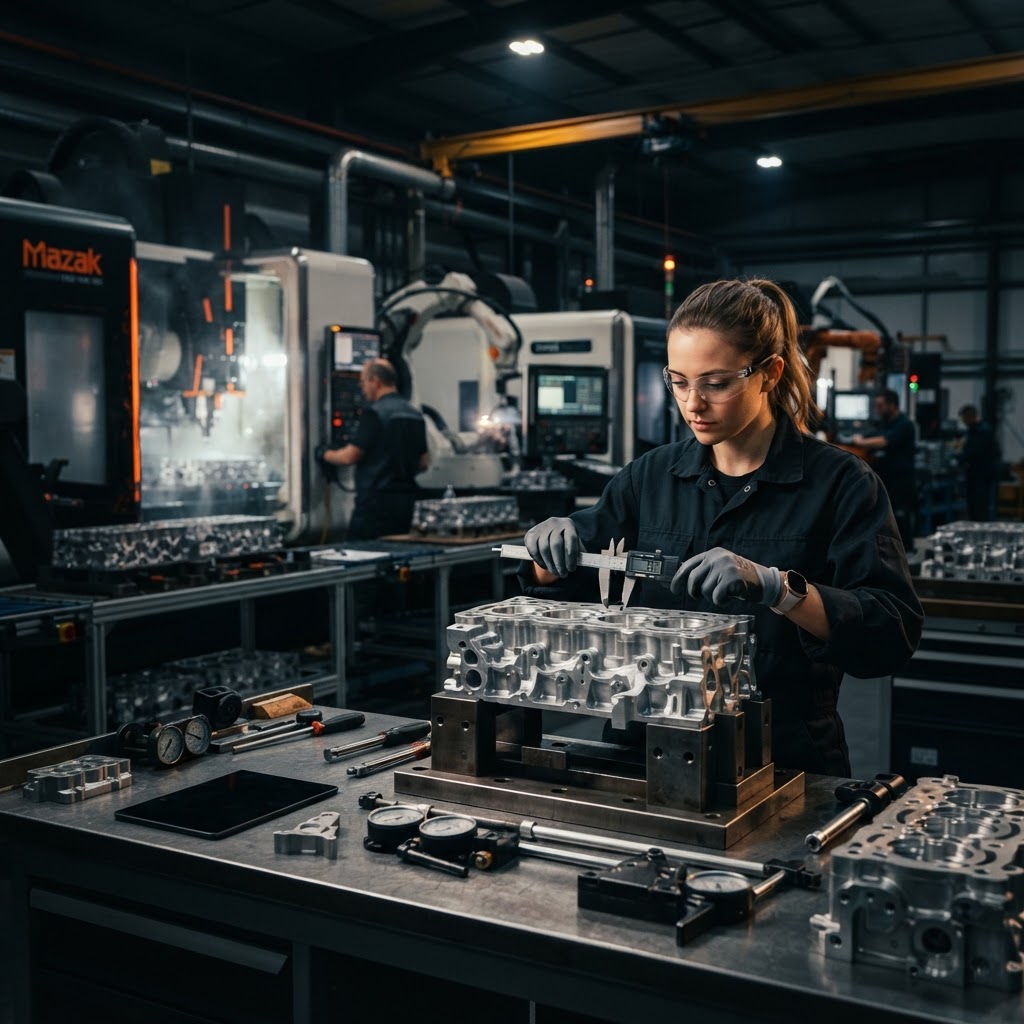
CNC spindle bearing replacement is precision work that requires specific tooling, a clean environment, and technical knowledge of the specific spindle design. The general process involves removing the spindle cartridge from the machine, disassembling it in a clean environment, pressing out the old bearings without damaging the shaft or housing, cleaning and inspecting all components, pressing in new matched bearing sets with correct preload, reassembling the cartridge to specification, and balancing and testing before reinstallation.
On most machining centers, spindle removal and reinstallation adds 2–4 hours to the bearing replacement time. Total service time for a typical vertical machining center spindle bearing replacement runs 6–12 hours depending on spindle design and machine model.
Bearing Selection Matters
Spindle bearings are not a commodity. Using incorrect bearing grades, wrong preload specifications, or non-matched sets causes premature failure and can damage a freshly rebuilt spindle. In-House CNC Service sources spindle bearings from NSK, SKF, FAG, and NTN — the bearing manufacturers whose products are specified by Haas, Mazak, Okuma, and other major CNC OEMs. We never substitute lower-grade bearings to reduce cost.
How In-House CNC Service Approaches This
Our spindle bearing replacement process begins with a vibration analysis and runout measurement to confirm the diagnosis and establish a pre-repair baseline. After replacement, we perform a controlled warm-up procedure — gradually increasing spindle speed over 30–60 minutes to allow bearings to seat correctly — followed by post-repair vibration analysis and runout verification to confirm the spindle is back within OEM specification.
We perform spindle bearing replacement on-site at your facility for most machine models. For spindles requiring specialized press equipment or balancing, we can arrange removal, off-site service, and reinstallation with minimum machine downtime. Explore our spindle rebuild and replacement services, see our full service offerings, or contact us today to discuss your spindle service needs.
Repair vs. Replace: The Spindle Cartridge Question
For machines with removable spindle cartridges, a spare cartridge strategy is worth considering. Having a rebuilt spare cartridge means spindle bearing failure results in a 2–4 hour cartridge swap rather than a multi-day repair event. In-House CNC Service can rebuild your spare cartridge while your machine continues running — then the swap happens during planned downtime. This approach is particularly effective for shops with multiple identical machines or high-production environments where spindle downtime is especially costly.
Act on Early Symptoms
Bearing replacement performed on a spindle showing early symptoms costs a fraction of replacement performed after a catastrophic bearing failure that damages the spindle shaft, housing, or drawbar mechanism. If your spindle is running warm, making noise, or producing degraded surface finish, contact In-House CNC Service today for an on-site spindle assessment across Southern California.