What Is Preventative Maintenance for CNC Machines?
Share Post
What Is Preventative Maintenance for CNC Machines?
In high-precision manufacturing, consistency, speed, and accuracy are the pillars of business success. Whether your shop operates a single CNC lathe or a massive floor of multi-axis machining centers, your machinery represents a significant capital investment and the absolute engine of your daily revenue. When a computer numerical control (CNC) machine is running smoothly, it produces high-quality parts, keeps your production schedule on track, and helps you meet tight customer delivery deadlines. However, many machine shops fall into a dangerous cycle of “reactive maintenance”—only addressing machinery issues when a component fails and the machine grinds to a halt. This approach is incredibly costly, resulting in unplanned downtime, rushed shipping fees for replacement parts, high-priced emergency service calls, and missed delivery dates that can permanently damage customer relationships.
The alternative is a structured program of CNC preventative maintenance (PM). But what exactly does preventative maintenance entail, what is included in a professional PM program, and why is it one of the single most profitable investments a machine shop can make? At In-House CNC Service LLC, based in Menifee, CA, and led by founder and master CNC technician Jason Wutzke, we partner with manufacturers throughout Southern California to implement highly effective, brand-specific preventative maintenance plans. Here, we outline the fundamental components of professional CNC maintenance and the substantial benefits it brings to your shop floor.
Defining CNC Preventative Maintenance
At its core, preventative maintenance is a planned, systematic set of inspection, cleaning, lubrication, adjustment, and testing protocols designed to identify and resolve minor mechanical and electrical issues before they escalate into catastrophic failures. Rather than waiting for a machine to break down, PM is performed during scheduled, low-impact production windows, allowing shop managers to control their schedules and ensure their machinery is always operating at peak design accuracy. It changes your maintenance strategy from reactive firefighting to proactive management.
Just like a high-performance sports car, a CNC machine tool relies on the perfect synergy of thousands of mechanical, electronic, hydraulic, and pneumatic components. When any of these systems are neglected, it creates a compounding chain of wear that accelerates the degradation of other components, eventually leading to a costly breakdown. Preventative maintenance breaks this cycle by keeping the machine’s vital systems clean, lubricated, and properly calibrated, preserving both machine tolerances and long-term equipment value.
What’s Included in a Professional CNC Preventative Maintenance Program?
A comprehensive, professional-grade preventative maintenance program goes far beyond simply wiping down the machine enclosure and checking the fluid levels. At In-House CNC Service LLC, our technicians follow a rigorous, multi-point inspection and service checklist tailored to the specific brand, model, and age of your machinery. A standard professional PM visit includes:
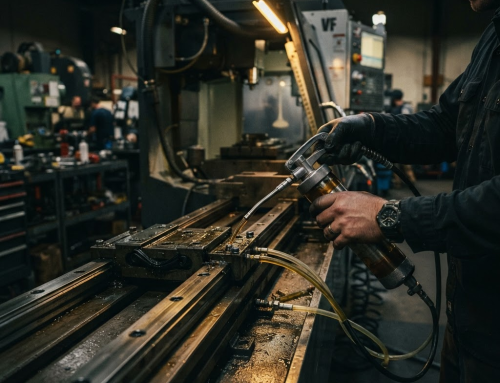
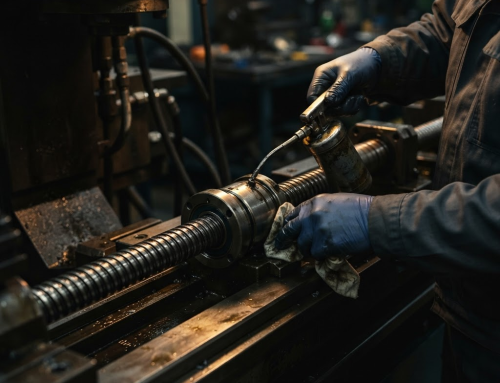
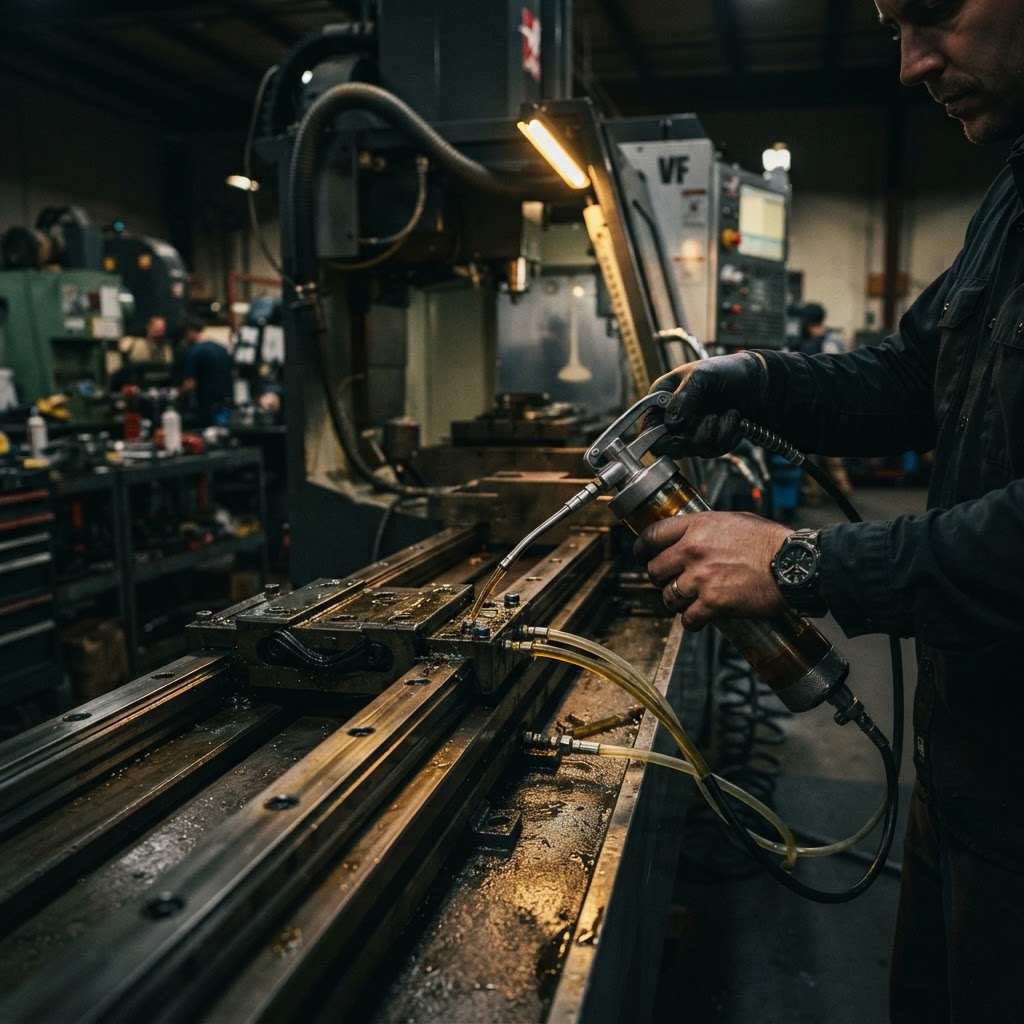
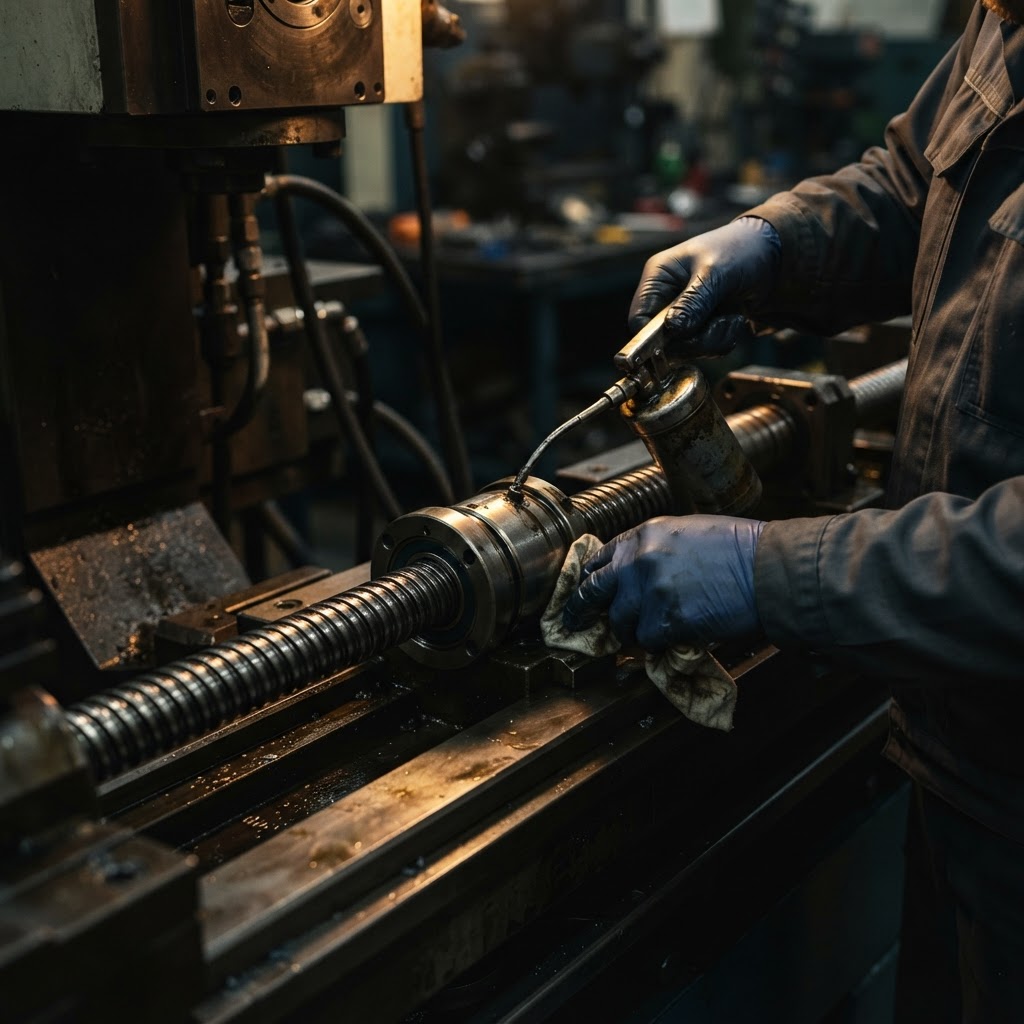
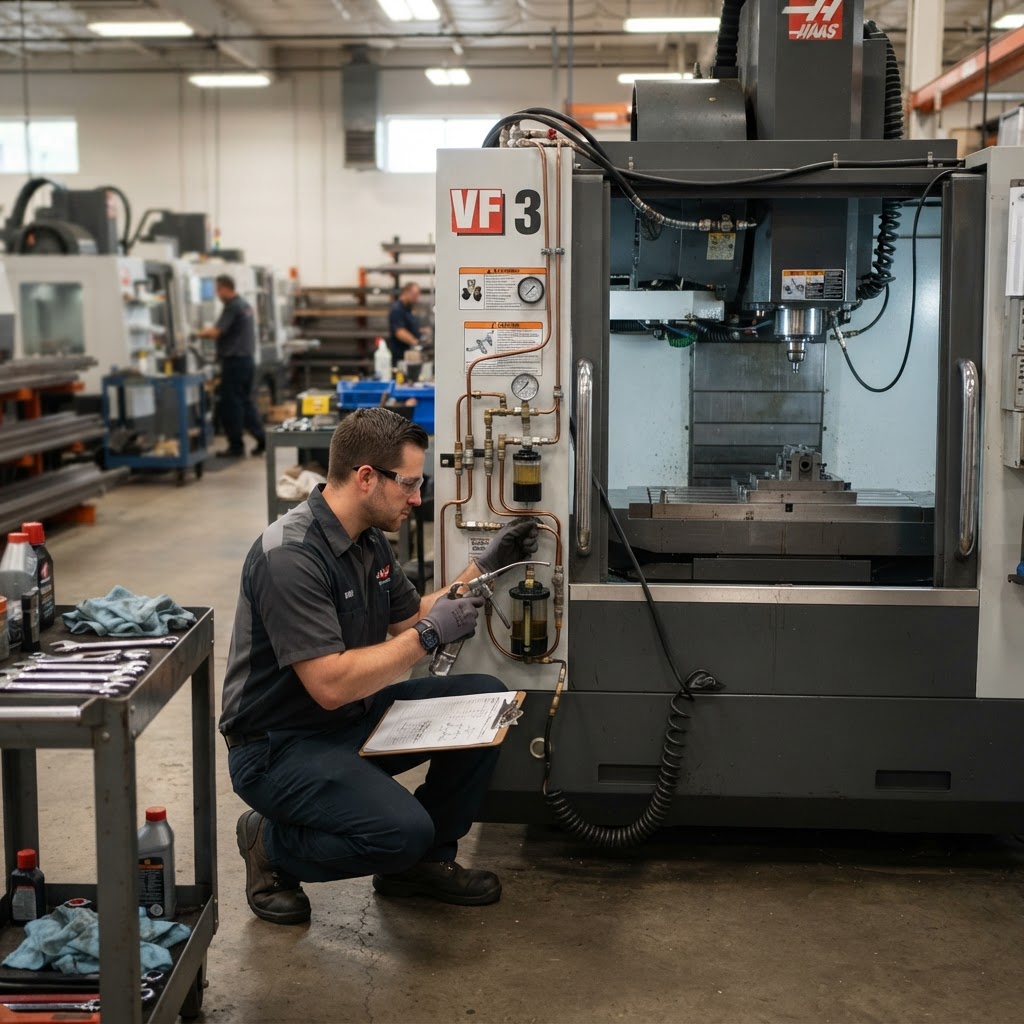
- Way Lubrication and Fluid Systems: CNC machines rely on high-precision linear guides and box ways that require constant, clean lubrication to prevent friction and wear. We inspect the way lubrication pump, verify that all oil distribution manifolds are flowing freely to each axis, inspect and clean filters, and test the oil pressure levels. We also check the condition of hydraulic fluids and cooling systems, cleaning heat exchangers and replacing filters as needed. Lubrication failure is the leading cause of premature ball screw wear.
- Mechanical Geometry and Alignment Checks: Over time, continuous cutting forces, axis travels, and minor workplace contacts can cause subtle misalignments. We measure spindle axial and radial runout, check the geometric perpendicularity of the axes, and measure axis backlash using high-precision dial indicators. If backlash is detected, we adjust the mechanical gibs, inspect the thrust bearings, and enter pitch error compensation values into the control system to restore original positioning accuracy.
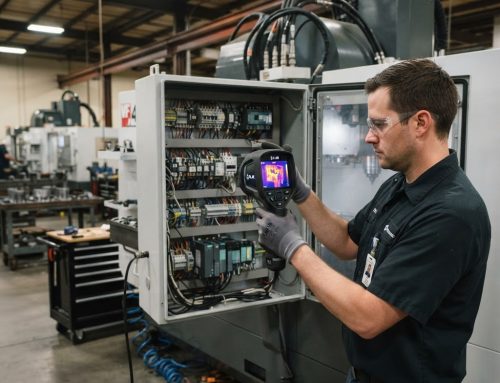
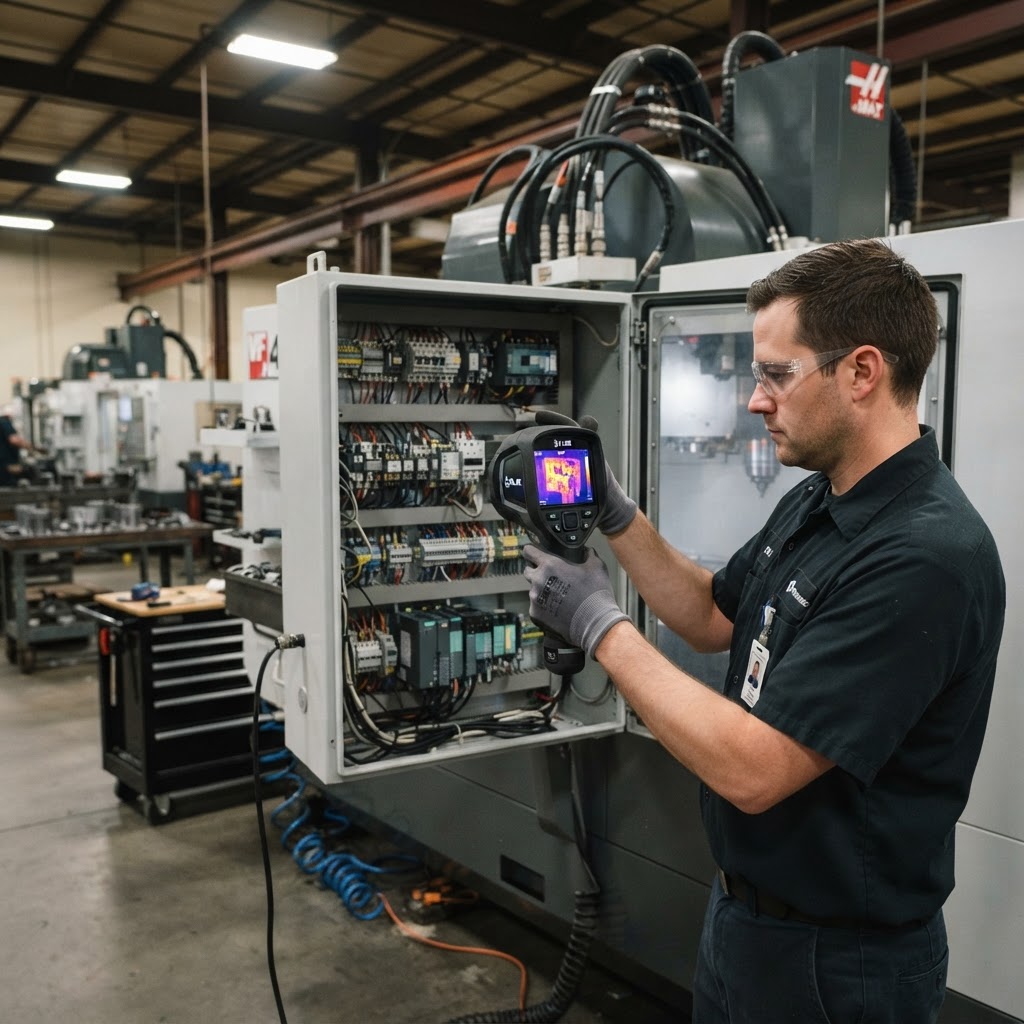
- Electrical Cabinet and Electronic Systems: Dust, oil mist, and heat are the primary enemies of CNC electronics. We open and clean the electrical cabinet, inspect cooling fans to ensure proper airflow, check the integrity of all wiring terminals and cables, test emergency stop circuits, and inspect relays and contactors for signs of arcing or wear. We also check control backup batteries to ensure you never suffer a catastrophic parameters loss.
- Spindle Drawbar Force Verification: The spindle drawbar must exert immense force to hold the tool holder securely in the spindle taper during heavy cutting operations. Over time, the internal disc springs can fatigue or break, reducing drawbar retention force. This leads to tool chatter, poor surface finishes, and a high risk of catastrophic spindle or tool failure. We utilize digital drawbar force gauges to verify that your retention force meets OEM specifications, protecting your spindle.
- Control System Parameter Backups: In the event of a sudden battery failure, power surge, or control board breakdown, your machine can lose its critical system parameters, axis grids, and macro programs. Without a backup, restoring the machine can take days of manual data entry and configuration. We perform full digital backups of all parameters, tool data, and programs during every PM visit, storing them securely for your shop’s peace of mind.
The Critical Science of Hydraulic and Pneumatic Filtration
Many CNC machine tools utilize specialized hydraulic circuits to clamp chucks, index tool turrets, and actuate tool changers. If hydraulic fluid is allowed to accumulate moisture, metal shavings, or particulate contamination, the internal valves and pumps can become scored or clogged, leading to sluggish tool changes, turret indexing errors, or loss of workholding clamping pressure. During a standard preventative maintenance visit, our technicians draw fluid samples, clean reservoirs, inspect and replace high-pressure hydraulic filters, and check system pressures to prevent catastrophic valve failures.
Pneumatic lines are equally important, particularly for clean tool-changer operation and spindle taper blow systems. Contaminated shop air containing oil or moisture can destroy delicate solenoids and lead to spindle taper contamination, resulting in tool runout and chatter. We verify the performance of your machine’s air regulators, drain water separators, and check the functionality of auto-drain systems. This detailed attention to auxiliary systems prevents minor fluid issues from causing major mechanical or electronic failures down the line.
The Recommended Frequency of CNC Maintenance
To be effective, preventative maintenance must be performed consistently. While daily and weekly operator checks (such as clearing chips, verifying way lube levels, and checking air pressures) are essential, professional-level technical PM should be scheduled at regular intervals based on your machine’s usage:
- Semi-Annual (Every 6 Months or 1,000 Operating Hours): Recommended for standard job shops operating on a single-shift schedule. This interval covers basic fluid changes, axis backlash measurements, lubrication manifold inspections, and electrical cabinet cleaning.
- Annual (Every 12 Months or 2,000 Operating Hours): Essential for all CNC machinery. This comprehensive visit includes deep geometric checks, spindle drawbar force verification, detailed electrical testing, drive cabinet tuning, and system parameter backups.
- Quarterly (Every 3 Months): Highly recommended for high-volume, multi-shift production shops, aerospace subcontractors, or facilities machining highly abrasive materials (such as graphite, composites, or cast iron) where component wear is highly accelerated.
The Financial Return: Preventative Maintenance vs. Reactive Repair
Some shop owners view preventative maintenance as an unnecessary expense or a disruption to their production schedule. However, a simple financial analysis reveals that preventative maintenance is one of the most cost-effective decisions a business owner can make. Consider the comparison:
| Operational Metric | Reactive Maintenance (Run-to-Failure) | Preventative Maintenance (Planned PM) |
|---|---|---|
| Downtime Costs | Unplanned, catastrophic failure during peak production. Machine offline for days or weeks. | Planned, controlled maintenance scheduled during off-peak hours or planned shut-downs. |
| Repair Costs | Extremely high. A seized spindle, damaged ball screw, or burnt vector drive can cost $10,000–$30,000+. | Low, manageable costs. Minor issues (worn belt, dry way, failing relay) are fixed for a few hundred dollars. |
| Machine Working Life | Accelerated wear and tear leads to premature machine retirement and high replacement capital needs. | Machines remain highly accurate and operational for 15–20+ years, preserving your capital. |
| Part Quality & Scrap Rate | Gradual mechanical drift goes unnoticed, leading to failed QA, scrapped parts, and wasted materials. | Machines are regularly calibrated, keeping scrap rates near zero and maintaining perfect part finishes. |
Partner with In-House CNC Service LLC for Your PM Program
At In-House CNC Service LLC, we don’t believe in one-size-fits-all maintenance checklists. We design customized preventative maintenance protocols tailored specifically to your shop’s unique machinery mix, production environment, and business goals. Whether you run Haas vertical mills, Mazak turning centers, Okuma multi-axis machines, or older Fadal platforms, we apply deep brand-specific knowledge to protect your investments. We work with you to plan PM windows that have zero impact on your customer commitments.
For professional, reliable on-site CNC preventative maintenance throughout Southern California, trust Jason Wutzke and our skilled technical team to keep your shop floor productive, profitable, and running smoothly.
Contact us today at (951) 540-4820 or visit in-housecnc.com to discuss your machinery maintenance needs, schedule a PM consultation, or request a free estimate. Let us help you eliminate unexpected breakdowns so you can focus on driving your business forward with complete confidence.