CNC Ballscrew Maintenance: Preventing Wear Before It Costs You
Share Post
Introduction to CNC Ballscrew Systems
In high-precision manufacturing, the ballscrew assembly is the mechanical heart of linear motion. Responsible for converting rotational torque from the servo motor into highly precise linear translation, ballscrews dictate the accuracy, repeatability, and surface finish capabilities of your CNC machines. However, because they operate under continuous physical stress and are exposed to harsh environments filled with abrasive chips, dust, and corrosive coolants, they are highly susceptible to wear. Implementing a rigorous CNC ballscrew maintenance schedule is not just a best practiceu2014it is an economic necessity that prevents catastrophic failures and protects your business from thousands of dollars in unexpected downtime and component replacement costs.
The Essential CNC Ballscrew Lubrication Schedule
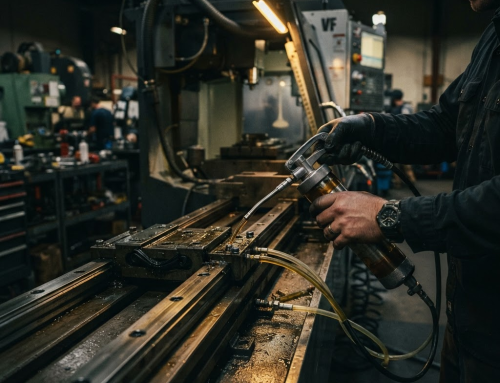
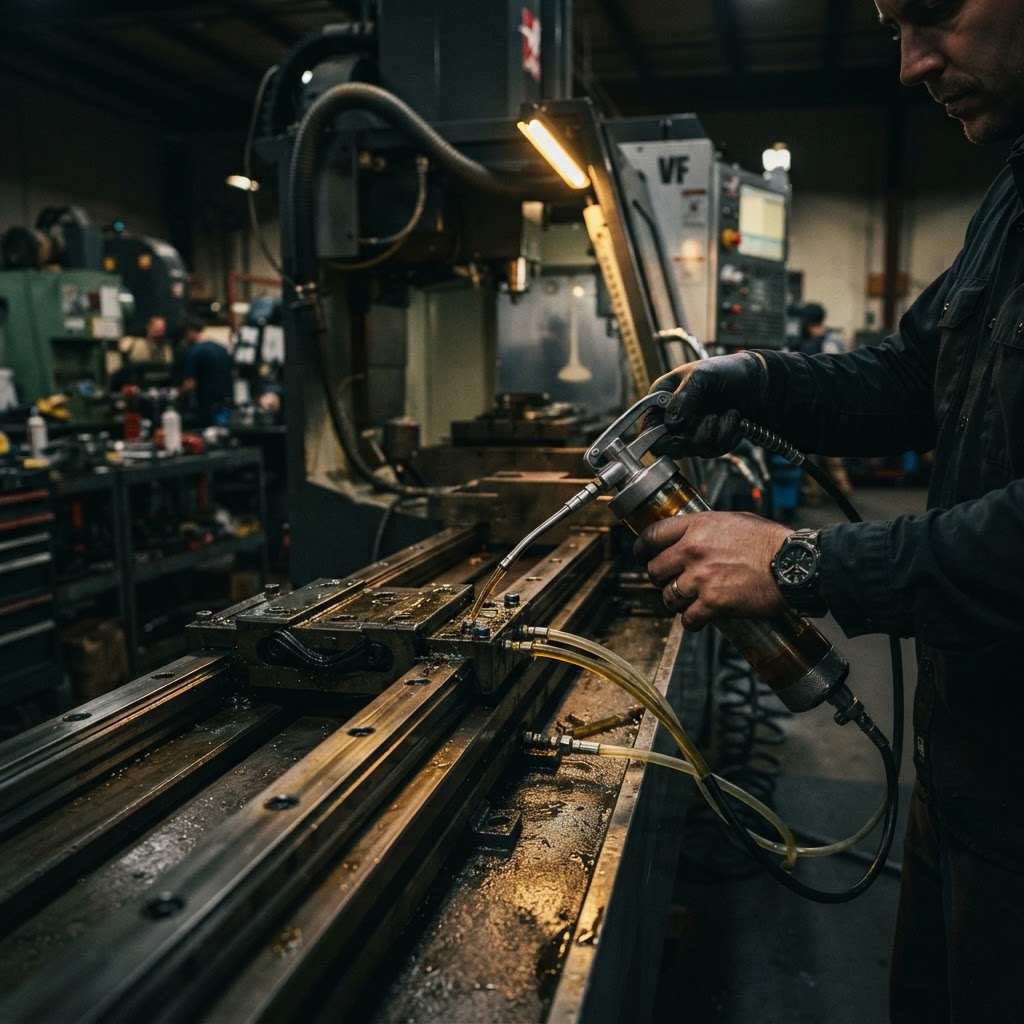
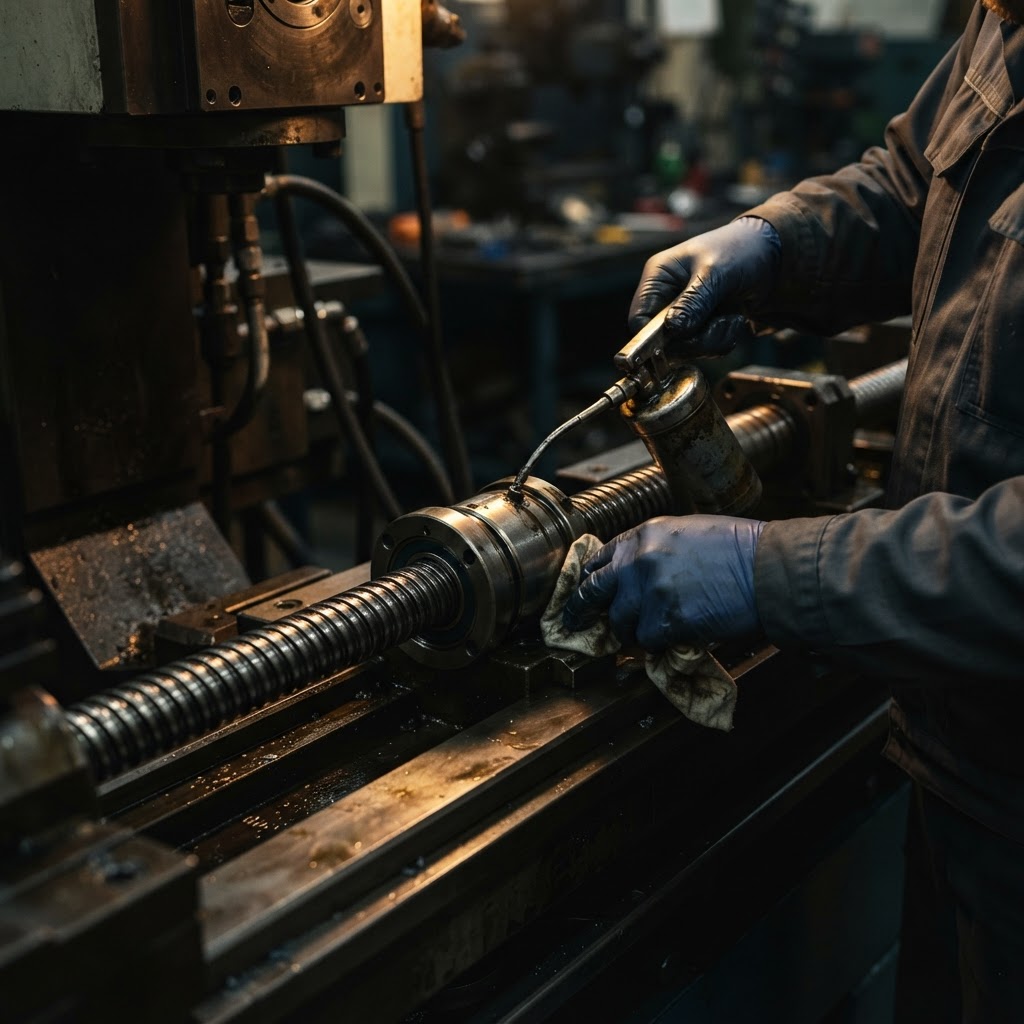
Lubrication is the single most critical factor in determining the operating life of a ballscrew. Without adequate lubrication, the recirculating steel balls experience intense metal-on-metal friction against the screw shafts, leading to rapid localized heating, surface pitting, and microscopic welding. This friction quickly destroys the precise physical tolerances of the assembly.
Depending on the machine design, ballscrews are lubricated using either a specialized grease or a continuous oil system. For grease-lubricated assemblies, a high-pressure lithium-soap or synthetic grease with Extreme Pressure (EP) additives (such as lithium complex or polyurea-based greases) is typically recommended. These greases must be replenished manually or via automated lubrication pumps on a strict schedule. Typically, manual grease application should occur every 500 to 1,000 operating hours, or at least every six months. For oil-lubricated systems, a continuous metering valve distributes way lube (such as ISO VG 68 or Mobil Vactra No. 2) directly to the ball nut. In these setups, maintenance operators must check the lubrication reservoir daily and inspect individual distribution lines weekly to ensure no metering valves are clogged or malfunctioning.
Recognizing Symptoms of Preload Loss and Backlash
As a CNC ballscrew wears down over time, the physical clearances between the recirculating balls and the thread grooves increase. This wear leads to a loss of preloadu2014the intentional internal stress applied within the ball nut during manufacturing to eliminate clearance and maximize axial rigidity. When preload is lost, mechanical backlash develops.
Operators and technicians should remain highly vigilant for the early symptoms of preload loss. These include:
- Degraded Surface Finishes: Microscopic axial play allows the machine tool or workpiece to vibrate slightly under cutting forces, resulting in visible chatter marks, scalloping, or rough surface finishes.
- Unexplained Dimensional Inaccuracy: Finished parts begin to drift outside of specified tolerances, particularly during direction changes along a single axis.
- Increased Axis Noise: A worn-out ballscrew often emits a distinct grinding, clicking, or high-pitched humming sound during high-speed rapid moves, indicating that the internal ball bearings are no longer recirculating smoothly through their return tubes.
Precision Backlash Measurement
To accurately quantify ballscrew wear before a failure occurs, technicians perform periodic backlash measurements. The most common shop-floor method involves mounting a high-resolution dial indicator (graduated in tenths of a thousandth of an inch, or 0.0001″) to a rigid magnet base attached to the machine frame. The indicator tip is positioned against a solid, non-moving component of the axis, such as the spindle housing or column.
The axis is then commanded to move in one direction (e.g., +0.0100 inches) and zeroed out on the dial indicator. Next, the operator commands a small incremental move in the exact opposite direction (e.g., -0.0010 inches). The difference between the commanded physical movement and the actual movement registered on the dial indicator represents the physical backlash of the axis. While modern CNC controllers allow operators to apply a software-based “backlash compensation” parameter to correct for minor wear (typically up to 0.001 to 0.002 inches), any mechanical backlash exceeding 0.003 inches indicates significant wear that software compensation can no longer reliably correct without introducing positioning lag and geometric errors.
When to Rebuild vs. Replace a CNC Ballscrew
When a ballscrew assembly has worn beyond acceptable limits, shop owners face a crucial decision: rebuild or replace? Understanding the physical state of the assembly is key to making a cost-effective choice.
When to Rebuild: If the screw shaft itself is straight, free of severe scoring, and has no visible pitting on the ground raceways, the ballscrew is an excellent candidate for a professional rebuild. During a rebuild, a technician will completely disassemble the ball nut, clean and inspect the housing, replace the worn recirculating steel balls with slightly oversized precision-graded balls (a process known as reballing), replace the internal wipers, and re-establish the correct mechanical preload. Rebuilding a ballscrew can save 40% to 60% of the cost of a brand-new assembly while restoring the unit to 90% or more of its original physical rigidity.
When to Replace: Complete replacement is unavoidable if the screw shaft exhibits severe structural damage. This includes deep scoring, spalling (where the hardened surface metal flakes off the thread groove), bending from a physical machine crash, or thread profile wear that exceeds what oversized balls can compensate for. Attempting to rebuild a severely compromised screw shaft is a short-term fix that will lead to rapid failure and additional downtime.
Ballscrew Brand Comparison: NSK, THK, and Hiwin
Selecting the right brand for your replacement or upgrade is vital for physical durability and precision. The market features several tier-one manufacturers:
- NSK: Renowned globally for producing ultra-precision ballscrews used in high-speed, high-accuracy applications. NSK incorporates advanced material sciences and surface treatments, making their assemblies exceptionally durable and popular in high-end Japanese machine tools (like Mori Seiki or Mazak).
- THK: A pioneer in linear motion technology, THK is famous for its patented “Caged Ball” technology. This design isolates individual recirculating balls to eliminate friction between the spheres, significantly reducing operating noise, heat generation, and maintenance requirements while extending service life.
- Hiwin: Based in Taiwan, Hiwin has established itself as the global industry standard for high-performance, cost-effective linear motion components. They offer excellent structural rigidity, reliable precision, and wide availability, making them the perfect choice for mid-tier production machines and rapid-turnaround maintenance replacements.
Proactive On-Site CNC Ballscrew Services by In-House CNC
At In-House CNC Service LLC, we specialize in comprehensive, on-site diagnostics, precision adjustments, and ballscrew repair services for manufacturing facilities throughout Southern California. Based in Menifee, CA, our expert technicians serve Los Angeles, Orange County, Riverside, San Bernardino, and San Diego counties.
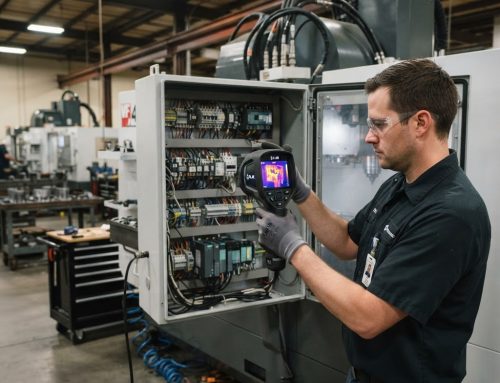
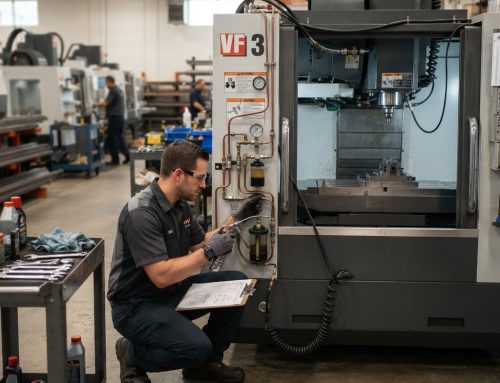
We perform precise laser and dial indicator backlash testing, inspect and repair automated lubrication lines, adjust gibs and guide rails, and execute full on-site removals and reinstallations of worn ballscrew assemblies. By choosing our specialized on-site CNC repair services, you eliminate the guesswork and avoid costly mistakes. We ensure your mechanical axes are physically aligned, correctly preloaded, and calibrated to deliver the precise tolerances your customers demand. Contact Jason Wutzke and the team at (951) 540-4820 or visit in-housecnc.com to schedule a preventative maintenance check before minor backlash turns into an expensive breakdown.