Safety Measures for CNC Machine Operators
Share Post

In the fast-paced world of Southern California manufacturing, keeping machine shops safe and productive is a daily challenge. CNC machines are extremely powerful tools that operate at high speeds, generate intense mechanical forces, and utilize incredibly sharp cutting edges. Because of these inherent hazards, implementing and strictly enforcing robust safety measures for CNC machine operators is absolutely essential to prevent workplace injuries, reduce liability, and protect your most valuable asset: your people. However, safety isn’t just about daily operations; it is also a vital consideration when outside field technicians arrive at your facility to perform on-site CNC repairs or preventative maintenance.
The Critical Importance of Operator Safety in CNC Environments
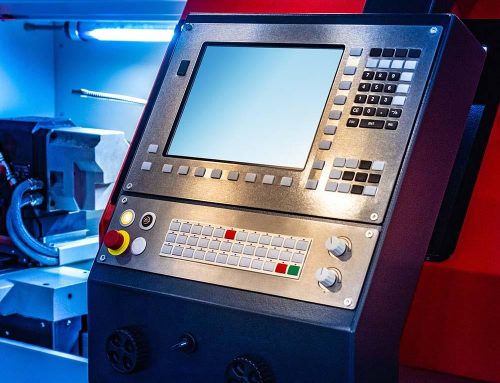
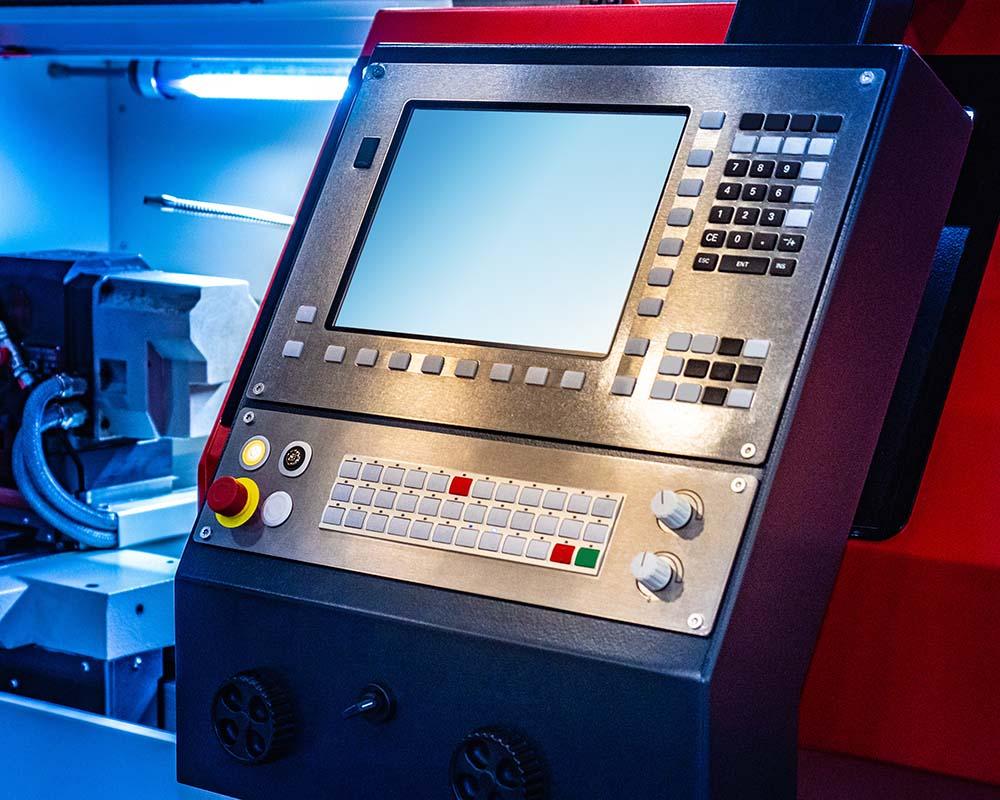
Modern CNC machine tools are designed with numerous built-in safety features, including interlocking enclosure doors, emergency stop buttons, spindle braking systems, and light curtains. Despite these advancements, accidents can still occur if safety protocols are ignored, bypassed, or poorly understood. A single moment of distraction, a slippery floor, or a disabled safety switch can lead to severe lacerations, puncture wounds, crush injuries, or worse.
To establish a highly secure and productive work environment, machine shop owners in Los Angeles, Orange County, Riverside, San Bernardino, and San Diego must cultivate a culture of safety. This begins with comprehensive operator training and includes regular inspections of machine safety systems. When operators understand the mechanical forces at play and strictly adhere to established safety rules, the risk of accidents is dramatically reduced. Our team at In-House CNC Service prioritizes safety in everything we do, providing reliable on-site CNC machine repair and maintenance services that help keep your equipment and your operators safe.
Essential Daily Safety Measures for CNC Machine Operators
A safe shift starts before the machine is even powered on. Operators must follow a strict routine of daily safety checks and personal habits to minimize the risk of workplace accidents.
1. Personal Protective Equipment (PPE) Requirements
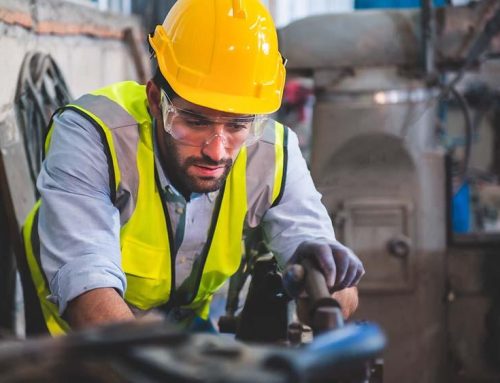
Operators must always wear appropriate personal protective equipment while on the shop floor.
- Eye protection: Safety glasses with side shields are mandatory to protect against flying metal chips, broken tool fragments, and coolant splashes.
- Footwear: Steel-toed boots protect feet from dropped parts, heavy fixtures, or tools.
- Apparel restrictions: Loose clothing, ties, lanyards, and jewelry must never be worn near rotating machinery. Long hair must be tied back securely behind the head to prevent entanglement hazards.
- Gloves: While gloves protect hands when handling sharp raw materials or finished parts, they must never be worn while operating or loading a machine with rotating spindles, as they can catch and pull an operator’s hand into the cutting zone.
2. Pre-Operational Machine Inspections
Before initiating a program, the operator should perform a brief visual and physical check of the machine’s condition:
- Verify that the workholding fixture (chuck, vise, or custom fixture) is secure and that the raw material is clamped correctly to prevent workpiece ejection.
- Ensure that all cutting tools are loaded correctly in the tool changer and that there are no signs of chipped, cracked, or excessively worn inserts.
- Check that the workspace inside the enclosure is clear of unnecessary tools, measuring equipment, or heavy chip accumulation.
- Test the emergency stop buttons and the door interlock switch to confirm they function correctly. Never operate a machine with a bypassed door safety switch.
3. Safe Programming and Dry Run Procedures
When proving out a new program or running a part for the first time, operators must use extra caution to prevent crashes:
- Perform a dry run with the Z-axis offset elevated well above the workpiece and workholding to verify the tool path without cutting.
- Utilize single-block mode and slow feedrate overrides to carefully monitor tool paths and verify clearances.
- Keep one hand on the feed hold button during the entire initial run, ready to halt motion instantly if an unexpected movement occurs.
On-Site CNC Repair Safety: What to Expect When a Field Tech Arrives
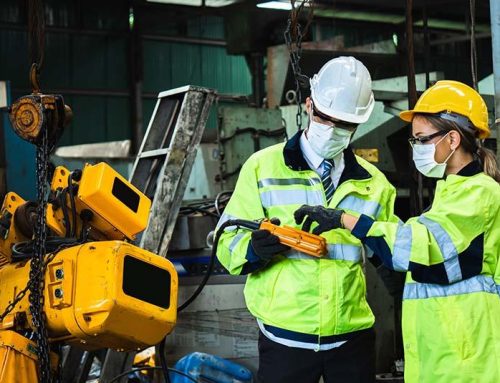
When a CNC machine breaks down and an In-House CNC Service technician arrives at your facility, safety protocol becomes a collaborative effort. On-site CNC repair involves unique hazards, as our technicians must often access internal mechanical components, electrical cabinets, and drive systems that are normally protected by guards and interlocks.
To ensure the safety of your operators and our field technicians during a repair visit, we follow a rigorous safety process:
- Lockout/Tagout (LOTO): Before opening electrical cabinets or performing mechanical disassembly, we implement strict Lockout/Tagout procedures to isolate energy sources. This ensures the machine cannot be accidentally energized while a technician is working inside.
- Worksite Isolation: We set up safety cones or barriers around the machine under repair. This establishes a clear boundary, keeping your shop operators at a safe distance and preventing accidental contact with exposed moving parts or electrical terminals.
- Collaborative Communication: Our technician, led by Jason Wutzke’s standards of excellence, will coordinate directly with your shop manager or lead operator before starting work. We explain the scope of the repair, identify any specific hazards, and establish clear communication protocols for when the machine needs to be powered up for testing.
How In-House CNC Service Approaches This
At In-House CNC Service, safety is our absolute priority. We do not cut corners, and we do not compromise on safety standards to save time. When we perform on-site repairs or execute a comprehensive preventative maintenance contract in Southern California, we integrate safety checks into every step of our technical workflow.
During our service visits, we thoroughly inspect your machine’s built-in safety devices. We test the door safety switch circuit, check the condition of safety glass in the enclosure windows (replacing cracked glass is critical to containing broken tools), and verify that emergency stops function immediately across all operator stations. If we find bypassed safety switches, frayed electrical lines, or faulty interlocks, we immediately report these critical safety hazards to your management team and assist in making the necessary repairs.
Our mobile service trucks are fully equipped with specialized diagnostic equipment, heavy-duty lifting gear, and personal protective equipment. This allows us to handle heavy components—such as spindles, ball screws, and motors—safely and efficiently, eliminating the risk of injury or machine damage on your shop floor. Whether we are conducting a complex spindle rebuild and replacement or aligning an axis, our team maintains an immaculate, organized workspace to ensure safety throughout the entire service call. We make sure that our repair environment remains hazard-free from start to finish.
Building a Culture of Safety on Your Shop Floor
Safety is not a static checklist; it is an active, ongoing commitment. Southern California machine shops that prioritize safety often experience higher operator morale, lower turnover, reduced insurance premiums, and fewer production interruptions. To foster this culture, shop managers should conduct regular safety meetings, encourage open reporting of near-miss incidents, and never pressure operators to bypass safety features to meet production deadlines.
Providing your team with well-maintained equipment is also a foundational element of safety. A machine that is regularly serviced, properly lubricated, and structurally sound is far less likely to experience a catastrophic mechanical failure that could pose a physical danger to the operator. By combining regular operator safety training with professional, reliable on-site maintenance from In-House CNC Service, you create a workplace that is both highly profitable and exceptionally safe.
A Tailored Approach for the Southern California Manufacturing Ecosystem
The manufacturing climate in Southern California is unique. Many shops run highly specialized jobs with tight turnaround times, where a single machine failure can cascade into safety hazards if rushed operators try to make up for lost time. Our local expertise allows us to customize safety and maintenance plans that match your exact usage patterns, environmental factors, and machine ages.
We serve a diverse range of machine shops throughout the region, adapting our strategies to the specific mechanical demands of each shop. By focusing on on-site diagnostics, real-time feedback, and high-quality replacement parts, we ensure your machines maintain their factory-level safety and repeatability for years to come. When you choose In-House CNC Service, you are choosing a local partner dedicated to the long-term success and safety of your business.
Secure Your Shop’s Safety and Productivity Today
Protecting your team and your equipment is the most important responsibility you have as a business owner or manager. Do not wait for an accident or a major mechanical failure to highlight gaps in your safety protocols. Partner with the local experts at In-House CNC Service to keep your machines in optimal, safe operating condition. Contact us today to schedule a comprehensive safety and maintenance inspection for your CNC machinery, and let us help you maintain a secure, compliant, and efficient manufacturing environment in Southern California.